How to Increase Repeat Purchases on Shopify
The economics of most Shopify stores depend on what happens after the first order. Here is what the post-purchase window offers, which channels drive repeat purchases, and how loyalty and content collection work as retention mechanics.
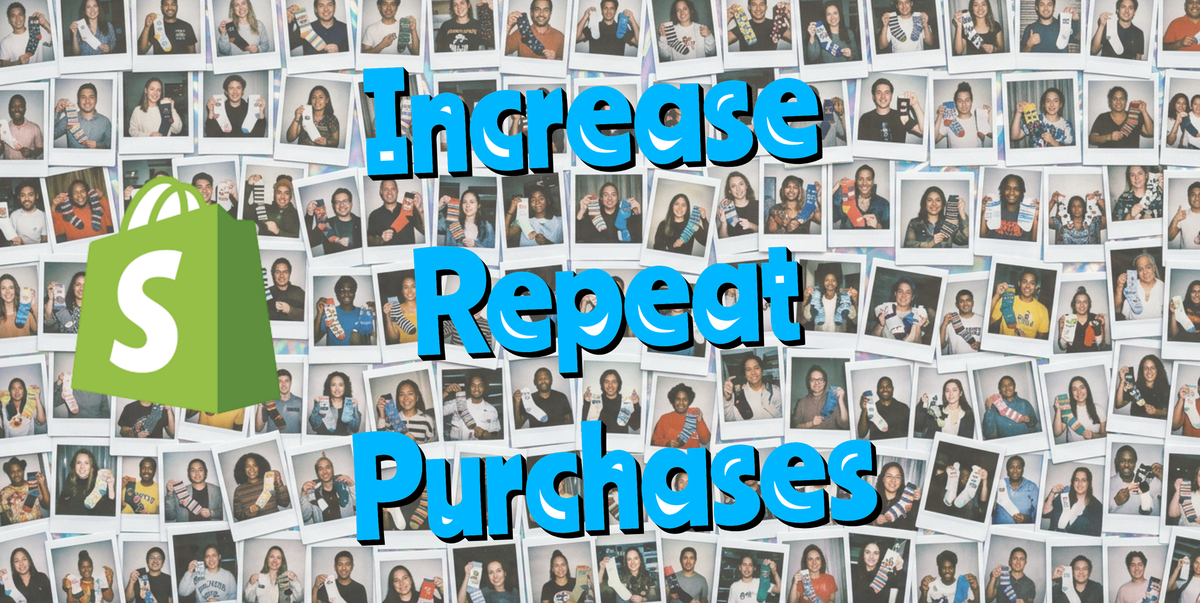
The economics of running a Shopify store depend almost entirely on what happens after the first order.
Customer acquisition costs have risen consistently for the past decade as paid social competition has intensified. The average DTC brand now spends $50-$120 to acquire a new customer. If that customer buys once and never returns, the maths rarely work. If that customer buys three times, they are profitable. If they buy five times, they are a meaningful contributor to the business.
Increasing the proportion of first-time customers who make a second purchase - and the speed at which they do it - is one of the highest-return levers in ecommerce. It does not require a bigger ad budget. It requires a better post-purchase experience.
"Absolutely, UGC can do wonders for repeat customers! From my experience, sharing authentic customer videos and testimonials not only attracts new buyers but also reminds existing ones why they loved your brand in the first place." — r/ecommerce
Why Most Post-Purchase Sequences Underperform
The standard post-purchase sequence for most Shopify stores is: order confirmation email, shipping update, delivery notification. After that, the customer enters a general email list and receives the same broadcast campaigns as every other subscriber.
The problem is that the post-purchase window - the period immediately after delivery when the customer's engagement with the brand is highest - goes mostly unused. The customer has just spent money, received their product, and (hopefully) had a positive experience. This is the moment when a follow-up with a relevant reason to return would land. Most brands send nothing targeted for 10-30 days, by which point the customer has moved on.
The email that eventually arrives is usually a generic campaign. Open rate: around 20%. It carries no acknowledgement of the customer's specific purchase, no connection to their experience, and no particular reason to act.
The gap between what the post-purchase window offers and what most brands do with it is where most repeat purchase opportunity is lost.
The Channels That Drive Repeat Purchases
There are four channels through which repeat purchase rates improve, each with different economics and reach.
Email remains the most widely used channel, with the lowest per-send cost. The constraint is attention - a 20% open rate on a retention email means 80% of customers receive nothing. Improving email performance is about segmentation, timing, and relevance, not volume. An email sent to a customer who bought product X at the right moment post-purchase, with a reason specific to their order, converts at a different rate than a broadcast campaign.
SMS reaches higher open rates (45-65%) but has higher friction: consent requirements are strict, opt-out rates run higher, and customers treat brand SMS messages differently from email. SMS works well for time-sensitive offers - a flash sale, a restock alert - but less well for ongoing retention.
Paid social retargeting brings back customers who have been inactive through ads. The cost is relatively high compared to the channels above but it reaches customers who have disengaged from email. Retargeting with customer-content creative (photos and videos from real buyers) has better conversion rates than standard brand creative for returning customers, because it reflects the experience they already had. A July 2026 Social Tip study across 17 brands found that 61.8% of TRIP customers who created content about the brand repurchased within two weeks - a figure that points to the self-reinforcing relationship between content participation and repeat purchase behaviour.
Wallet pass push notifications are the most efficient retention channel for brands that can get customers to install a card. Brandmovers research puts the open rate at approximately 99% - reaching almost every cardholder with each message, at the same per-customer cost as email. For a brand with 3,000 wallet cardholders, a push notification announcing a new product or expiring reward reaches 2,970 customers. The same message via email reaches approximately 600.
Loyalty Mechanics That Drive Second Purchases
A well-structured loyalty programme does not just reward customers for buying repeatedly. It creates a reason for the second purchase that would not otherwise exist.
Stamp-card logic (buy five, get one free) is the simplest form: the customer who bought once has one stamp. One stamp is worth nothing on its own, but it is one step toward something. The incompleteness is what drives return. A loyalty card in the customer's Apple or Google Wallet showing "1 of 5" is a visual reminder that there is progress to complete.
Points programmes accumulate value over time. A customer who has earned 250 points is not going to abandon them - the sunk investment creates an incentive to return and add to the balance. The key is making the balance visible and the next threshold reachable. A push notification when a customer is close to a reward threshold ("You're 50 points away from a $10 reward") converts at a different rate than a generic "we miss you" email.
Tiered membership creates status that customers want to maintain. A customer who has reached Silver tier will return before their tier lapses. The tier upgrade notification - pushed to the lock screen when the customer crosses the threshold - is one of the most effective retention moments in any loyalty programme.
Content rewards create a retention loop distinct from points or stamps. A customer who submits a photo or video receives a wallet pass reward immediately - typically $10-$15 off their next order. The reward creates a specific reason to return. The wallet pass makes the reward visible on the home screen until it is used. The act of submitting content also reinforces the customer's relationship with the brand - they have invested time and created something, which increases their connection.
How to turn a form into an Apple or Google Wallet pass covers how the content submission to wallet pass reward flow works technically.
Post-Purchase Timing: When to Reach Out
The timing of post-purchase communications is where most brands leave repeat purchase opportunity on the table.
Day 0-1: Order confirmation. The customer has bought. Confirmation email is expected and should arrive immediately. No ask yet.
Day 5-7: Shipping and anticipation. If delivery is pending, a shipping update with a small piece of useful content (how to get the most from the product, what to expect when it arrives) keeps the brand in view.
Day 10-14: First meaningful post-purchase contact. The customer has received and begun using the product. This is the window for a content request (photo or video brief), a review request, or a loyalty enrolment offer. A request here is timely and relevant. The same request at day 30 is late.
Day 21-30: Replenishment or cross-sell. For consumable products, this is the window where the customer may be approaching reorder. A relevant cross-sell (complementary products to what they bought) or a replenishment reminder converts better than a generic promotion.
Day 45-60: Win-back window. Customers who have not returned within 45-60 days are at risk of becoming inactive. A targeted offer - higher value than standard promotions - with a specific reason to return is more effective than another broadcast campaign.
Automation makes it practical to run all of these sequences simultaneously across every order cohort, without any ongoing manual effort after the initial setup.
Content Collection as a Retention Mechanic
Asking customers to submit a photo or video is not just content strategy. It is a retention mechanism.
The process of submitting content - taking a photo, filming a short video, writing a review - requires a customer to actively engage with the product and the brand at a moment when they are otherwise moving on. The act of engagement extends the relationship beyond the transaction.
The immediate reward (a wallet pass delivered to their phone) creates a reason to return within the reward window, typically 30-60 days. The reward is visible from the lock screen, not buried in an inbox. The expiry creates urgency that is communicated via push notification as the date approaches.
The combined effect is a structured reason for three post-purchase interactions with the brand: the order, the content submission, and the reward redemption. Three touchpoints instead of one. A customer who has had three positive interactions with a brand is a different customer from one who bought once and never heard from them again.
Shopify: influencer content vs customer content - rights, cost, and ROI covers the broader economics of customer content compared to influencer-sourced creative, including how the content loop affects customer lifetime value.
Measuring Repeat Purchase Rate on Shopify
Shopify's analytics include repeat customer rate as a standard metric: the percentage of customers who have placed more than one order. This is the baseline number to track.
More useful is the cohort view: of customers who made their first purchase in month X, what percentage made a second purchase within 90 days? Within 180 days? This view shows whether post-purchase retention efforts are working, because it isolates the behaviour of specific customer groups rather than averaging across all customers at different stages of their relationship with the brand.
The two metrics to move are: the percentage of first-time buyers who return, and the time to second purchase. Both improve with a better post-purchase sequence. A customer who receives a relevant reward reason to return within 30 days of their first purchase buys sooner and at a higher rate than a customer who receives only broadcast campaigns.
82DASH connects the content collection flow to wallet pass reward delivery for Shopify brands, creating a post-purchase sequence that simultaneously builds a content library and creates structured repeat purchase incentives.
Isabelle Simon - Communications Lead - 82DASH
Frequently Asked Questions
What is a good repeat purchase rate for a Shopify store?
Repeat purchase rates vary significantly by product category. Consumables (food, drink, beauty) typically run higher because the product runs out. One-purchase-intent products (furniture, large appliances) run lower by design. For most DTC brands, a repeat purchase rate above 25-30% is considered healthy. The more useful benchmark is your own cohort trend - whether the rate is improving quarter over quarter with deliberate post-purchase efforts.
What is the most effective way to get a second purchase from a first-time customer?
A specific, timely, relevant reason to return is more effective than a generic discount. A reward for content submitted, a loyalty card showing progress toward a reward, or a replenishment reminder timed to when the product should be running low are all more effective than a standard "10% off your next order" broadcast email. The channel matters too: a wallet pass push notification reaches almost every cardholder, while the same message via email reaches around 20%.
How does a loyalty programme increase repeat purchases?
A loyalty programme creates incremental value that only exists if the customer returns. A stamp card where the customer has earned two of five stamps is worthless if they never come back - but that incompleteness is a reason to return that the customer would not otherwise have. A points balance, a tier status, or a content reward all create the same dynamic: there is something to collect or maintain, and collecting it requires another purchase.
How quickly should I try to get a repeat purchase?
The goal is the second purchase before the customer becomes inactive, which typically means within 60-90 days for most product categories. Post-purchase sequences that include a relevant offer or incentive at day 10-14 (when the product experience is fresh) and a follow-up at day 30-45 (if no second purchase has occurred) are more effective than waiting for the customer to decide to return on their own.
Is it worth investing in retention when acquisition is what grows the business?
Both matter, but the economics increasingly favour retention. Acquiring a new customer costs $50-$120 in most DTC categories. Selling to an existing customer costs a fraction of that, because the channel costs are lower and the conversion rate is higher. A 5% improvement in repeat purchase rate compounds significantly over time - the same customer base generating more revenue without increasing acquisition spend.