Photo Release Form: Do You Need One for Customer Photos?
Sometimes you need one, sometimes you do not, and it depends on who took the photograph and who is in it. Plus the part a signed document does not solve.
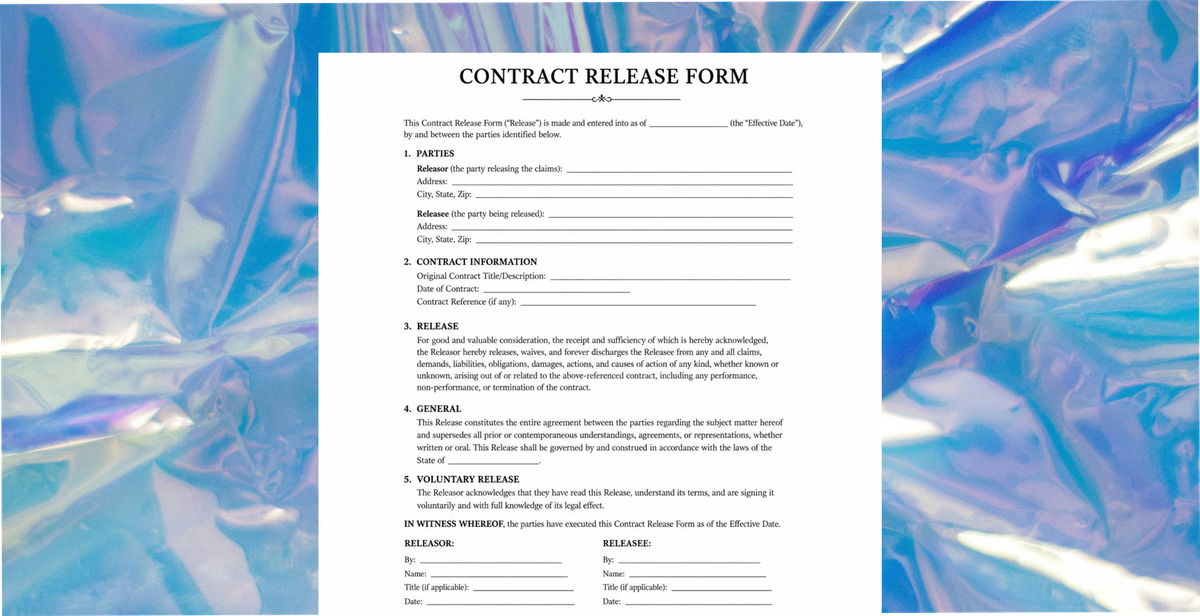
A photo release is permission, in writing, to use a photograph. Most of the templates circulating online were written for professional photographers shooting models, which is a different situation from a business collecting photographs from its own customers.
The short answer is that it depends on who took the photograph, who is recognisable in it, and where you intend to put it. This covers all three, and then the part that a signed document does not solve.
This is general information, not legal advice. Anything running at scale, in a regulated sector, or across borders is worth putting in front of a lawyer.
Two Different Permissions, Often Confused
This is the part most templates get wrong, and it matters because you may need one, both, or neither.
Copyright permission comes from whoever owns the photograph, which is usually whoever took it. Under US copyright law the creator owns the work by default, though employment, work-made-for-hire arrangements and prior contracts can move that ownership elsewhere. For a customer photographing your product on their own phone, the default holds: they own it, and you need their permission.
Personality permission comes from whoever is recognisable in the photograph. Using someone's likeness to promote a product generally needs their consent, separately from who owns the image. The detail varies considerably by jurisdiction, since rights of publicity and privacy are not uniform even between US states, let alone between countries.
Where the customer both took the photo and appears in it, one document can cover both. Where a customer photographs their friend holding your product, you may need the friend as well.
| Situation | Copyright from | Likeness from |
|---|---|---|
| Customer photographs the product alone | The customer | Nobody |
| Customer photographs themselves with it | The customer | The customer |
| Customer photographs a friend with it | The customer | The friend |
| Customer sends a photo their partner took | The partner | Whoever is in it |
| You photograph a customer in your venue | You | The customer |
That fourth row catches people out. A customer forwarding you a photograph is not the same as a customer giving you a photograph they took.
When You Actually Need One
You need a release: paid advertising, product pages, packaging, out-of-home, anything where the photograph promotes the business commercially.
You very likely need one: email marketing, your website, brand social accounts. These are commercial uses even when they do not look like adverts.
You are on safer ground: resharing a customer's public post using the platform's own share function, within that platform. You are surfacing it where it already sits rather than copying it. That is not a blanket permission for every commercial use, platform terms vary and they change, and taking the content off that platform is a different act entirely.
A public post is not a release. Someone tagging your brand has given the world permission to see the photograph. They have not given you permission to put it behind paid media. Platform terms govern the platform, not your ad account.
What a Release Has to Contain
Six things worth checking for. A release missing any of them is likely to leave a question open at exactly the moment you need a clear answer.
Who is granting the permission. A name and a contact address. An anonymous submission cannot be relied on later.
What is covered. Specific enough to identify the material. "The photographs and videos submitted through this campaign on this date" works. "All content" does not.
What you may do with it. Name the channels. Website, email, paid social, packaging, print, third-party retail listings. Anything unnamed is arguably outside the grant, and paid advertising is the one most often left out.
How long, and where. A term and a territory. "Worldwide, for three years from submission" is a normal shape. Perpetual and worldwide is cleaner for you and a harder ask.
Whether you can edit it. Cropping, colour correction, adding text, cutting a video. Most brands need this and most templates forget it.
Whether you must credit them. Decide and say so, because a customer expecting a tag and not getting one is a complaint you can avoid for one line of text.
Two more worth adding: confirmation they are old enough to agree, and confirmation that anyone recognisable in the photograph has agreed too.
The Two Clauses Almost Every Template Leaves Out
If you are assessing a release, yours or someone else's, these are the two that decide whether it survives contact with a real campaign.
An edit clause. Cropping, resizing, colour correction, trimming a video, adding text over the top. Every one of those is an alteration, and a release silent on alteration is a release you have to think about before every crop. It should also say what you will not do: change the meaning, or misrepresent the person.
A withdrawal route. What happens when somebody asks you to stop. A named contact, a timeframe for pulling it from new material, and an honest acknowledgement that printed stock already in circulation cannot be recalled. This is not required everywhere, and having it is the difference between a policy and an argument.
The Document Is the Easy Part
Here is the thing nobody tells you when they hand you a template.
Writing a release takes an afternoon. Some of it you can copy, some of it a solicitor will tidy for a modest fee, and once it exists it is done. It is a one-off task with a clear end.
Getting it agreed, at scale, attached to the right photograph, is the part that never ends. That is a process problem, and it is where content libraries quietly become unusable.
Consider what actually has to happen for one photograph to be safely runnable in an ad:
- The customer sends the photograph
- Somebody notices it is worth using
- Somebody asks for permission
- The customer replies, with the right wording, to the right terms
- Somebody files the reply where it can be found again
- Somebody links the reply to the specific file
- Eight months later, somebody finds both in time to use them
A template solves step four. Steps one through three and five through seven are still yours, for every photograph, forever. That asymmetry is why brands with a sound release sitting on file still cannot clear content when they need it.
The practical answer is not a better document. It is making the permission part of the submission, so steps three to six stop being separate jobs performed by a person who may have left.
Paper, PDF or Built Into the Form
The format decides the completion rate, and the completion rate decides whether you have a release at all.
| Method | Completion | Record quality |
|---|---|---|
| Printed form, signed in person | Low outside events | Physical, hard to search, easy to lose |
| PDF emailed for signature | Low, it is a separate task | Good, if it comes back |
| Checkbox on the submission form | High, it is one tap | Attached to the file, timestamped, searchable |
| Asking afterwards by message | Lowest | Weak, scattered across threads |
Asking afterwards is legitimate and plenty of businesses do it. It is just the hardest version: the customer has moved on, the thread has scrolled, and you are chasing something they get nothing for.
Capturing it in the submission flow is the same permission obtained at the one moment the customer is actually paying attention.
Whichever you choose, keep the record with the file. A release in a separate spreadsheet, referring to a photograph in a separate folder, is a reconciliation problem waiting for the worst possible week.
Where People Go Wrong
Using a photographer's model release. Those are written for a professional shooting a hired model. They assume the business owns the copyright, which is the opposite of your situation.
Naming "social media" and meaning paid ads. Organic posting and paid advertising are different uses, and Meta, TikTok and Google all expect the advertiser to hold rights for what it runs. Name paid advertising explicitly.
No term. A release with no end date is arguably indefinite, and arguably not. Say which.
Forgetting minors. If a child is recognisable, a parent or guardian agrees, not the child, and not the adult who took the photograph.
One release, many campaigns. A release covering "this campaign" does not cover the next one. Either say so, or capture it each time.
If You Sell Outside the United States
The requirements above are not written to any single jurisdiction, and two things change once you cross a border.
Copyright is broadly similar everywhere. Most countries are signatories to the international framework administered by WIPO, under which the creator owns the work by default, subject to local rules on employment and commissioned work. The principle that your customer owns their photograph holds in the UK, the EU, Australia and Canada much as it does in the US.
Data protection is the part that differs. In the UK and the EU, a photograph of an identifiable person is personal data as well as a copyrighted work, which brings a separate set of obligations around lawful basis, retention and the individual's right to request erasure. That right is qualified rather than absolute and has exceptions, but you still need a process for handling a request. The ICO's UK GDPR guidance is the starting point for UK businesses. That is why the withdrawal route described above matters even where you are not strictly required to offer one.
The practical effect is that the same release generally works, but a UK or EU business also needs a retention position and a deletion route, and both should be real rather than aspirational.
How 82DASH Fits
82DASH is a customer content library. It collects photos, videos and feedback directly from customers, and a reward lands in their Apple Wallet or Google Wallet when they submit.
The licensing agreement comes with the platform, rather than being something you supply. You are not asked to bring your own release, write one, or have a solicitor draft one before you can collect anything. The campaign carries the usage terms, the customer agrees to them as they upload, and the agreement stays attached to the file. Automatic content licensing and usage rights are included on every paid plan.
That collapses the seven steps above into one. The photograph and its permission become the same record, created at the same moment, so six months later nobody is matching a spreadsheet row to a filename or wondering whether the wording covered paid media.
On plans. The free plan covers branded forms and wallet passes, up to 50 submissions a month, which is enough to test the flow. Photo and video collection sit on the paid plans. Starter and Growth include a seven-day free trial. Monthly plans start at $50, with around 15% off annually, and the pricing page has the current detail.
Underneath it: pay your customers, not creators. The people who already bought from you will photograph the product for the price of a small reward, and their version carries more weight because nobody paid them to hold the opinion.
Start free with forms to Apple and Google Wallet
Isabelle Simon, Communications Lead, 82DASH
FAQs
What is the difference between a photo release and a model release?
In practice the terms are used interchangeably. Historically a model release covers the person appearing in the image, while a copyright licence covers whoever took it. When your customer both took the photograph and appears in it, one document can cover both, which is why the distinction blurs.
Do I need a release to repost a customer's Instagram photo?
For resharing inside the platform using its own share function, usually not. For copying the photograph onto your website, into email, or into a paid advertisement, yes. A public post is not permission for commercial use elsewhere.
Does a release have to be signed?
It has to be agreed, and be capable of being evidenced. A clear, recorded, timestamped agreement captured in a submission flow is generally more useful than a scanned signature, because it is searchable and attached to the file it covers. Requirements vary by jurisdiction and by use.
Can I get permission after the customer has sent the photo?
Yes. Permission obtained later is still permission. It is simply harder to get, because the customer has moved on and there is nothing in it for them. Asking at submission is the same agreement at the only moment you have their attention.
What if a child is in the photograph?
A parent or guardian needs to agree, not the child, and not necessarily the adult who took the photograph. Many brands simply exclude recognisable children from marketing use to avoid the question.
How long should the term be?
Perpetual and worldwide is simplest to administer and the biggest ask of the contributor. Shorter fixed terms are also used. What matters more than the number is that there is one, because a release silent on duration leaves a question rather than an answer. Set it in consultation with whoever reviews your contracts.
Further Reading
- How to use customer content in Shopify ads legally
- Customer photos in Meta ads: rights clearance guide
- Why incentivising reviews is not buying them
- CGC vs UGC: the difference in rights, quality and ROI
- US Copyright Office: what is copyright
- FTC endorsement guides
- Meta
- TikTok
- WIPO: international copyright framework
- ICO: UK data protection guidance