Why Incentivising Reviews Is Not the Same as Buying Them
Incentivising a review means rewarding participation. Buying a review means paying for a specific outcome. Here's why the distinction matters - and how to do it right.

There's a worry that stops a lot of hospitality businesses from offering rewards for customer reviews. It sounds something like this:
"If I offer people something in return for a review, aren't I just buying positive feedback? Isn't that dishonest?"
It's a reasonable question. And the answer - once you understand the distinction - is a clear no.
Incentivising participation is not the same as buying outcomes. The difference matters, and it's the reason some of the most trusted brands in the world use incentivised review programmes without any credibility problem at all.
The distinction that changes everything
Here's the difference in one sentence:
Buying a review means paying someone to say something specific. Incentivising a review means rewarding someone for saying anything at all.
When you offer a customer a discount on their next visit for submitting a review, you're rewarding the act of engaging - not the content of what they write. A customer who gives you three stars and says the service was slow gets the same reward as a customer who gives you five stars and says it was perfect. The incentive is attached to participation, not to praise.
That's not bribery. That's the same logic as paying a market research firm to run focus groups. You're compensating people for their time and attention. The quality of the signal depends on your willingness to accept honest responses - and the best businesses do.
When incentivised correctly, reviews collected with rewards are just as authentic as organic reviews and often more diverse - because the incentive brings in the moderate majority who wouldn't bother without it.
Why the moderate majority matters
Here's the problem with organic, unincentivised reviews: they're biased towards the extremes.
The people who leave reviews without any prompting are disproportionately people who had a very good experience or a very bad one. The satisfied majority - the guests who had a perfectly good stay, the diners who enjoyed a solid meal, the spa clients who felt the treatment was worth the money - largely don't bother. They have nothing to complain about. They have nothing to rave about. They move on.
This skew means your organic review profile doesn't accurately represent your customer base. It represents your outliers. And when a new potential customer reads your reviews, they're making a booking decision based on a sample that's systematically unrepresentative.
Incentivising reviews brings in the moderate majority. When you offer something in return for engaging, the customers who had perfectly good experiences - the ones who would honestly give you a four - show up. Your review profile becomes more accurate. Your score may actually decrease slightly. And that more accurate, slightly-lower score will convert better with potential customers who are sceptical of businesses with implausibly perfect ratings. Authentic review mix lifts booking conversion rates. More bookings from the same traffic is pure revenue.
68% of consumers trust reviews more when they see a mix of positive and negative feedback - because a range of responses signals authenticity. A wall of five-star reviews looks managed. A realistic spread looks earned.

What the platforms actually say
Google and TripAdvisor both prohibit paying for positive reviews. That's the important nuance.
Google's policy: you cannot offer incentives in exchange for positive reviews, or only for reviews with a specific rating. You can ask customers to leave reviews. You can make it easy to do so. The line is drawn at specifying the content or the star rating.
This means that a business which says "leave us a five-star review and get 10% off your next visit" is in violation. A business which says "submit your experience and receive a loyalty reward" - with no condition on the rating or content - is not.
The distinction is in the ask. One is buying a positive outcome. The other is rewarding honest engagement.
TripAdvisor operates on similar principles. TripAdvisor's 2025 Transparency Report detected 2.7 million fraudulent reviews and removed 360,000 reviews linked to employee incentive programmes. The businesses flagged weren't rewarding participation - they were tying incentives to specific ratings or requiring reviews as a condition of employment. That's the line. And notably: both platforms allow and even encourage businesses to ask for reviews. The problem is using that ask to manipulate the rating, not to generate genuine input.
In August 2024, the FTC finalised a rule banning fake reviews and undisclosed incentivised testimonials, with civil penalties of up to $51,744 per violation. The rule explicitly targets fake reviews, reviews conditional on positive sentiment, and undisclosed compensation. It does not prohibit rewarding honest participation - it requires that the relationship be transparent. Which is exactly what a reward-for-submission model already does.
The content collection parallel
The same principle applies to customer photos and video testimonials.
When a business collects photos via a QR code and rewards submissions with a wallet pass, they're not buying a positive photo - they're rewarding the act of participating. A customer can submit a photo of a dish they thought looked better in the menu and still receive the reward. The rights clearance is automatic. The content is theirs to use.
This is the model that 82DASH is built around: rewarding participation in a way that generates honest signal, authentic content, and real engagement - without conditioning the reward on saying anything in particular.
As explored in the photo contest context, reward by selection takes this further: the merchant picks the best submission, not the most positive one. The competition is about quality and creativity - not about writing the most enthusiastic review.
Why incentivised reviews improve your business faster
There's a second reason to incentivise reviews that has nothing to do with volume or conversion: honest critical feedback.
The customers who had a genuinely negative experience often don't bother to leave a review either - not because they're forgiving, but because writing a detailed critical review takes effort, and the emotional energy to do it dissipates quickly. Many just don't come back.
When you incentivise submission, you get some of those critical responses. A customer who had a problem with their room will, with a small incentive in place, often submit that feedback instead of just walking away. That feedback - even at two stars - is valuable operational signal. It tells you something specific is broken. You can fix it.
The businesses that improve fastest are the ones that hear the honest critical responses alongside the praise. Incentivising reviews doesn't prevent honest feedback. It actively creates the conditions for it.
What good incentivised review collection looks like
The pattern that works is straightforward.
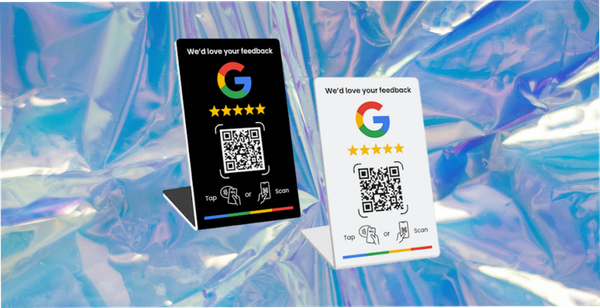
A customer finishes their visit. A QR code, NFC tap, receipt prompt, or link in a post-purchase email invites them to share their experience. No guidance on what to say. No hint about the star rating. Just: "tell us about your visit and receive your reward."
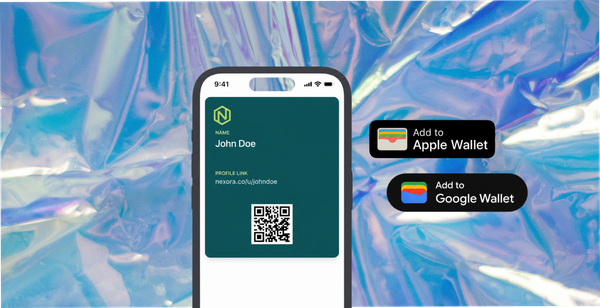
The reward - a loyalty stamp, a small discount, a complimentary offer - lands in their Apple or Google Wallet the moment they submit. It's instant. It's on their phone. And it creates the beginning of a direct relationship - one where future communications can arrive via push notification rather than the email inbox they barely check.
You get the review. You get the wallet channel. And you get the feedback that tells you what to improve - the kind of signal that a wall of five-star reviews, bought or otherwise, would never give you.
Incentivising participation isn't a shortcut. It's a system for collecting the honest signal that your business needs to improve and your future customers need to trust you.
Isabelle Simon - Communications Lead - 82DASH
Frequently Asked Questions
Is it against Google's policy to incentivise reviews?
Google prohibits offering incentives specifically for positive reviews or for reviews with a particular rating. It does not prohibit asking customers to leave reviews or rewarding the act of submitting feedback regardless of content. The key distinction: incentivising participation (rewarding any submission) is permitted; incentivising a positive outcome (rewarding five-star reviews only) is not.
Does offering a reward for a review make it less authentic?
No - if the incentive is attached to participation rather than content. A customer who receives a loyalty reward for submitting an honest three-star review gives you the same authentic signal as one who submitted without any incentive. Research shows incentivised reviews collected with this approach are as authentic as organic reviews, and often more representative because they bring in the moderate majority who wouldn't bother otherwise.
What is the difference between incentivising reviews and buying reviews?
Buying reviews means paying for a specific outcome - a positive rating, a minimum star count, or a particular piece of written content. Incentivising reviews means rewarding the act of engaging, regardless of what the customer says. One is manipulative and against platform policies. The other is a legitimate customer research practice used by some of the most trusted brands in the world.
What are the best incentives to offer customers for leaving a review?
Instant rewards perform best - something the customer receives immediately at the point of submission rather than days later. A loyalty stamp added to their wallet card, a small discount on their next visit, or a complimentary offer delivered via Apple or Google Wallet all work well. The incentive should be proportionate to the ask: a 20-second review warrants a small reward, not a significant discount.
Further Reading
- How to Collect Customer Feedback Without Annoying Anyone - 82DASH Blog
- Beyond Yelp and TripAdvisor: How Hospitality Brands Can Own Their Customer Content - 82DASH Blog
- Why Video Testimonials Beat Written Reviews (And How to Collect Them) - 82DASH Blog
- Local Consumer Review Survey 2025 - BrightLocal
- FTC Final Rule Banning Fake Reviews and Testimonials - Federal Trade Commission
- TripAdvisor 2025 Transparency Report - TripAdvisor
- UGC Statistics 2025 - inBeat Agency
Further Watching
- r/restaurantowners - Reddit Community - real debates about review generation tactics and what's ethical vs problematic
- r/Hotelier - Reddit Community - hotel professionals on review strategy, platform policies, and incentivisation approaches
- Review Generation Strategy YouTube Search - practical discussions on what's allowed and how to do it properly