Shopify Post-Purchase Wallet Rewards: How to Drive the Second Order
The 24-72 hour window after delivery is the highest-leverage retention moment on Shopify. Wallet passes turn it into a tangible, time-stamped reason to come back and drive the second order.
The first order is the hard one. By the time a customer has reached your Shopify checkout, you've typically spent on creative, paid traffic, email, retargeting, and conversion optimisation. The order lands. The order ships. The customer is happy with the product.
Then nothing.
The customer doesn't come back. Or they come back six months later, prompted by an email they almost deleted. The cost-per-acquisition you paid to win the first order doesn't pay back until the second order arrives - and for most Shopify stores, that second order arrives slowly or not at all.
The single biggest leverage point on Shopify retention in 2026 isn't the first order or the email flow. It's the 24-72 hour window after delivery, and the question of whether the customer leaves that window holding a tangible, time-stamped reason to come back. Wallet passes are the cleanest answer to that question.
Here's how to build the post-purchase wallet reward system that actually drives the second order.
Why the Second Order Matters More Than the First
The economics of Shopify retention are well-documented, with classic Bain & Company and Harvard Business Review research consistently showing that increasing retention by 5% can lift profits by 25% or more. Repeat customers spend more per order, convert at higher rates from email and ads, and have meaningfully lower customer acquisition cost amortised over their lifetime, per research from Bazaarvoice and Nosto. Industry research from Shopify and Klaviyo consistently shows repeat-purchase rates of 25-30% as the threshold separating profitable Shopify stores from unprofitable ones.
The hard part is that most Shopify stores never cross that threshold. In our experience working with Shopify stores, default repeat-purchase rates for first-time customers tend to sit at the low end of that range within the first 90 days. Below the threshold, every paid order has to recoup the full acquisition cost from a single transaction, which crushes margin and limits how aggressively the brand can advertise.
The brands that crack the second-order problem can spend more on acquisition because they trust the second order to arrive. The brands that don't are stuck.
What Blocks the Second Order
Three structural blocks sit between a first-time customer and a second order:
Forgetting. The customer enjoyed the product, intended to come back, and then life happened. The first order was a moment of intent that wasn't followed up on. By week four, the brand has slipped from short-term memory.
No incentive. Even when the customer remembers, there's no specific reason to come back today rather than next month. A 10%-off email goes into the same folder as every other 10%-off email. The reward isn't differentiated enough to drive action.
No next-step. The customer doesn't know what to buy next. They bought the moisturiser. Should they now buy the cleanser? The serum? The same moisturiser again? In the absence of a clear next step, most customers don't take any step.
A post-purchase wallet reward addresses all three. It is visible (no forgetting), tangible (specific incentive), and prescriptive (the reward is tied to a specific next purchase or category).
Why Post-Purchase Wallet Rewards Drive Second-Order Behaviour
The mechanics that make a wallet pass effective at this specific moment in the customer journey:
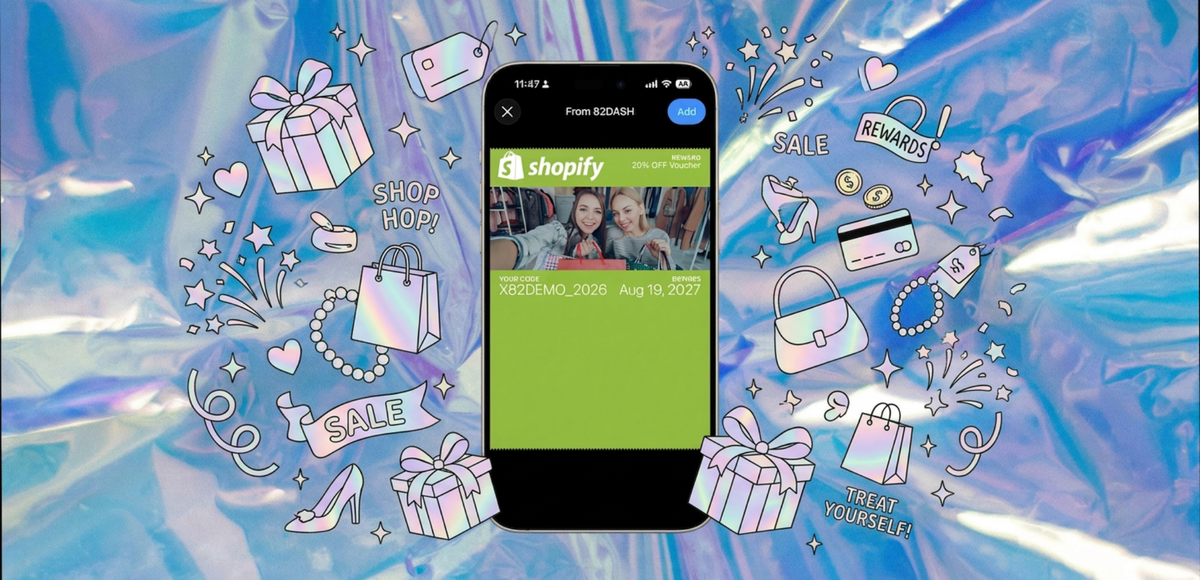
Immediate delivery. The pass lands on the customer's phone within seconds of the trigger - typically order delivery or post-purchase email click. The customer is engaged, the order is fresh, the unboxing is recent. The reward arrives at the moment of peak satisfaction.
Lock-screen visibility. Unlike a discount code in an email or a points balance in a loyalty app, a wallet pass surfaces on the lock screen as the expiry approaches. The customer doesn't need to remember anything. The reward reminds them.
Time-stamped. The pass has a visible expiry. "$15 off, expires in 7 days" creates urgency that an open-ended reward can't. The customer either uses it or loses it.
Server-side updateable. The brand can extend the expiry, change the reward, or layer on additional offers without asking the customer to redownload anything. The pass becomes a long-term relationship surface.
Native, not branded. The reward sits in Apple Wallet or Google Wallet alongside boarding passes - the structural advantage we cover in our no-app rewards comparison, transit cards, and the customer's own credit card. It's in the highest-trust software surface on the phone, not in a branded app the customer half-remembers installing.
The combined effect is that a post-purchase wallet pass closes the experience loop in a way no email, code, or app notification can.
The 24-72 Hour Window
The single most-important variable in post-purchase retention is timing. The window between order placement and the second engagement opportunity collapses fast.
Most Shopify stores default to sending a post-purchase email a day or two after delivery. Engagement data from Klaviyo, Mailchimp, and Litmus shows post-purchase emails routinely outperform broadcast marketing emails on open and click rates. By that point, most customers have already mentally moved on. The unboxing moment - the highest-engagement window in the entire customer journey - is gone.
The right pattern: trigger the wallet pass at delivery confirmation, not days after. Most carriers report delivery to Shopify within minutes of the courier marking it complete. The post-purchase email goes out automatically. The wallet pass is included in that email and on the order status page. The customer is opening the box, looking at the product, and seeing the reward at the same time.
Within 72 hours, the pass should be on the customer's phone, surfacing at relevant moments, with a clear next-purchase action attached.
Reward Structures That Drive the Second Order
What earns the second order isn't the size of the reward; it's the specificity of the next-step it implies.
Category-specific reward. "Free travel-size cleanser on your next order" tells the customer exactly what to buy next. The reward narrows the decision and removes the next-step friction.
Stack-based reward. "$15 off your next order, plus a free sample of [related product]." The discount drives the purchase; the sample expands the catalogue exposure.
Tier-trigger reward. "Order again in 30 days and unlock VIP early access." The reward changes shape if the customer takes the action, which creates a behavioural payoff.
Replenishment-timed reward. A pass that auto-updates with a "time to restock" message at the typical replenishment point for the product. Particularly powerful for consumables and beauty products.
Content-for-reward. A pass that issues when the customer submits a photo, video, or feedback (see our cornerstone customer content guide). Combines second-order driver with content collection in a single mechanic.
What works less well: open-ended percentage discounts with no category direction, no expiry, and no behavioural component. The customer files them away and forgets.
How to Wire Post-Purchase Wallet Rewards Into Shopify
The setup, in practical steps:
Step 1: Choose the trigger. The recommended primary trigger is delivery confirmation. Secondary trigger: post-purchase email click. Both can be configured to issue the same pass, with logic that prevents duplicates.
Step 2: Choose the reward. Start simple. A category-specific reward with a 14-30 day expiry. Avoid stacking multiple rewards on day one; you can layer in tier upgrades and replenishment timers later.
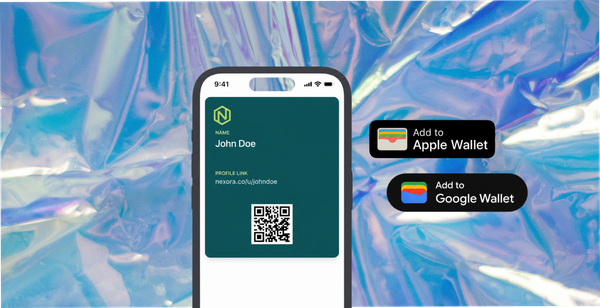
Step 3: Add the pass to the post-purchase email. A clear "add to Apple Wallet" / "add to Google Wallet" button. The pass platform handles the issuance link.
Step 4: Add the pass to the order status page. Customers often check order status multiple times before delivery. (For the full wallet pass setup, see our Shopify wallet pass guide.) Putting the pass call-to-action on the status page captures customers at peak anticipation.
Step 5: Add a packaging insert. A small printed card with a QR code that links to the pass issuance flow. Reaches customers who don't open the post-purchase email.
Step 6: Set up the second-order tracking. Tag orders that came from a wallet pass redemption. Measure the second-order rate, time-to-second-order, and AOV uplift on pass-triggered orders against the baseline.
For most Shopify stores, the entire flow is live within an hour from first install.
How 82DASH Powers Post-Purchase Wallet Rewards
82DASH connects to your Shopify store and runs the post-purchase wallet pass workflow as a managed service. It handles the certificate management, the issuance pipeline, the trigger logic, and the analytics.
The Starter plan is $50/month and is the right starting point for stores under 200 orders/month. The Growth plan is $82/month and covers the higher volumes most growing Shopify stores need, plus the customer content collection layer if you're combining post-purchase rewards with photo/video submissions. The Pro plan is $120/month and adds push notifications.
The platform tracks every issued pass back to Shopify customer data, which means second-order rate uplift, time-to-second-order, and AOV impact are all visible in a single dashboard.
Install directly from the Shopify App Store.
Measuring the Second-Order Lift
The metrics that matter for evaluating post-purchase wallet rewards on Shopify:
Second-order rate. The percentage of first-time customers who place a second order within 30, 60, and 90 days. Compare pass-issued customers to a control group that didn't receive a pass. The lift should be visible by week 8.
Time-to-second-order. The average days between first and second purchase. In our deployments, a working post-purchase reward compresses this window meaningfully on the customers who redeem.
Pass-attributed AOV. The average order value of orders triggered by a wallet pass redemption versus organic repeat orders. Often higher because the reward includes a category-specific recommendation that lifts basket size.
Pass acceptance rate. The percentage of customers who add the pass to their wallet from the issuance link. In our deployments, healthy acceptance rates run 30-50% of orders. Low acceptance points to issuance UX or reward-relevance issues.
Pass redemption rate. The percentage of accepted passes that end up redeemed in a second order. In our deployments, healthy redemption rates run 25-40% within the expiry window.
A clean dashboard tracks all five and lets you adjust the reward, the timing, and the trigger to find the highest-leverage configuration for your specific store.
A Worked Example: Shopify Coffee Brand, 600 Orders a Month
You sell speciality coffee on Shopify. 600 orders a month. Repeat-purchase rate within 60 days: 18%. You install 82DASH and configure a post-purchase wallet reward.
Trigger: Delivery confirmation. Pass issues automatically.
Reward: Free 250g bag of any roast on the next order over $40, expires in 21 days.
Month 1. Pass acceptance: 41% of orders. Redemption: 32% of accepted passes within 21 days. Second-order rate among pass-redeemers: 100% by definition. Second-order rate among orders that didn't receive a pass: 18% baseline.
Month 3. You add a tier upgrade for customers who pass three orders, granting free shipping and a "first to try" pass for new releases. Second-order rate stable; third-order rate up.
Month 6. You add a replenishment reminder triggered at week 4, with a smaller discount than the post-purchase pass. Pass-attributed orders are now 34% of all orders. Time-to-second-order has compressed from 47 days to 23 days on pass redeemers. CAC payback period is materially shorter.
The second-order problem doesn't disappear, but it stops being the binding constraint on growth.
Isabelle Simon - Communications Lead - 82DASH
Frequently asked questions
When should the post-purchase wallet pass issue - at order placement, or at delivery?
Delivery is the higher-leverage trigger. The customer has just opened the box, the product is in their hand, and the reward arriving at that moment closes the experience loop. Order placement is acceptable as a secondary trigger but tends to underperform delivery on acceptance rate.
How long should the post-purchase wallet reward expire?
14-30 days is the sweet spot for most Shopify categories. Shorter than 14 days creates urgency but cuts redemption volume. Longer than 30 days dilutes urgency. For consumables with longer replenishment cycles - coffee, supplements, skincare - extend toward 30 days; for fashion and impulse-purchase categories, lean toward 14.
Can I segment the post-purchase reward by what the customer bought?
Yes, and you should. A post-purchase reward that matches the customer's actual purchase category - free sample of a related product, discount on a complementary item - converts materially better than a generic discount. 82DASH supports per-product and per-collection trigger logic.
What's the right discount level for a post-purchase reward?
Tied to your category margin and AOV. For most Shopify stores, the meaningful range is 15-25% off, or a free product valued at 20-30% of typical AOV. Below 10% the reward doesn't drive behaviour; above 30% you're cutting into margin without proportional uplift.
Can post-purchase wallet rewards be combined with email marketing?
Yes, and they should be. The post-purchase email is the primary issuance channel for the wallet pass. The email reaches the customer at the right moment; the pass becomes the persistent reminder. The two work together, not in competition.
What if a customer doesn't add the pass to their wallet?
The post-purchase email also includes the discount code as a fallback. Customers who don't engage with the wallet pass still receive the reward via the email. Acceptance rates of 30-50% are typical, which means a meaningful share of the audience prefers the email format - and that's fine.
Further reading
Shopify Customer Content Strategy: The Complete Guide 2026
How to Collect Customer Photos on Shopify and Reward via Apple Wallet
Shopify Apple Wallet Rewards: Beyond Points Loyalty