Shopify Customer Rewards: Points vs Content - Which Drives More Value?
Points vs content rewards: one generates retention, the other generates retention plus marketing assets plus customer insights. Here's the breakdown.

Shopify merchants have more reward tools than ever before.
Most of them do the same thing: customer buys, earns points, redeems for discount, buys again.
It works. Points-based loyalty programmes are proven, well-documented, and widely deployed. Tools like Smile.io, JeriCommerce, and LoyaltyLion have built thriving businesses around this model.
But there's a problem with loyalty points. They generate one output.
A customer buys your product. They earn points. They come back. You win retention. That's valuable. But look at what you don't get: any content, any insights into what they like, any asset you can use in ads, email, print, social, or in-store.
What if you could reward something that generates three outputs instead of one?
How Points-Based Loyalty Works (And Why It's Good)
The model is simple and it works:
A customer makes a purchase. They earn a point for every $1 spent. Once they hit a threshold - say 100 points - they redeem for a discount. They come back to spend again because they're closer to the next reward.
The ROI is clear: you pay out discounts. You get repeat purchases. You measure customer lifetime value (CLV) and retention rate. Research from Forrester shows that loyalty programme members spend 31% more on average than non-members, and members are 5x more likely to make repeat purchases.
If you're running a high-frequency category - coffee, groceries, supplements, skincare consumables - points programmes are powerful. They work because repeat purchase behaviour is the goal, and points directly incentivise repeat purchases.
Smile.io, JeriCommerce, and LoyaltyLion do this extremely well. They've optimised for scale, integration, and simplicity. If your primary marketing lever is retention through repeat purchase, they're good choices.
But here's where the model starts to break down: points generate one thing.
Retention. Nothing else.
The Content Model: One Reward, Three Outputs
Now consider a different approach.
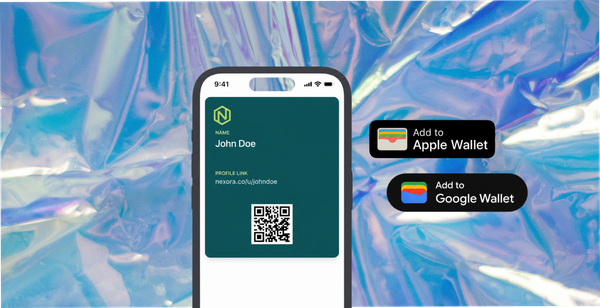
A customer submits a photo or video of your product. They fill in a quick 2-3 question form about what they like, what surprised them, what they'd change. They receive a Wallet reward - a pass that lives on their phone, ready to redeem on their next purchase.
What did you get?
First: a repeat purchase (when they redeem the reward).
Second: a rights-cleared photo or video you can use in ads, emails, social posts, in-store displays, print catalogues, or wholesale decks.
Third: customer insights - real data about what customers love, what works, what they'd change.
This isn't theory. Bazaarvoice research shows that products with user-generated content receive a 161% conversion lift, and Stackla reports that content with customer photos gets 2.4x higher engagement than brand-created content.
One reward. Three outputs. That's a fundamental shift in ROI per reward issued.
The Math: Points vs Content
Let's look at actual numbers.
Points model:
- Merchant issues 100 loyalty rewards (100 point redemptions)
- Cost: $1,000 in discounts (assuming $10 per reward)
- Output: 100 repeat purchases
- Tangible asset value: $0
Content model:
- Merchant issues 100 content rewards (100 Wallet rewards)
- Cost: $1,000 in Wallet credit (assuming $10 per reward)
- Output: 100 repeat purchases + 100 rights-cleared content assets + insights from 100 form responses
- Tangible asset value: $5,000-$15,000 (depending on how much you'd normally spend on professional photography or user-generated content licensing)
The repeat purchase is the same. The cost is identical. But the asset value is wildly different.
Add the customer insights from the form responses and you're not just collecting content. You're running embedded market research. You're learning what customers actually care about. What surprised them. What they'd change. That information informs product development, marketing messaging, and positioning.
Points generate retention. Content rewards generate retention plus marketing fuel that drives measurably lower cost per click in ads plus customer intelligence.
Forms Matter Just As Much As Content
Here's a critical detail that most merchants miss:
A photo is useful. A photo plus customer insight is strategic.
When you pair a photo submission with a 2-3 question form - "What's your favourite thing about this product?" or "What would you change?" - you're not just collecting visual assets. You're collecting data that changes how you market.
A customer submits a photo and says, "I love how durable this is - I've had it for two years." That insight tells you durability is a competitive advantage. You start emphasising it in your ads. That customer's insight is now shaping your entire marketing narrative.
A beauty brand collects 50 before-and-after photos. The form asks, "How long did it take to see results?" Half the responses say, "Two weeks." That's actionable. That's a claim you can test and potentially use in your marketing.
Research from McKinsey shows that companies using customer data in their marketing decisions are 3x more likely to see significant revenue growth. Not because the data is perfect. But because you're making decisions based on actual customer voices, not assumptions.
Points programmes don't do this. They can't. Points reward an action (purchase), not insight.
Content rewards capture both.
When Points Still Make More Sense
Let's be honest: points aren't dead. They're not wrong. They're just narrower.
Points make sense when:
- Your category has extremely high purchase frequency (weekly or more). Coffee shops, juice bars, fast food, groceries. The repeat purchase is the primary goal and photos would be noise.
- Your product isn't visually interesting enough to warrant content. Bulk supplies, office materials, industrial goods - content is less relevant.
- Your customer base prefers simplicity. Some people just want points. They don't want to submit photos. That's valid.
- You're competing on price elasticity. You need every customer to come back as often as possible. Pure retention focus.
In these scenarios, Smile.io or JeriCommerce are the right choice. They're optimised for exactly this job. Use them.
But for most Shopify merchants - especially in fashion, beauty, home, food, fitness, pets, subscription boxes, and lifestyle - content rewards generate more total value than points alone.
The Real Advantage: AI-Generated Content Is Flooding Your Market
Here's what's happening right now that wasn't true even two years ago: AI-generated product content is everywhere.
Every competitor's product pages have AI-generated lifestyle imagery. Every paid ad platform is flooded with AI-created content. Every influencer feed is starting to blend real photos with synthetic ones.
The signal-to-noise ratio has collapsed.
The one thing AI cannot generate is authentic customer proof. A real person, in a real moment, with a real product, getting a real result. That's the scarce content now. That's the content that converts. That's the content that algorithms favour because it's fundamentally different from generated slop.
Merchants who build a customer content library now - collecting real photos, real videos, real feedback - will have a structural advantage in 2027 and beyond. Not a temporary one. A permanent one.
Because by then, AI-generated content will be noise. And authentic customer content will be the signal.
Points programmes won't help you build that library. Content rewards will.
You Don't Have to Choose
Points and content rewards aren't competitive. They're complementary.
The smartest merchants run both.
Loyalty points for repeat purchases. Content rewards for building your marketing library and customer insights.
A customer buys a dress. They earn points (retention incentive). The same customer then submits a styled outfit photo using the dress. They earn a Wallet reward (content + insight).
You're not cannibalising one programme with the other. You're layering incentives. First you reward the purchase. Then you reward them for proving the purchase was good by sharing it.
82DASH handles the content side with Apple and Google Wallet rewards - instant delivery, no app download, lives on the customer's phone. Your points programme (Smile.io, JeriCommerce, whoever) handles the purchase side.
They coexist. They complement each other.
The 2026 Shopify Reality
The smartest Shopify merchants aren't choosing between loyalty and content. They're choosing both.
Here's why: the average customer acquisition cost on Shopify is between 10-20% of order value. Once you've acquired a customer, the cheapest customer to market to is the one you already have. Retention is cheaper than acquisition.
But retention programmes that only reward purchases miss one moment: the moment after the customer loves your product so much they want to show it off.
That's not just a retention moment. That's a marketing moment. That's when you get to capture their voice, their photos, their real-world use case, their insights about what works.
A points programme locks you into pure retention. A content reward programme turns retention into a springboard for content marketing, customer research, and AI-proof marketing assets - the kind of assets that reduce your customer acquisition cost because they convert better than paid-only production content.
82DASH makes this easy on Shopify. You set up a content collection campaign with optional reward by selection or fixed rewards. Share the campaign link in order confirmations, post-purchase emails, or product pages. You pair it with 2-3 form questions. You collect photos and insights. You deliver Wallet rewards to customers who submit.
Everyone who submits, whether they win or not, is now part of your content library and your customer insight database.
Pricing:
- Starter: $50/month (or $510/year, save 15%) - 200 image uploads, 200 form requests, 2 active campaigns, Apple & Google Wallet rewards, reward by selection. No video uploads. No push notifications.
- Growth: $82/month (or $836/year, save 15%) - 400 image uploads, 200 video uploads, unlimited form requests, 8 active campaigns, push notifications, reward by selection.
- Pro: $120/month (or $1,224/year, save 15%) - 1,000 image uploads, 400 video uploads, unlimited campaigns, push notifications, custom brand domain.
Push notifications are available on Growth and Pro plans only. They matter because Apple Wallet push notification open rates are 90%+, meaning your reward actually gets seen.
The retention is the same cost as points. The value you capture is orders of magnitude higher.
The Real Difference
Points generate one thing: repeat purchases.
Content rewards generate three things: repeat purchases, marketing assets, and customer insights.
At the same cost.
That's not saying points are bad. It's saying content rewards do more. They solve more problems. They generate more value per dollar spent on rewards.
If you're looking purely at customer retention, points work. They're proven, simple, and deployed at scale.
But if you're looking at total ROI - retention plus content library development plus lower CAC through better-performing ad creative plus customer intelligence plus future-proofing against AI-generated content commoditisation - content rewards pull ahead. Not by a little. By a lot.
The question isn't which model is better.
The question is: what's stopping you from running both?
Isabelle Simon - Communications Lead - 82DASH
Frequently Asked Questions
Should Shopify stores use points-based rewards or content-based rewards?
Both have a place, but they serve different goals. Points programmes drive repeat purchases and work best for high-frequency categories. Content rewards drive repeat purchases AND generate rights-cleared photos and customer insight simultaneously - at the same cost. For Shopify merchants who need both retention and a growing content library for ads and product pages, content rewards deliver more value per dollar spent.
What are content rewards on Shopify?
Content rewards are incentives delivered to customers in exchange for submitting a photo, video, or form response - rather than for making a purchase. The customer submits their content, accepts rights clearance terms, and receives a reward (Apple Wallet credit, discount, or loyalty stamp) instantly. The merchant gets the content asset, the customer insight, and the loyalty relationship from one interaction.
Do points programmes work for Shopify stores?
Yes - especially for stores in high-frequency purchase categories like supplements, coffee, skincare consumables, and pet supplies. Points programmes are well-understood, easy to communicate, and effective at driving repeat purchase behaviour when customers transact often enough to keep the momentum alive. The limitation is that they generate retention metrics but no marketing assets.
Can a Shopify store run both points rewards and content rewards at the same time?
Yes. Many merchants use points for purchase-based retention and content rewards for specific campaigns - a seasonal photo challenge, a post-launch submission drive, a review collection push. The two mechanics are complementary. Points keep regular buyers engaged; content rewards activate the customers who haven't bought recently but are still willing to engage.