Lead Capture Forms: Why Yours Converts Badly, and What to Change
Most advice on lead capture forms is about shortening them. Length matters less than the trade, and the trade is what almost nobody designs.

A lead capture form asks a visitor for contact details in exchange for something. It is the oldest mechanism in digital marketing and most implementations of it are worse than they need to be.
The usual advice is to shorten the form. That helps, and it is the smallest of the three things that matter.
One: How Much You Ask For
Every field is a decision the visitor has to make, and every decision is somewhere they can stop.
Ask for what you will actually use this week. Not what the CRM has a column for. If nobody will call the phone number, do not ask for a phone number.
Job title and company size are the usual culprits. They are there because somebody wanted segmentation, and they are answered honestly by a minority.
A practical test. Take your form, and for every field ask what decision changes based on the answer. If the answer is "none, but it is useful to know", cut it.
One exception worth keeping. A single qualifying question, phrased as something the visitor benefits from answering, often improves lead quality enough to justify the drop-off. "What are you trying to solve?" is worth more than "Company size".
Two: When You Ask
Placement decides who sees the form, and that matters more than the form itself.
| Placement | Who you get | Typical quality |
|---|---|---|
| Sitewide popup on arrival | Anyone, immediately | Weakest signal. They have not read anything yet |
| Exit intent | People leaving | Mixed. Last chance, low commitment |
| End of a relevant page | People who read it | Better. They came for the topic |
| In person, on a code or card | People who are physically present | Strong. They chose to scan |
| After a purchase | Existing customers | Different job entirely, high intent |
Those are directional rather than measured. Run two placements against each other for a month before believing any ranking, including this one.
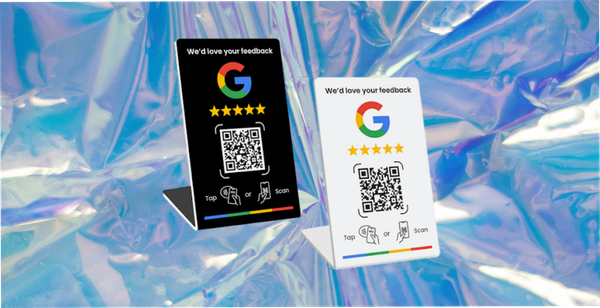
The in-person row is the one most online-first businesses ignore. Somebody scanning a code at a counter, on a receipt or at an event has actively chosen to, which is a different starting point from somebody dismissing a popup. Whether it produces better leads for you is worth measuring rather than assuming.
Three: What They Get Back
This is the part that gets the least attention and decides the most.
A lead capture form is a trade. The visitor gives you something they are mildly reluctant to give, and in return they get something. The strength of that return sets the conversion rate more than the number of fields does.
The usual return is weak. A PDF they will not read. A newsletter they did not want. A "thanks, we will be in touch" that means nothing.
Three properties separate a return worth having.
Immediate. It arrives now, not in an email that has to survive a spam filter and an inbox. The exchange completes while the visitor is still on the page.
Retrievable. They can find it again next month without searching their email. A PDF in an inbox is functionally gone within a week.
Persistent. It goes on living somewhere they look. This is the one almost nothing offers.
What a Wallet Pass Changes
Instead of a thank-you page, the visitor receives a card that saves to Apple Wallet or Google Wallet in one tap. No app, no account, no download.
It meets all three properties above. It arrives immediately, it is retrievable because it is in an app they open for other reasons, and it persists after the tab closes.
It can be either half of the trade.
A reward if the ask was substantial: a discount, a voucher, a credit.
A contact card if the ask was small: your details, a link, a way back, with no expiry.
Our guide to lead gen forms ending in a wallet card rather than a thank you page covers the campaign design, and turning a form into a wallet pass covers the mechanics.
What to Measure
Most teams track submissions and stop, which hides the two numbers that actually diagnose the problem.
| Metric | What it tells you |
|---|---|
| Views to starts | Whether the offer is worth beginning |
| Starts to submissions | Whether the form is too long |
| Submissions by placement | Which surfaces are worth keeping |
| Qualified rate | Whether you are optimising for the wrong thing |
| Second contact response | Whether the lead remembers you at all |
Views to starts and starts to submissions are different problems with different fixes. A low start rate is an offer problem. A high abandon rate mid-form is a length problem. Tracking only submissions tells you something is wrong and not which.
The last row is the honest one. A form that generates a hundred contacts who never reply again has not generated a hundred leads.
The Consent Question, Which Is Not Optional
A lead capture form collects personal data, and in the UK and EU that is regulated regardless of how small the form is.
Marketing consent is separate from the form. Somebody giving you an email to receive a voucher has not agreed to a weekly newsletter. If you intend to market to them, ask for that separately, in plain words, unticked.
Say what you will do with it, on the form. A line, not a link to a policy nobody opens. "We will email you about offers. Unsubscribe any time" does more for trust than a privacy notice does.
Have a retention position. How long you keep a lead that never converted is a decision to make deliberately rather than by default, and "forever" is a decision too.
Have a deletion route that works. A named address, and somebody who can actually find every copy when a request arrives.
The ICO publishes practical guidance for UK businesses and the EU framework runs in parallel. None of this is heavy. It is simply never urgent until the week it is.
How 82DASH Fits
82DASH is a customer content library. The part relevant here is the form and wallet builder: a branded form that ends with a pass in the visitor's Apple or Google Wallet.
That solves the third problem above directly. The visitor submits and receives something immediate, retrievable and persistent, rather than a message they close.
Two things follow.
You can reach them again through the pass, within the notification limits each platform sets, which means the form starts a channel rather than filling a spreadsheet.
Both halves of the trade are available. A reward for a substantial ask, a contact card for a small one, and the tips page on which to offer covers the choice.
The free plan covers branded forms and wallet passes up to 50 submissions a month, which is a real allowance rather than a trial. Photo and video collection are on the paid plans, and Starter and Growth include a seven-day trial. Monthly plans start at $50, with around 15% off annually. The pricing page has the detail.
Underneath it: pay your customers, not creators.
Start free with forms to Apple and Google Wallet
Isabelle Simon, Communications Lead, 82DASH
FAQs
How many fields should a lead capture form have?
As few as you will act on this week. For every field, ask what decision changes based on the answer. If nothing does, remove it. One well-phrased qualifying question is often worth keeping, because it improves lead quality enough to justify the drop-off.
Where should a lead capture form go?
At the end of a page somebody chose to read, or on a code somebody chose to scan in person. In both cases the visitor has demonstrated some interest before being asked, which is a better starting point than a popup on arrival. Whether it produces better leads for your business is worth measuring rather than assuming.
What is the best thing to offer in exchange for an email?
Something immediate, retrievable and persistent. A PDF is none of those within a week. A discount emailed later competes with everything else in the inbox. A pass saved to the phone meets all three.
Why do lead forms convert badly even when they are short?
Usually because the return is weak. Length is a real constraint and a smaller one than the trade. If what the visitor gets is a newsletter they did not ask for, shortening the form from five fields to three will not fix it.
What should I measure?
Views to starts and starts to submissions separately, because they diagnose different problems. Then submissions by placement, and whether those contacts respond to a second approach. A hundred contacts who never reply again are not a hundred leads.
Can I collect leads in person with a form?
Yes. A QR code at a counter, on a receipt or at an event reaches somebody who is physically present and chose to scan, which is a different starting point from a web visitor. It is a source worth testing against your online placements rather than one you should assume will win.
Further Reading
- Why lead gen forms should end in a wallet card, not a thank you page
- How to turn a form into an Apple or Google Wallet pass
- Combine feedback forms and content collection in one flow
- Wallet pass push notifications
- Apple Wallet developer documentation
- Google Wallet developer documentation
- QR code specification, Denso Wave
- Mobile OS market share, StatCounter