Wallet Pass Push Notifications: The Marketing Channel Brands Are Ignoring
Wallet pass notifications reach customers on the lock screen without an app install or email deliverability problem. Here is how the channel works, what it is good for, and how to build a programme without losing your audience.
Every brand has the same three channels for reaching customers after a purchase. Email, which most people ignore. SMS, which most people find intrusive. And a mobile app, which almost nobody downloads unless the brand is very large or the app does something genuinely necessary.
There is a fourth channel that sits between them, and most brands have not noticed it exists. If a customer has added a wallet pass to Apple Wallet or Google Wallet, you can send a message directly to their lock screen. No app install. No email deliverability problem. No carrier filtering.
This guide covers what wallet pass push notifications actually are, what they can and cannot do, how the engagement compares to email and SMS, and how to build a programme around them without irritating the people you are trying to reach.
From r/shopify: "You're right, I also see the current loyalty apps are overkilled and mostly using tricks to reward ppl rather than native."
Elsewhere in the same thread: "They are bad for your bottom line too. Most people are just giving away margin and have no idea if their program is incremental at all."
The word doing the work there is native. A loyalty app asks the customer to install something new. A wallet pass uses software already on their phone, sitting next to their bank cards and boarding passes. That distinction is the whole argument for this channel.
What a Wallet Pass Push Notification Actually Is
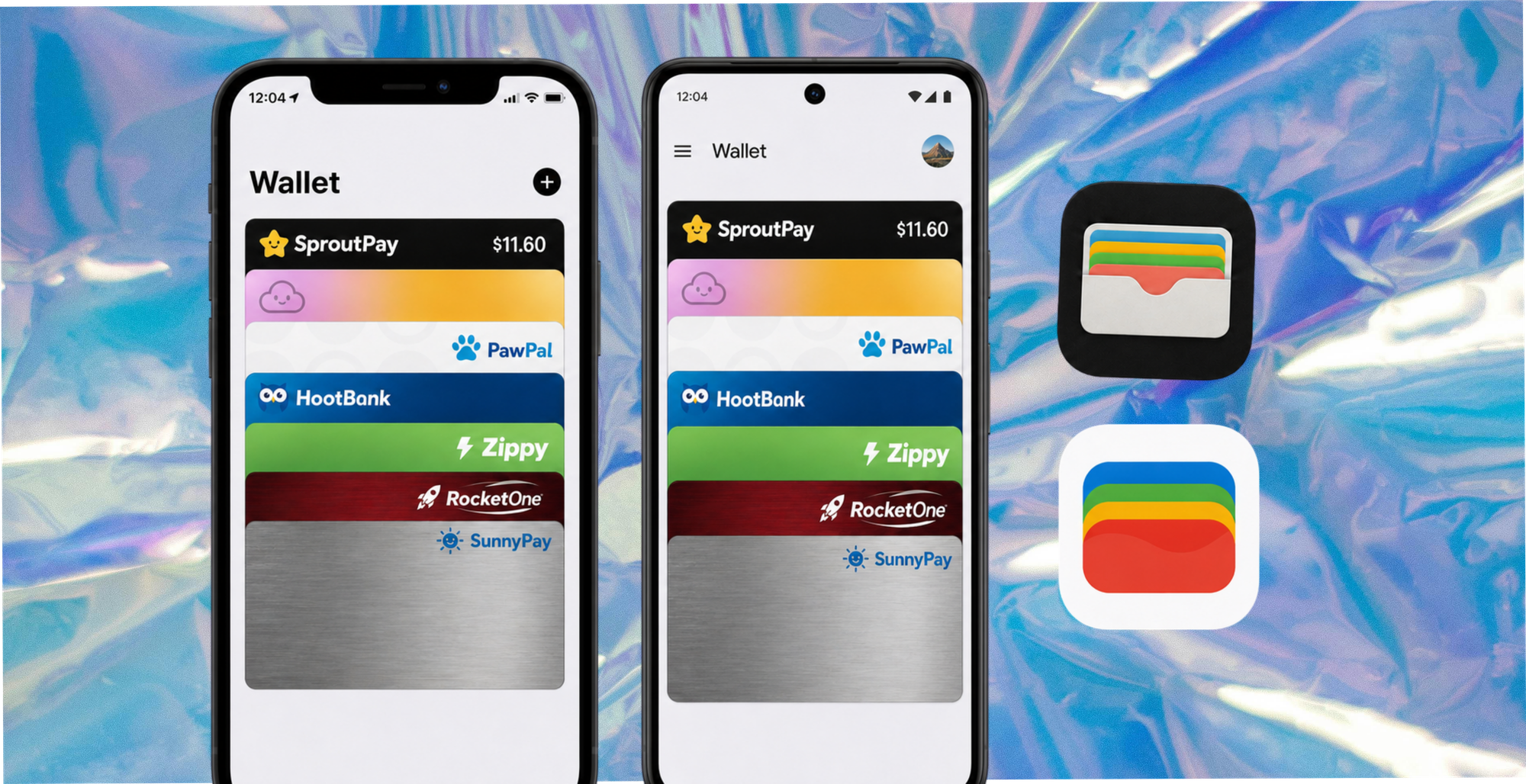
A wallet pass is a digital card stored in Apple Wallet or Google Wallet. It might be a loyalty card, a reward, an event ticket, a membership, or a contact card.
Once a customer adds that pass, the brand that issued it can update it remotely. Change the balance, change the offer, change the expiry date. And critically, that update can trigger a notification on the customer's lock screen.
The mechanics are worth understanding because they explain both the strength and the limitation of the channel.
How it works technically. The pass on the customer's phone holds a reference back to the issuer's server. When the issuer updates the pass, the phone receives a signal and pulls the new version. If the update includes a change to a field flagged for notification, the customer sees a lock screen message.
What this means in practice. You are not sending a message in the way you send an email. You are updating a card the customer already chose to keep, and the notification is the phone telling them something changed. The framing is different, and customers seem to read it differently.
The limitation. The message is short. You have roughly the length of a lock screen notification, not a paragraph. This is a channel for a single clear update, not a newsletter. Brands that try to use it like email will find it does not work and will conclude the channel is weak, when the real problem is the format.
Why Engagement Is Higher Than Email or SMS
Comparisons here need care, because the wallet pass industry publishes some very flattering numbers and not all of them are independently verified. But the directional picture is consistent across sources and it holds up to common sense.
Email. Open rates across ecommerce sit somewhere in the high teens to mid twenties depending on the list and the sender. Klaviyo and Mailchimp both publish benchmark data by industry. Most brands are competing with dozens of other marketing emails in a promotions tab.
SMS. Higher open rates than email, but customers are more sensitive to volume, and the cost per message means most brands ration it to a handful of sends per year. Twilio publishes guidance on messaging frequency and opt-out behaviour.
Wallet passes. Vendor figures for lock screen visibility on wallet notifications tend to be reported in the 80 to 90 percent range, and platforms such as PassKit document the underlying delivery mechanism. Treat the exact percentages with some scepticism, but the structural reason for high visibility is real: the notification arrives through system level infrastructure rather than a marketing channel, it appears alongside bank alerts and boarding passes rather than promotional email, and it cannot be filtered into a promotions folder because there is no promotions folder.
There is also a selection effect worth naming honestly. A customer who added your pass has already opted in more deliberately than someone who ticked a box at checkout. Some of the engagement advantage is the channel, and some of it is that the audience is better. Both are useful, but they are not the same thing.
What Wallet Notifications Are Good For
The format rewards specificity. Short, timely, single purpose messages work. Broad campaign messaging does not.
Reward availability. The customer has earned something, or something has been added to their card. This is the most natural use of the channel because it maps directly to what the pass is: a card that holds value.
Time sensitive offers. A message that is genuinely relevant today. Not a generic sale announcement, but something that expires or applies now.
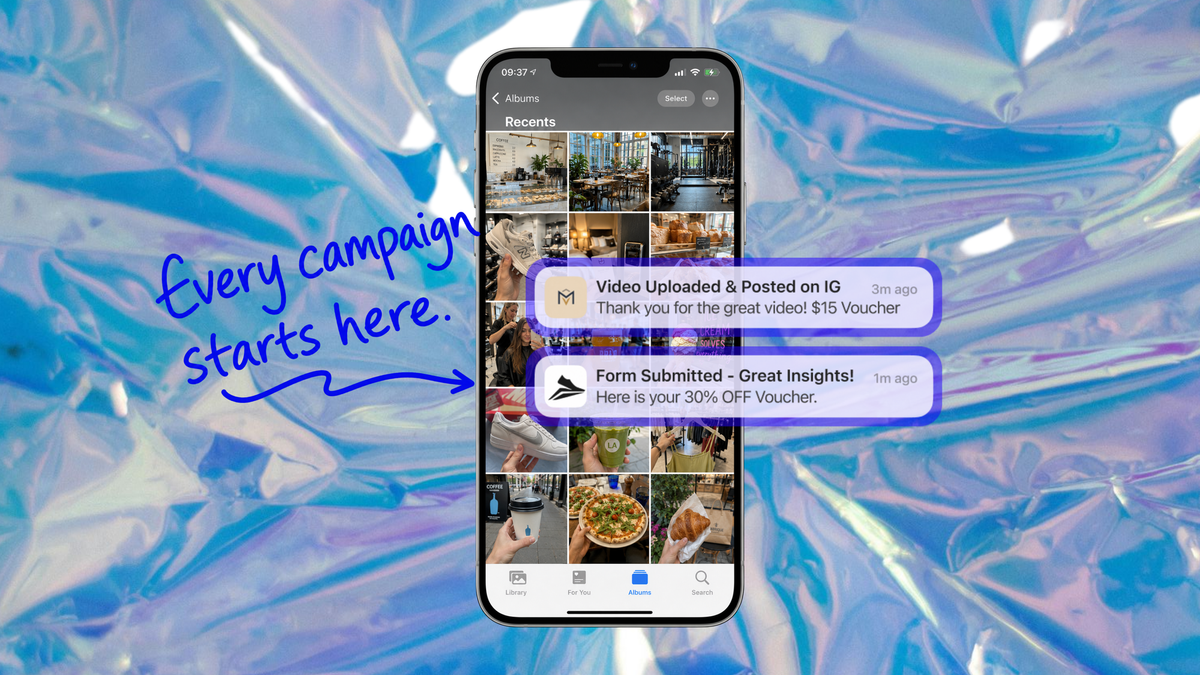
Content requests. A short message asking the customer to share a photo, video, or piece of feedback, usually attached to a reward. This works particularly well because the customer already has a relationship signal on their phone, and the request arrives in a low noise environment rather than competing with promotional email.
Location or visit triggers. Both Apple Wallet and Google Wallet support surfacing a pass based on location. A customer near your store sees the card without you sending anything.
Status and account updates. Membership renewals, tier changes, appointment reminders. Functional messages that the customer actually wants.
What the channel is bad for: long form storytelling, product launches with multiple items, anything that needs images and layout, and high frequency messaging. A brand sending three wallet notifications a week will lose passes quickly, and unlike an email unsubscribe, a deleted pass is difficult to win back.
Frequency and the Trust Question
The reason wallet notifications work is that they are rare and they matter. That is also the reason they are easy to ruin.
A useful mental model: treat the wallet pass like a bank card and the notification like a transaction alert. Customers tolerate their bank notifying them because every message is about something that actually happened to their money. If your bank sent marketing through the same channel, the tolerance would collapse.
Practical guidance most operators converge on:
Frequency. Somewhere between once a month and once every six weeks for most consumer brands. Higher for genuinely transactional updates, lower for anything promotional.
Relevance test. Before sending, ask whether the customer would be annoyed to have missed this. If the honest answer is no, do not send it.
Segmentation. The channel supports targeting by pass type, reward status, and purchase behaviour. Sending the same message to everyone with a pass is the fastest way to train customers to delete it.
Value density. Every notification should carry something the customer gets, not just something the brand wants. The ratio matters more here than in email because the tolerance ceiling is lower.
The FTC guidance on clear disclosure applies to wallet notifications as it does to any other marketing message, particularly where a reward or incentive is involved.
Building a Wallet Notification Programme
The sequence that works for most brands runs in three stages.
Stage one: get the pass onto the phone. This is the hard part and the part most brands underestimate. Nobody adds a wallet pass because a brand asked nicely. They add it because there is something in it: a reward already earned, a discount that applies now, a membership with a clear benefit, a ticket they need.
The highest converting moments are immediately post purchase, at the point of an in store transaction, and at an event where the pass has a functional purpose. QR codes on packaging and receipts work well because the customer is already holding the product.
Stage two: establish the pattern. The first few notifications set the customer's expectation for the channel. If the first message is a reward and the second is useful, the pass survives. If the first message is a generic promotion, it does not.
Stage three: build the loop. The most valuable version of this channel is not one directional. A notification that asks for something, a photo, a piece of feedback, a review, and rewards the response through the same pass, creates a cycle where the channel gets more valuable each time it is used rather than degrading through repeated asks.
That third stage is where wallet passes stop being a notification tool and become a customer content mechanism.
How 82DASH Uses Wallet Notifications
82DASH is a customer content platform. It collects rights-cleared photos, videos, feedback, and reviews from real customers, and wallet passes are the delivery mechanism for the reward that makes those customers willing to contribute.
The loop runs like this. A customer receives a content request, by QR code on packaging, an NFC tap in store, or a link after purchase. They submit a photo, a video, or feedback. Rights clearance is captured at the point of submission, so the content is usable in paid advertising rather than only on a product page. The reward lands as a wallet pass in Apple Wallet or Google Wallet.
From that point the brand has two things it did not have before: a piece of rights-cleared content in its library, and a direct notification channel to a customer who has demonstrably engaged.
The next content request goes out through the pass. No email deliverability problem, no app install, no paid reach. The customer who contributed once is significantly more likely to contribute again, and each cycle deepens the relationship rather than depleting it.
This is the difference between a wallet pass used as a loyalty card and a wallet pass used as a content engine. The first holds points. The second turns your existing customers into an always-on source of rights-cleared photos, videos and reviews, without constantly paying creators.
Install 82DASH on the Shopify App Store
For brands not on Shopify, 82DASH works with Lightspeed and Square, or standalone via QR and NFC.
Getting Started
If you have no wallet programme at all, the first question is not which notifications to send. It is what reason a customer has to add the pass in the first place.
Start with a reward that already exists. Most brands have some form of post-purchase discount, referral incentive, or loyalty benefit sitting in an email that nobody opens. Move it into a wallet pass and the redemption rate changes, because the card is in the customer's pocket rather than buried in an inbox.
Once passes are on phones, keep the first month quiet. One useful notification. Then build from there.
The brands that get the most from this channel treat it as a relationship rather than a broadcast list. That framing sounds soft, but it has a hard consequence: the value of the channel compounds if you use it carefully and collapses if you do not.
Isabelle Simon is Communications Lead at 82DASH.
Frequently Asked Questions
Do wallet pass notifications require the customer to install an app?
No. Apple Wallet and Google Wallet are built into iOS and Android. The customer adds a pass to software already on their phone, and notifications arrive through the operating system. There is nothing to download.
Can I send unlimited wallet pass notifications?
Technically yes, practically no. There is no hard platform limit, but customer tolerance is the real constraint. Most brands find that more than one or two messages a month causes passes to be deleted, and a deleted pass is much harder to recover than an email unsubscribe.
What are the benefits of a brand wallet pass?
A brand wallet pass gives you three things a loyalty app does not: adoption without a download, a card that cannot be lost the way a paper one can, and a direct notification channel to the lock screen. The message itself is short, roughly a sentence, so it suits one clear update rather than campaign copy.
Do wallet pass notifications work on both iPhone and Android?
Yes. Apple Wallet handles iOS and Google Wallet handles Android. The mechanics differ slightly between the two, but the customer experience is broadly the same and most platforms issue passes for both from a single setup.
What is the difference between a wallet pass notification and an app push notification?
An app push notification requires the customer to have downloaded and kept your app. A wallet pass notification only requires them to have added a card. Wallet passes see substantially higher adoption because the barrier is a tap rather than an install, and the pass has an immediate functional purpose.
Further Reading
- Apple Wallet: official documentation on passes and updates
- Google Wallet: Google's pass platform and developer resources
- PassKit: technical documentation on wallet pass notification delivery
- Klaviyo: email and SMS benchmark data for ecommerce comparison
- FTC: disclosure guidance for incentives and rewards in marketing