Survey Incentives: What to Offer, and What It Does to Your Data
An incentive raises your response rate and changes who responds. Both are true, and the second one is the part worth designing around.
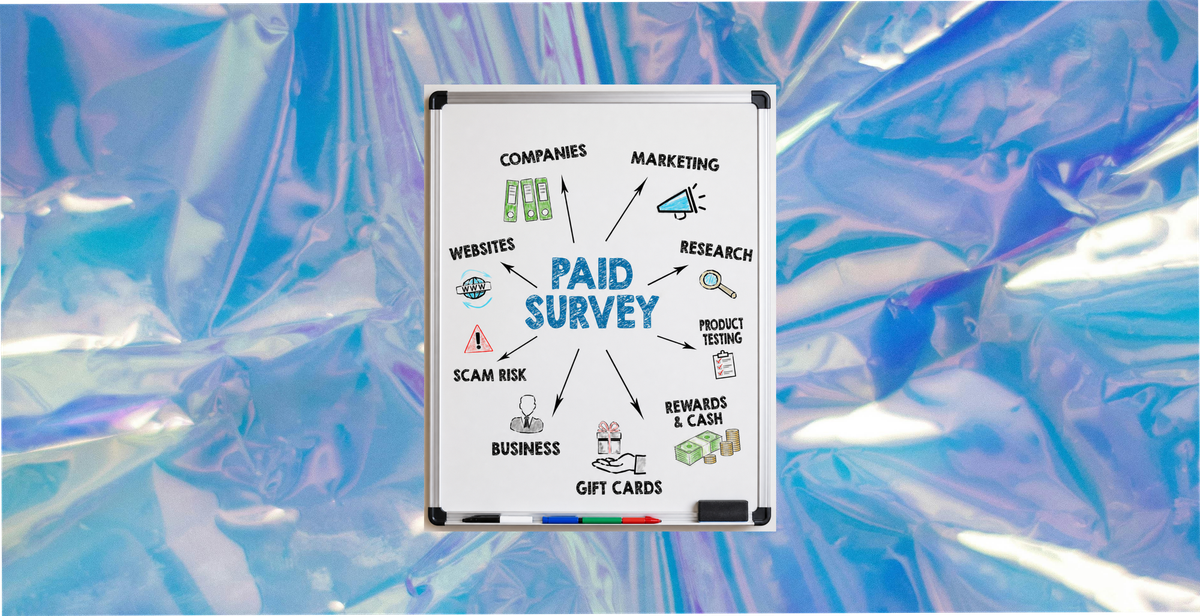
A survey incentive is something you give people for answering. The research consistently shows it can raise response rates, and it may also change who responds, which is the part most guidance skips.
Both effects are context-dependent rather than automatic. The job is choosing an incentive whose likely distortion you can live with, then measuring what actually happened.
This is general information, not legal advice. Incentive and disclosure rules differ by country and by platform, and anything running at scale deserves a lawyer.
The Two Structures, and What Each Does to Your Sample
A prize draw. Everyone who responds is entered, one person wins something substantial.
A guaranteed reward. Everyone who responds gets something smaller.
They are not interchangeable, and the difference is not only cost.
| Prize draw | Guaranteed reward | |
|---|---|---|
| Cost | Fixed, whatever the response count | Scales with responses |
| Perceived value | High headline, low expected value | Low headline, certain |
| Who it attracts | People comfortable with chance, and prize hunters | People doing a fair trade |
| Admin | Draw mechanics, terms, notifying a winner | None beyond delivery |
| Skew risk | May attract entrants rather than customers | May attract people who wanted the reward |
| Best for | Large audiences, one-off surveys | Existing customers, recurring surveys |
The skew is the thing to think hardest about. The concern with a substantial prize draw is that it can attract people who enter prize draws, some of whom have no relationship with you and may click through to reach the entry. The concern with a guaranteed reward is a mild bias towards the price-sensitive. Both are plausible mechanisms rather than measured certainties, and which matters depends entirely on who you are surveying and what you are asking. Published research on incentives is more nuanced than most marketing advice suggests: NORC's experiment on incentive amount and timing found a modest response-rate gain from raising a prepaid incentive, without measurable harm to data quality in that study, and Gallup has reported improved response and cost efficiency from small prepaid cash incentives in its own testing. Both are specific to their context. Treat them as evidence that the effect is real and conditional, not as a rule you can copy.
Prepaid versus conditional is a separate axis. Paying before somebody responds and paying on completion behave differently, and the research above points at prepaid being worth testing rather than dismissing as waste.
If You Run a Prize Draw, It Has Admin
A draw is a promotion, and promotions carry rules that a straightforward reward does not.
Written terms, published before entry. Who can enter, how, by when, what the prize is, how the winner is chosen and notified, and what happens if they do not respond.
Eligibility and geography. Age limits, excluded territories, and whether staff and their families can enter.
Free entry route, where required. Some jurisdictions require a no-purchase or free-entry alternative for a promotion of this kind. Whether yours does depends on where you are running it and how the draw is structured.
Fulfilment and tax. Who ships the prize, what happens if it is not claimed, and whether the value creates a reporting obligation for you or the winner.
Local promotion law varies considerably, including between US states and between European countries. If the prize is substantial or the draw is running across borders, this is the point to involve somebody qualified rather than copying another brand's terms.
A guaranteed reward avoids nearly all of the above, which is a practical argument for it that has nothing to do with response rates.
How Much
There is no correct number, and the useful frame is not generosity but proportion.
Match the reward to the effort honestly. Three questions is thirty seconds. Twenty questions with free text is fifteen minutes of somebody's evening. Offering the same reward for both tells respondents you have not thought about it, and the long survey will be abandoned.
Too small reads as insulting. A reward that costs the respondent more attention than it is worth is worse than no reward, because it prices the relationship.
Very large rewards are worth watching. The intuition is that if people want the reward badly enough, some will give whatever answers get them to the end fastest. It is worth saying that the NORC study cited above found no measurable data-quality harm when it raised a prepaid incentive within the range it tested, so treat this as a risk to monitor in your own free-text responses rather than a settled effect.
The practical middle is something with clear value that is not life-changing: a discount they would have used anyway, a credit against a next purchase, a small voucher.
The Rule That Decides Everything Else
Reward the act of responding, never the content of the response.
Rewarding people for positive answers does not just breach the rules, it destroys the data. The entire reason to run a survey is to find out something you did not know, and paying for a particular answer guarantees you will not.
In the United States, attaching a reward to a review makes it a testimonial under the FTC's review rule, and compensation conditioned on the response expressing a particular sentiment is exactly what Section 465.4 addresses. The FTC's endorsement guides cover the disclosure side. Our post on incentivised reviews and what the FTC rule actually says goes through it in detail.
In the UK, the Advertising Standards Authority codes take a recognisably similar position, and EU consumer rules apply across the member states.
One thing worth separating. A survey answer given privately to you is a different object from a public review. The disclosure duties bite hardest where the content is published. That does not make private feedback unregulated, and it does make it the simpler thing to incentivise.
Delivery, Which Decides Whether It Lands
An incentive nobody receives is not an incentive, and the delivery method does more work than people expect.
| Method | Arrives | Problem |
|---|---|---|
| Emailed code | Minutes to days | Competes with the whole inbox, often unopened |
| Posted voucher | Days to weeks | Expensive, and the moment has passed |
| Prize draw, announced later | Weeks | Most respondents get nothing and know it |
| Wallet pass, on submission | Seconds | Requires a tool that issues one |
Immediate delivery closes the loop while the respondent still cares. There is a good argument that this matters more than the size of the reward, though the honest position is that you should test both rather than take anyone's word for it, including ours.
The Part After the Responses Arrive
An incentivised survey produces two things that need handling, and most teams plan for neither.
Answers you have paid to receive, which you should therefore read. Free-text responses are where the value sits, and they are the first thing skipped when a summary chart is available. Twenty people describing a problem in their own words is worth more than a satisfaction score, and the wording they use is usually better copy than anything you would write.
Personal data, if the reward is tied to the response. Delivering a reward means holding something that identifies the respondent, which brings retention and deletion obligations in the UK and EU that a genuinely anonymous survey does not. It does not have to work that way: if fulfilment is separated from the answers, so that the reward record and the response record are not linked, the survey can stay anonymous. That is a design decision worth making deliberately. The ICO publishes guidance for UK businesses.
One practical note on delivery. Test the reward on an iPhone and on an Android handset before you launch. The two wallets differ, and a reward that saves on one and fails on the other turns a goodwill exercise into a complaint.
How 82DASH Fits
82DASH is a customer content library. The part relevant to surveys is the form and wallet builder: a branded form or survey that ends with a reward landing in the respondent's Apple or Google Wallet.
The design answers the sentiment problem structurally. The reward attaches to submission rather than to the content of the response, so there is no mechanism by which a more favourable answer earns more. That is easier to evidence than a policy you promise to follow.
Delivery is immediate, which removes the main reason incentives fail to land.
82DASH is not a survey platform in the sense of advanced logic, branching and statistical analysis. It is a branded form that collects answers and rewards the person for giving them. If you need conditional survey design, you want a survey tool, and you can still use this for the reward half.
The free plan covers branded forms and wallet passes up to 50 submissions a month. Photo and video collection are on the paid plans, and Starter and Growth include a seven-day trial. Monthly plans start at $50, with around 15% off annually. The pricing page has the detail.
Underneath it: pay your customers, not creators.
Start free with forms to Apple and Google Wallet
Isabelle Simon, Communications Lead, 82DASH
FAQs
Do survey incentives improve response rates?
The research generally points that way, with the size of the effect depending on the audience, the amount and whether the incentive is prepaid or conditional. They may also change who responds: a prize draw can attract people comfortable with chance, a guaranteed reward can bias towards the price-sensitive. Which of those matters more for your survey is worth testing rather than assuming.
Prize draw or guaranteed reward?
A draw costs the same whatever the response count and suits large audiences and one-off surveys. A guaranteed reward scales with responses and suits existing customers and recurring surveys. A draw also carries real administrative and legal overhead that a guaranteed reward does not, which is often the deciding factor.
How much should a survey incentive be worth?
Proportionate to the effort. Thirty seconds and fifteen minutes should not earn the same thing. Too small prices the relationship badly. Whether a very large reward degrades answer quality is less settled than it is often stated: the NORC study cited above found no measurable harm within the range it tested, so treat it as a risk to watch in your own free-text responses rather than a rule.
Can I offer an incentive for a positive review?
No. Compensation conditioned on a response expressing a particular sentiment is addressed by the FTC's review rule, and it also destroys the data, which is the point of running a survey. Reward the act of responding, whatever it says.
Do I need to disclose the incentive?
Where the material connection is not obvious to the audience, yes, and that bites hardest where the content is published rather than given privately to you. Rules differ by country, and anything at scale is worth putting past a lawyer.
What is the best way to deliver the reward?
Immediately, in a form the respondent can retrieve later. Emailed codes compete with the inbox and posted vouchers arrive after the moment has gone. A pass saved to the phone arrives in seconds and stays findable.
Further Reading
- Why incentivising reviews is not buying them
- The incentivised feedback loop
- How to collect customer feedback without being annoying
- NPS for hospitality: collect and act on guest feedback
- FTC endorsement guides
- Advertising Standards Authority, UK
- European Union consumer protection
- Apple Wallet developer documentation