Incentivized Reviews: What the FTC Rule Actually Says
The line is not whether you rewarded the review. It is whether the reward depended on what the review said. Most coverage blurs the two.
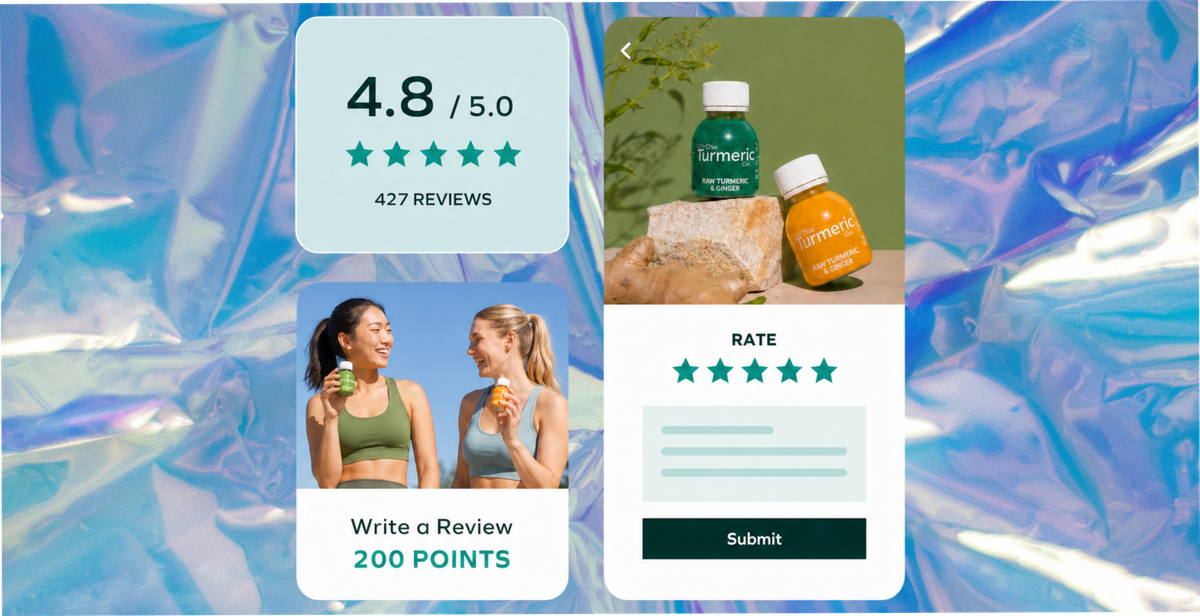
An incentivized review is a review written in exchange for something: a discount, loyalty points, a free sample, an entry into a draw.
They are legal in the United States. What is not legal is making the reward depend on the review being favourable. That single distinction does most of the work here, and a great deal of published advice blurs it.
This is general information, not legal advice. Rules differ by country and by platform, and anything running at scale deserves a lawyer.
The Rule, and What It Covers
The FTC's Rule on the Use of Consumer Reviews and Testimonials took effect on 21 October 2024. It allows courts to impose civil penalties for knowing violations.
On incentives, the rule's own guidance is direct:
"If a business pays for or gives incentives for consumer reviews of its business, products, or services, then those incentivized reviews would also be considered consumer testimonials under the rule."
So the moment you attach a reward, the review becomes a testimonial in the rule's terms and the rule's provisions apply to it.
The provision that matters is Section 465.4. A business can be liable where it provides compensation or other incentives conditioned on the writing or creation of consumer reviews expressing a particular sentiment.
Read that slowly, because the operative words are conditioned on and expressing a particular sentiment. Both halves matter.
The table below is the position under the FTC rule only. Platform policies are separate and several are stricter, so read the next section before designing anything.
| What you do | Position under the FTC rule | Also check |
|---|---|---|
| Reward anyone who leaves a review, whatever it says | Not the conduct 465.4 targets | Disclosure where the connection is not obvious. Platform policy, which may prohibit it outright |
| Reward only the reviews you consider positive | The conduct 465.4 targets | Platform policy prohibits this too |
| Reward more for five stars than for three | The same problem, by degree | As above |
| Ask for honest feedback and reward it | Not the conduct 465.4 targets | Disclosure. Platform policy |
| Ask customers to "share the love" and reward it | Conditioning on sentiment by implication. Risky | As above |
| Offer no incentive at all | Nothing to disclose, nothing to condition | Nothing, and you will get far fewer reviews |
The FTC's guidance does not require you to stop incentivising. It requires you to stop paying for an opinion.
The platform layer is where most businesses actually get caught. Google prohibits incentives in exchange for any review, favourable or not, which is stricter than the FTC rule. Amazon, Yelp and Tripadvisor all run their own restrictions. Whatever the FTC permits, the surface the review appears on governs what you can do there.
Two More Sections Worth Knowing
Section 465.7, review suppression. Worth being precise here, because this section is widely misquoted. 465.7(a) covers using unfounded legal threats, physical threats, intimidation, or knowingly false public accusations to get a review removed or changed. 465.7(b) covers misrepresenting that the reviews displayed on a surface you control represent most or all of those submitted, when negative ones have been suppressed.
So a moderation policy that quietly removes reviews you dislike, on your own site, while presenting what remains as the full picture, is the 465.7(b) problem. Responding aggressively to a bad review is the 465.7(a) problem. Both are separate from the incentive question, and both are separate again from platform policy.
Section 465.8, fake indicators of social media influence. Bought followers and bought engagement.
Neither is about incentives directly. But a business running an incentivised programme is usually also making moderation decisions, and the two sit in the same rule.
The Disclosure Point Almost Everyone Gets Wrong
This is the detail that separates accurate coverage from the rest.
The review rule's own disclosure requirements relate only to company insiders: officers, managers, employees and their immediate relatives writing reviews without disclosing the relationship.
The obligation to disclose an incentive given to an ordinary customer does not come from this rule. It comes from the FTC Act and the endorsement guides, which require a material connection between endorser and business to be disclosed clearly where that connection is not obvious to the audience.
The practical instruction is the same, which is why the conflation survives: disclose the incentive. But the two duties have different sources and different scopes, and anyone citing the review rule as the source of a disclosure duty for customers has not read it.
"This Review Was Collected as Part of a Promotion"
If you have seen that line under a review and wondered what it means, it is a disclosure label. The reviewer received something in exchange for writing, and the retailer is flagging the material connection.
It usually means one of three things:
- The reviewer received a free or discounted sample
- The review came from a sampling or seeding programme
- Loyalty points or a voucher were given for reviewing
It does not mean the review is fake, bought, or that a positive opinion was required. It means the connection has been declared, which is the system working rather than failing.
As a shopper, the useful signal is not the label but the spread. A product where every labelled review is glowing and every unlabelled one is lukewarm is telling you something. A product where both look similar is telling you something else.
As a business, that label is what compliance looks like in public. Labelled incentivised reviews are not a weakness to hide. Unlabelled ones are the risk.
What a Compliant Programme Looks Like
Reward the act, never the sentiment. The reward lands when the review is submitted, whatever it says, and your terms should say exactly that.
Say so in the ask. "Leave a review, good or bad, and get $10" removes the ambiguity in the request itself, which is where most programmes go wrong before a single review is written.
Disclose with the content, not in terms nobody opens. The disclosure should travel with the review wherever it is displayed or syndicated.
Do not filter by rating, at collection or at display. Routing four and five stars to a public page and one and two stars to a private inbox is prohibited outright by Google's review policies. Under the FTC rule it becomes a problem where you present the surviving reviews as representative of all of them, which is the 465.7(b) territory described above.
Keep the record. Which customer, what incentive, what date, what was disclosed. If the programme is ever questioned, its design is your answer, and the design has to be evidenced.
Do not reward your own staff for reviews. That is the insider provision, and it is the part of the rule that imposes a disclosure duty directly.
Reviews Are Not the Only Thing You Can Reward
Worth separating, because the risk is different.
A review is an opinion, and opinions are where the sentiment problem lives. A photograph is not an opinion. Rewarding a customer for sending a photo of the product in their kitchen raises no question of buying a favourable view, because there is no view being expressed.
The material connection still needs disclosing where it is not obvious. But the sentiment trap does not apply, which makes content collection a structurally cleaner thing to incentivise than reviews.
The platforms you sell through run their own review policies, and several are stricter than the FTC's. Google prohibits incentivised reviews on business profiles outright, whatever US law permits. Check the policy of every surface a review will appear on, because the strictest one governs it.
Outside the United States
The FTC rule is US law. The underlying principle travels, and the wording does not.
United Kingdom. The Advertising Standards Authority administers the advertising codes, and the position on incentivised reviews is recognisably similar: the incentive has to be made clear, and it must not be contingent on a favourable opinion. Consumer protection legislation covers misleading commercial practices alongside it.
European Union. Consumer protection rules across the EU require traders to say whether and how they ensure published reviews come from genuine purchasers, and to avoid submitting or commissioning false reviews. In several member states this has led to enforcement against practices the FTC rule also targets.
The instruction that survives every version. Reward the act, disclose the connection, never buy the sentiment. If a programme is built that way it tends to satisfy whichever regime it lands in, which is a better foundation than tuning to one set of rules and hoping.
How 82DASH Fits
82DASH is a customer content library. It collects photos, videos and feedback directly from customers, and a reward lands in their Apple Wallet or Google Wallet when they submit.
The design answers the sentiment problem structurally rather than by policy. The reward attaches to the submission, not to what was submitted, so there is no mechanism by which a more favourable opinion earns more. A structural answer is easier to evidence than a rule you promise to follow.
82DASH is not a review platform and does not publish reviews to product pages. What it collects is content and feedback, which is the cleaner half of this subject for the reason above.
Usage terms are captured at submission and the agreement stays attached to the file. The rights management page sets out how.
On plans. The free plan covers branded forms and wallet passes, up to 50 submissions a month. Photo and video collection are on the paid plans, and Starter and Growth include a seven-day free trial. Monthly plans start at $50, with around 15% off annually, and the pricing page has the current detail.
Underneath it: pay your customers, not creators.
Start free with forms to Apple and Google Wallet
Isabelle Simon, Communications Lead, 82DASH
FAQs
Are incentivized reviews legal?
In the United States, yes, provided the incentive is not conditioned on the review expressing a particular sentiment and the material connection is disclosed where it is not obvious to the audience. Rewarding anyone who reviews is fine. Rewarding only the favourable ones is what the rule prohibits.
What does "this review was collected as part of a promotion" mean?
It is a disclosure label. The reviewer received something, usually a free sample, a discount or loyalty points, in exchange for writing. It does not mean the review is fake or that a positive opinion was required. It means the connection has been declared.
Can I offer a discount for a five-star review?
No. That is compensation conditioned on sentiment, which is what Section 465.4 addresses. Offer the same reward for any honest review, whatever the rating.
Do I have to disclose the incentive?
Where the material connection is not obvious to the audience, yes. That duty comes from the FTC Act and the endorsement guides rather than from the review rule, whose own disclosure requirements concern company insiders. The practical answer is the same: disclose it, with the content.
Can I delete negative reviews?
Section 465.7 of the FTC rule addresses review suppression, with 465.7(b) covering the case where a surface you control displays a filtered set while implying it represents all reviews submitted. Google separately prohibits discouraging negative reviews. Removing content that breaks a published policy, such as abuse or spam, applied consistently regardless of rating, is a different matter from removing reviews because they are critical.
Is rewarding a photo the same as rewarding a review?
Not quite. A photograph is not an opinion, so the sentiment question does not arise in the same way. The material connection still needs disclosing where it is not obvious, but no favourable view is being purchased.
Further Reading
- Why incentivising reviews is not buying them
- The incentivised feedback loop
- How to reward customers for reviews and UGC
- New York's synthetic performer disclosure law
- FTC: Consumer Reviews and Testimonials Rule, questions and answers
- FTC endorsement guides
- US Copyright Office
- Shopify
- Advertising Standards Authority, UK
- European Union consumer protection