Progress Photos: How to Get the Second Half of the Pair
Every tool solves showing a before-and-after. Almost none solve getting the second photo six weeks later, which is the only hard part.
Getting the second progress photo takes a channel that still reaches the customer weeks later, a record that links both photos to one person, and a reward released only on completion. The first photo is easy. The second is where these campaigns die.
Which is the odd thing about this category. Every tool in it solves the display problem, with sliders, galleries, comparison widgets and embeds. There is no shortage of ways to show a before-and-after once you have one. Almost nothing solves retrieval, which is the only part that is actually hard.
Why Most Progress Photo Campaigns Die Between the First and the Last
The economics of the first submission and the last submission are not remotely similar, and treating them as one campaign is the mistake.
The first photo is collected at the moment of peak enthusiasm. The customer has just bought, just booked, just started. They are physically present, or on your confirmation page, or holding the product. Attention is high and the ask is cheap.
The last photo is collected from someone who has moved on. Not unhappy, just elsewhere. They have had four to twelve weeks of ordinary life since they thought about you. Whatever enthusiasm powered the first submission has been spent, and the thing you need now has to survive on structure instead.
Most campaigns budget effort as though both ends are the same. In practice the second half needs most of the design.
The Two-Moment Capture Problem Nobody Builds For
Single-moment collection is a solved problem. A QR code on a receipt, a link in a post-purchase email, a tap in store: the customer acts while the context is still live, and the context is doing the persuading.
Two-moment collection breaks every assumption in that model. The second ask arrives with no context at all. There is no receipt in their hand, no shop they are standing in, no email they were expecting. You are reaching into an ordinary Tuesday six weeks later and asking someone to go and stand in the same spot in the same light and take the same photo again.
That requires three things most campaigns do not have:
- A channel that still reaches them. Not one that technically delivers, one they still look at.
- A record that links both submissions to one person, so the pair can actually be matched afterwards.
- A reason to finish that is worth more than the effort of the second photo, which is higher than the effort of the first because the novelty has gone.
Get all three and the format works reliably. Miss any one and you collect halves.
Why Email Reminders Fail at Week Four
Email is the default answer and it is the weakest available option, for a reason that has nothing to do with copywriting.
A marketing email sent four weeks after purchase lands in an inbox where your previous emails have already been triaged into the ignore pile. The customer is not rejecting this specific message. They sorted your sender weeks ago and the sorting is doing its work. Promotions tabs, bulk folders and muted senders all compound it.
The honest comparison across channels:
| Retrieval channel | Still reaching them at week four? | Needs an install? | Typical failure mode |
|---|---|---|---|
| Marketing email | Weakly. Sender already triaged | No | Filtered into promotions, never opened |
| Transactional email | Better, if genuinely transactional | No | Reads as marketing, gets reclassified |
| SMS | Yes, but intrusive and costly at volume | No | Opt-out rates and per-message cost |
| Push via your own app | Yes, strongly | Yes, a full app install | Almost nobody installs an app for one campaign |
| Push via a wallet pass | Yes. Wallet is already on the phone | No | Customer deletes the pass, which is rare |
| Instagram DM | Only if they follow and check requests | No | Request folder, no reliable delivery |
| Printed card or leaflet | No. Physical items are lost within days | No | Thrown away with the packaging |
| Phone call | Yes, but unscalable and unwelcome | No | Does not survive past a handful of customers |
The row that matters is the fifth. A wallet pass is the only channel on that list that combines native push with no install requirement, because Apple Wallet and Google Wallet are already on the device. You get the reach of an app without asking anyone to download one.
Worth being precise about the limits, because they differ. Meta and the social channels are not in this comparison at all, since none of them will reliably reach somebody who has not opened the app that week. On the wallets: Apple triggers a notification when a field on the pass changes and documents no daily cap, while Google caps notifications at three per pass per 24 hours and controls the lock-screen wording itself. 82DASH sends at most one per pass per day on either platform, which sits comfortably inside both.
What a Photo Submission Form Needs to Link Both Halves to One Customer
The form is the unglamorous half of this and it is where pairs get lost.
A photo submission form built for single submissions treats every upload as a standalone event. Two photos from the same person arrive as two unrelated records, and matching them later becomes manual work that nobody does. By the time you have two hundred submissions, reconstructing which "after" belongs to which "before" is a job rather than a query.
What the form has to carry:
- A stable identifier for the customer across both submissions, so the pair joins automatically rather than by someone eyeballing thumbnails
- A position in the series, so you know which submission this is and how many remain
- The same brief at both ends, because consistency between the photos is the entire value and a changed instruction destroys it
- Rights captured at the point of submission, not chased afterwards by email
- A progress state the customer can see, since people finish things they can see themselves part-way through
Most form builders give you none of this, because they were built to collect one response from one person once. That is a reasonable thing to build. It is just not this.
UGC vs CGC: Why Progress Photos Have to Be Submitted, Not Found
You cannot source progress photos from hashtags, and it is worth being clear about why, because brands keep trying.
UGC, in the strict sense, is content a customer posted publicly that you then found. For most formats that is workable. For progress photos it fails at the first step, because people post the result and not the starting point. The "before" almost never exists publicly, since nobody photographs the problem for their own feed. And where both halves do exist, they were shot months apart with no attempt at consistency, so the comparison is not usable.
Customer-generated content is the opposite arrangement: content submitted directly to you, against a brief you wrote, with rights cleared as it arrives. UGC is a stream you can watch. CGC is a library you can plan. CGC vs UGC sets out the distinction properly, and UGC usage rights covers what each one lets you legally do.
For this format the practical difference is absolute. There is no version of hashtag monitoring that produces a matched, consistent, rights-cleared pair from a named customer. It has to be requested, and the request has to hold across weeks.
How 82DASH Retrieves the Second Progress Photo
82DASH is a customer content library platform. It collects rights-cleared photos, videos and feedback from real customers through a QR code, an NFC tap or a link, and delivers the reward to Apple Wallet or Google Wallet with nothing to install.
Challenge mode is the part that handles multi-submission requests. It asks for a series over time and releases the reward on completion, and the mechanics map directly onto the three requirements earlier in this post.
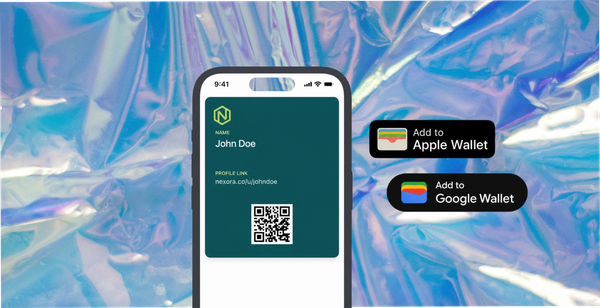
The channel. On the first submission the customer receives a pass in Apple Wallet or Google Wallet showing how many submissions are done, when the next is due, and what the reward is. The pass sets its relevant date to the next due date, which means it surfaces on the lock screen at the point it becomes useful rather than sitting in a list waiting to be remembered. A notification fires before each window closes. Email carries exactly one reminder, by design, because a second one teaches people to filter the first. Wallet pass push notifications covers the channel in full, and using wallet passes to keep customers coming back covers the wider pattern.
The record. Both submissions attach to the same customer and the same series automatically, with the position in the sequence stored alongside each one. Reviewing a series shows the pair together rather than as two orphan uploads, and reviewing, tagging and managing submissions works the same way whether the series has two submissions or thirty. Rights are cleared as each submission arrives, so there is no permissions chase afterwards.
The reason to finish. The reward releases on completion rather than on the first submission, and rights vest with the reward. An incomplete series grants no licence, which is worth stating plainly in both directions: you cannot use a lone "before", and the customer knows their photo is not being used unless they finish and are paid for it. How rights management works covers the detail.
There is a second-order effect that matters more than the campaign in front of you. Because the customer submits directly and the pass stays on their phone, you end up knowing who creates content for you. That relationship is yours rather than a platform's, and the second request to the same person costs a fraction of the first. Campaigns that run through a creator network reset to zero when the contract ends. This compounds.
Start free with forms to Apple and Google Wallet
Push Notification Timing: When to Ask for the Next Progress Photo
Timing is where otherwise sound campaigns lose submissions.
Send the reminder on the due date itself, not days ahead. An early reminder arrives before the customer has anything to photograph, which trains them to dismiss it, and the dismissal carries over to the one that matters.
Give the window a buffer of two or three days either side of the due date. Real people are busy on arbitrary days, and a buffer converts a missed day into a late submission rather than a dead campaign.
Remind once per window, not repeatedly. A second notification inside the same window reads as nagging and raises the odds the pass gets deleted, which costs you the channel permanently.
Recalculate remaining dates after every submission so they compress rather than break. If someone submits late, the schedule should absorb it quietly. Nothing kills completion faster than telling a customer who just did what you asked that they have failed.
Incentives That Actually Get the Second Photo Sent
Customers price effort accurately, and the second photo costs more than the first in every way that matters to them.
Size the reward against the whole series rather than the submission count. A twelve-week commitment with a token discount attached will be declined at the join screen by people who would have accepted a four-week one, and nothing about the reminder design rescues a badly priced ask.
Put the entire reward at the end. Splitting it across submissions sounds fairer and performs worse, because a customer who has already received something has less reason to return.
Make the reward concrete before they start. A customer who knows exactly what they get is deciding whether the trade is worth it. A customer told the reward depends on how their photo performs is being asked to carry risk on your behalf, and most will decline.
And be clear that nothing has to be posted anywhere. The reason progress photos are hard to get is not that people are unwilling, it is that they are being asked to publish something personal in front of people whose opinion of them matters. Remove the public post and the ask becomes far easier to accept: a private photo, a known reward, nobody watching. Around 79% of customers who would share content about a brand will not do it publicly but will submit directly, and intimate formats like progress photos sit squarely inside that majority.
Written by Isabelle Simon, Communications Lead, 82DASH
FAQs
What is a progress photo in a marketing context?
One submission in a series taken by the same customer at set intervals, where the value is the comparison between them rather than any single image. Before-and-after pairs are the two-submission case.
How do I stop customers dropping out between submissions?
Put the request on a channel that still reaches them weeks later, give each submission a window with a buffer rather than a hard date, remind once per window, and release the reward only on completion.
Can I collect progress photos without building an app?
Yes. Submissions run through a browser link, QR code or NFC tap, and the progress tracking and reminders sit in Apple Wallet or Google Wallet, which are already installed on the phone.
How many progress photos should a series ask for?
Two for a before-and-after. Longer series work for genuine diary formats, but completion falls with every additional submission, so ask for the fewest that still tells the story.
What happens to photos from a customer who never finishes the series?
Under a completion-based licensing model, nothing. No licence is granted, so the content cannot be used. That is the correct outcome: it keeps the library clean and it is what the customer agreed to.