Contact Cards in Apple and Google Wallet: What They Are and When to Use One
A reward card gives somebody a reason to come back once. A contact card keeps you on their phone indefinitely. The two are not interchangeable.
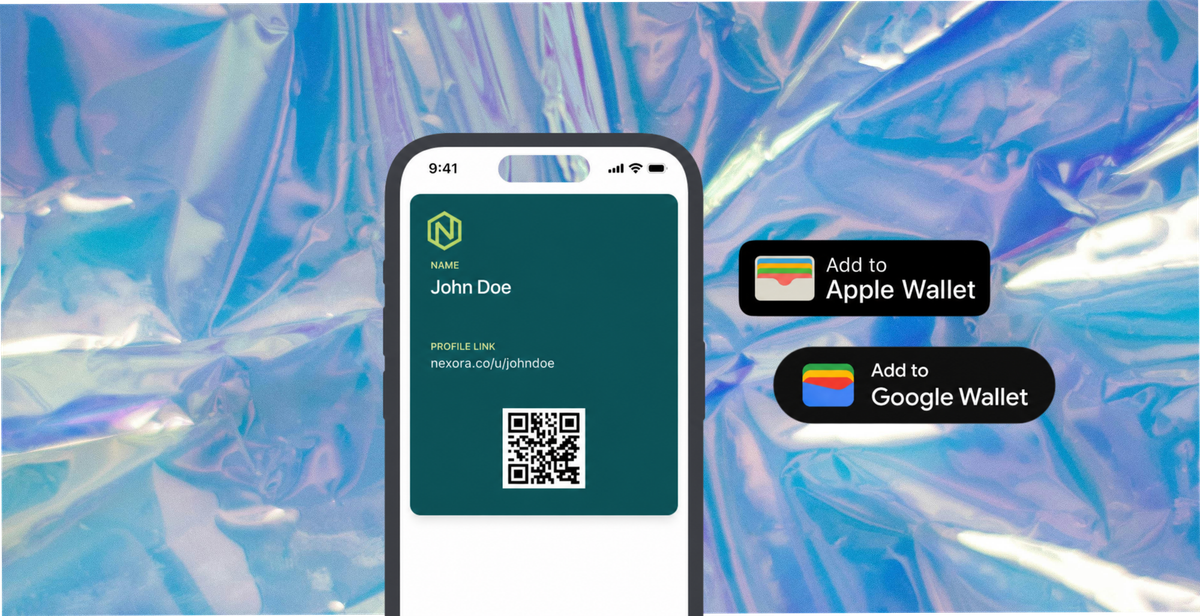
A contact card in Apple or Google Wallet is a branded card holding your details, sitting alongside somebody's bank cards and boarding passes. It is usually configured without an expiry and with nothing to redeem. Its whole job is to keep you one tap away rather than one search away.
It is not the same thing as a saved phone contact, and not quite the same as a digital business card. The differences matter when you are deciding what to issue.
Three Things That Get Confused
| Phone contact | Digital business card | Wallet contact card | |
|---|---|---|---|
| Where it lives | The contacts app | A web page, usually | Apple or Google Wallet |
| Who it is for | Anyone | Usually one person networking | Usually a business and its customers |
| Branded | No | Yes | Yes |
| Can you update it after | No | Yes | Yes |
| Notifications | No | No | Yes, within platform limits |
| Needs an app | No | Sometimes | No |
| Found when they need you | If they remember your name | If they kept the link | It is in the wallet they already open |
The practical difference is retrieval. A phone contact requires remembering your name to search for. A link requires having kept the link. A wallet card sits in an app the customer already has installed and already opens for payment cards and tickets, which is a shorter route back to you than either.
Contact Card or Reward Card
Both are wallet passes. The choice changes what the pass is for, and it mostly comes down to how big the ask was.
| Reward card | Contact card | |
|---|---|---|
| What it holds | A discount, voucher or credit | Your details, a link, a way back |
| Best after | A survey, feedback, a photo, real effort | A signup, an enquiry, a waitlist, an event |
| Customer sees | Something worth money now | A reason to keep you to hand |
| Expiry | Set one, it creates urgency | Usually left off, by choice |
| Risk | Discount liability if uncapped | Lower perceived value, so lower completion |
| The relationship | Transactional, then over | Ongoing, quietly |
The rule of thumb: match the reward to the effort. A customer who filled in five questions and uploaded something has done real work and expects something of value. A customer who left an email address at an event has done almost nothing, and offering them a discount for it feels like a transaction neither party asked for.
Our tips page on contact card or reward card goes through the decision in more detail.
When a Contact Card Is the Right Answer
Events and trade shows. Somebody stops at the stand, you want them to remember you next week. A reward makes no sense. A card that sits in their wallet next to the boarding pass home does.
Enquiries and waitlists. They have asked about something and are waiting. The card is the waiting room, and you can update it when the answer arrives.
Services with a long gap between visits. Dentists, garages, salons on a six-week cycle, anything annual. The customer does not need a discount today. They need to find you in four months without searching.
B2B and professional services. Where a discount would be inappropriate and a way back is the entire point.
After a lead gen form. Which is the case our guide to lead gen forms ending in a wallet card covers in full.
What Goes on It
On the front: your name, the logo, and one line saying what you do. Not three lines. The front of a wallet card is small and a cluttered one reads as advertising rather than as something they own.
On the back: phone, email, address, opening hours, a link to book or buy, and social handles if they matter. This is where detail belongs, because the customer only sees it when they have deliberately turned the card over.
The thing most people leave off: a reason to open it. A card with only contact details is a business card. A card that also shows something that changes, an opening time, a next appointment, a current offer, is a card somebody looks at.
Where It Falls Down
Nobody asked for it. A contact card pushed at somebody who did not want one is deleted immediately, and a deleted pass cannot be won back. It should be offered in exchange for something they wanted to do anyway.
It is a business card with no reason to exist. If you never update it and never notify, it is a digital version of a thing that used to go in a drawer.
The front is too busy. Three lines of positioning on a card the size of a credit card.
No route back. A contact card whose link goes to a homepage rather than to the thing the customer cared about wastes the tap.
Two Things That Differ by Platform and by Country
Notifications are not equivalent across the two wallets, and neither is a free-form marketing channel. On Apple, a notification is triggered by updating a field on the pass, and the text the customer sees on the lock screen is the change message attached to that field. You write it, and Apple documents no daily cap, but it is tied to something on the card actually changing rather than being an arbitrary push. On Google, you add a message flagged to notify, which works on the generic pass type as well as loyalty and ticket types, but you are capped at three per pass per 24 hours and Google controls the lock screen wording. Check what you can actually send on Android before building a plan around it.
A contact card usually involves personal data. The customer gave you an email or a phone number to receive it, and in the UK and EU that brings obligations a wallet pass does not remove: a lawful basis for holding it, a retention position, and a route to deletion when somebody asks. The ICO publishes guidance for UK businesses.
Neither is a reason not to issue contact cards. Both are reasons to decide the answer before somebody asks you for it.
How 82DASH Fits
82DASH is a customer content library. The part relevant here is the form and wallet builder: a branded form that ends with a pass in the customer's Apple or Google Wallet, and that pass can be a reward or a contact card.
Both are on the free plan, which covers branded forms and wallet passes up to 50 submissions a month. That is enough to run a real event or a real enquiry flow rather than a demonstration.
Three things worth knowing.
The card is issued at the end of a form, so you get their details and they get yours in the same interaction. That symmetry is why people accept it.
You can update it after they have saved it. Opening hours, a new link, a changed offer. The card in their wallet changes without them doing anything.
It can notify the holder when something on the card changes, within the platform limits, which differ between Apple and Google and are worth understanding before you build a plan around them.
Photo and video collection are on the paid plans, and Starter and Growth include a seven-day trial. Monthly plans start at $50, with around 15% off annually. The pricing page has the detail.
Underneath it: pay your customers, not creators.
Start free with forms to Apple and Google Wallet
Isabelle Simon, Communications Lead, 82DASH
FAQs
What is a contact card in Apple Wallet?
A branded pass holding your business details, saved alongside the customer's bank cards and tickets. It is usually configured without an expiry and with nothing to redeem. It can be updated after saving, and an update can surface a notification within the platform's limits.
How is it different from a digital business card?
A digital business card is usually a web page, aimed at an individual professional networking, and found only if the recipient kept the link. A wallet contact card lives in an app the customer already opens, is usually issued by a business to its customers, and can be updated and notified afterwards.
Contact card or reward card, which should I use?
Match it to the effort. A reward card suits an ask that took real work, such as a survey or a photo. A contact card suits a small ask such as an enquiry, an event signup or a waitlist, where the relationship rather than the transaction is the point.
Do contact cards expire?
Usually not, though that is a choice you make when you build the pass rather than a rule the wallet imposes. Issuing it without an expiry is what makes it suited to long gaps between visits, and what makes it poor at creating urgency.
Can I change the card after somebody saves it?
Yes. Opening hours, links and displayed information can be updated and the customer's copy changes without any action from them. That is what separates it from a printed card.
Does the customer need an app?
They do not need one from you, and there is no 82DASH app to install. Apple Wallet is built into every iPhone. Google Wallet is available on supported Android devices and may already be installed, though availability varies by country and device. Saving is one tap from a link or a QR code.
Further Reading
- Why lead gen forms should end in a wallet card, not a thank you page
- How to turn a form into an Apple or Google Wallet pass
- Wallet passes for business
- Wallet pass push notifications
- Apple Wallet developer documentation
- Google Wallet developer documentation
- Mobile OS market share, StatCounter
- QR code specification, Denso Wave