Shopify Customer Rewards Without an App: The Wallet Pass Guide
Loyalty apps ask customers to install something. Most won't. Wallet passes deliver the same rewards via apps customers already have, and the engagement and cost maths are dramatically better.
Every loyalty app on Shopify is, in effect, asking your customer to install a second app for your brand. They already have one - your store. Now they're being asked for another.
Most won't. The ones who do mostly stop opening it within a fortnight. The ones who keep opening it mostly never earn enough to redeem. And the brand operating the loyalty app is paying a monthly fee for a customer surface that the vast majority of customers never engage with.
The Shopify brands that pulled ahead on retention in 2026 didn't pick a different loyalty app. They got rid of the app entirely and moved their reward layer onto something every customer already has on their phone: Apple and Google Wallet.
Here's how the model works, and why it converts where loyalty apps don't.
The Loyalty App Problem on Shopify
Loyalty apps were built for a world where every brand was building its own audience and customers had room on their phones for one more icon. That world ended around 2018, and industry research from Bond Brand Loyalty and Forrester has documented a steady decline in active loyalty-app engagement since.
Three structural drags on the loyalty-app model:
Install friction. Asking a customer to install an app to earn a reward is a high-cost ask. Industry research from data.ai, Sensor Tower, and Adjust consistently shows the average phone has roughly 80 apps installed, of which fewer than 30 are used in any given month. A loyalty app for a single Shopify brand competes for the bottom of that list, against the customer's bank, calendar, and messaging apps.
Engagement decay. Of customers who do install, a meaningful share never log in again after the first session. The reward sits in an app the customer doesn't open. The brand's only push channel - app notifications - is the most-disabled permission on iOS and Android, per platform-level data published by Apple and Google.
Cost-to-value mismatch. The brand pays a monthly subscription for the loyalty app, plus the cost of redeemable rewards, plus the engineering or operations time to manage tiers. The customer who never logs in is a pure cost; the customer who logs in but never redeems is also a cost. The maths only works at scale and at high engagement, which most Shopify stores don't reach.
The loyalty app isn't broken. It's just sitting in the wrong place.
Why Wallet Passes Work Where Loyalty Apps Don't
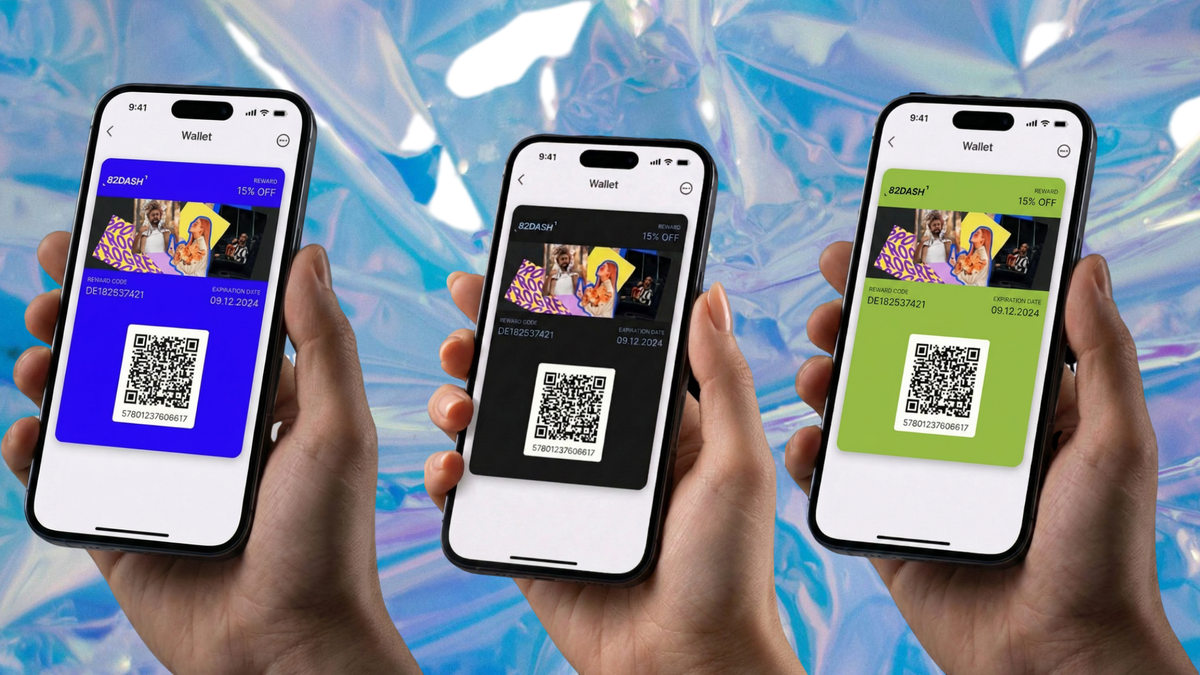
A wallet pass lives in the Apple Wallet or Google Wallet app. Both apps are pre-installed on every iPhone and Android phone. Both apps are opened multiple times a day - for boarding passes, debit cards, transit, event tickets. The customer doesn't need to install anything.
The customer adds your reward pass with one tap. It now lives in the same wallet as their bank card. It surfaces on the lock screen near relevant locations. It updates server-side when you change the reward, the value, or the expiry.
The structural advantages over a loyalty app:
Zero install friction. The most expensive step in any loyalty programme - get the customer to install something new - disappears entirely. (Our setup guide walks through the wallet pass implementation step by step.)
Native delivery surface. Wallet apps are opened more than any branded loyalty app could realistically be. The pass is visible without the customer choosing to look at it.
Lock-screen visibility. A pass with a "$15 off, expires in 7 days" reward surfaces on the lock screen as the expiry approaches. No notification permission required, no email, no app open.
Server-side updates. The brand updates the reward, value, terms, expiry, and visual without the customer doing anything via the Apple PassKit and Google Wallet API push-to-pass mechanisms. The pass gets richer over time without the customer needing to redownload or take any action. (Our deep dive on Apple Wallet rewards beyond points loyalty covers what's possible.)
One subscription line. A wallet pass platform is typically a fraction of the cost of a full loyalty-app stack. For most Shopify operators, it replaces the loyalty app entirely.
What You Can Reward Without a Loyalty App
A wallet pass can carry every reward category a loyalty app supports, plus several it can't:
Discounts. Percentage off, dollar amount off, free shipping. The single most common reward type, and the one wallet passes deliver most cleanly.
Free products and samples. A pass with a code that converts to a free travel-size or full-size product on the next order. Particularly powerful for beauty, food, and consumer brands.
Tier-based rewards. Bronze, silver, gold, or any equivalent. The pass updates as the customer crosses thresholds, with the reward visually shifting to reflect the new tier.
Birthday and milestone rewards. Auto-issued on the customer's birthday, anniversary, or order count. The pass surfaces near the relevant date.
Referral and advocacy rewards. A pass that issues when a customer refers a friend who buys. Rights-cleared content submission rewards work the same way.
VIP and early access. A pass that grants entry to a launch waitlist, a sample sale, or a private restock. The pass itself is the access mechanism.
Replenishment incentives. A pass that updates with a "time to restock" message at the right point in the consumption cycle, with a discount built in. This is one of the most under-used reward formats and one of the most commercially powerful.
Content submission rewards. A pass that issues the moment a customer submits a photo, video, or feedback. Closes the loop on customer content collection without a points system - see the customer content strategy guide for the full collection workflow.
The discipline: don't try to replicate a loyalty app's full points-and-tiers complexity on day one. Start with one reward type that maps to a clear behaviour, prove the engagement, then layer on additional triggers.
Reward Structures That Work via Wallet Pass
The reward structures that map most cleanly to a wallet pass:
Single-use post-purchase reward. Order completes, pass issues, reward expires in 30 days. The simplest format, and the one that drives the cleanest second-order behaviour.
Stamp card. Buy 5, get the 6th free, or any equivalent. The pass updates with each qualifying purchase. The customer sees progress without opening anything.
Tier-based loyalty. The pass shifts visually as the customer reaches new tiers, with the reward changing accordingly. Lower complexity than a loyalty-app tier system because the pass is the only surface.
Time-limited campaign reward. A seasonal or launch-tied pass with a defined window. Builds urgency without spamming the customer.
Behaviour-triggered reward. Submit a photo, write a review, refer a friend, complete a survey. The pass issues on completion of a defined action.
What works less well: complex earn-and-burn points systems with multiple redemption paths. The wallet format favours simplicity. The reward should be readable in two seconds on a lock screen.
How 82DASH Replaces a Loyalty App on Shopify
82DASH connects to your Shopify store and runs the wallet pass infrastructure as a managed service. You configure the reward triggers, the pass design, and the issuance flow. The platform handles certificates, delivery, server-side updates, and analytics.
The Starter plan is $50/month and covers the core reward and content-collection workflow. The Growth plan is $82/month and covers higher volumes, including up to 400 photo and 200 video submissions per month if you're combining wallet rewards with customer content collection. The Pro plan is $120/month and adds push notifications and higher submission ceilings.
For most Shopify stores running a no-app reward strategy, 82DASH replaces a loyalty-app subscription, a separate content-collection tool, and the engineering time required to wire wallet passes into a Shopify post-purchase flow. The single subscription line is typically lower than the loyalty app it replaces.
Install directly from the Shopify App Store.
Loyalty Apps vs Wallet Passes: The Practical Comparison
A loyalty app and a wallet pass are not equivalent products. They sit in different layers of the customer relationship.
A loyalty app gives you a full-screen surface. The customer can browse, search, redeem, view history, see tiers, and engage with the brand. For brands that have genuinely earned that level of engagement - large beauty brands, frequent-flyer programmes, large-scale consumer goods - the app is still the right answer.
A wallet pass gives you a lock-screen surface. The customer sees the reward, the expiry, the tier. It's a glanceable object, not a full-screen one. For most Shopify brands, this is the right level of surface area: enough to be visible, not so much that it requires installation or training.
The mistake most operators make is to choose the loyalty app for the wrong reason - because they were told that's what serious brands do. The right question is: do you have the customer engagement that justifies a separate app? For most Shopify stores under $20M revenue, the answer is no, and the wallet pass is the cleaner play.
A Worked Example: Shopify Apparel Brand, 400 Orders a Month
You sell apparel on Shopify. 400 orders a month. You're paying $500/month for a loyalty app that 8% of customers actively use. You switch to a wallet pass model.
Month 1. You issue a post-purchase wallet pass with $20 off the next order. Acceptance rate: 38% of orders. Loyalty-app install rate previously: 11% of orders. The pass is reaching nearly 4x more customers in the first month.
Month 2. You add a tier upgrade trigger - customers who pass three orders see their pass shift to "VIP" with free shipping baked in. The visual change is visible the next time they open their wallet.
Month 3. You add a content submission reward. Customers who send a photo of their order styled get a wallet pass with 25% off and a free accessory on the next order. Submission rate: 9% of orders. Content library starts compounding.
Month 6. You're paying $82/month instead of $500/month. Your second-order rate is up. Your post-purchase email engagement is up because every email links to a tangible wallet reward. Your content library is meaningfully larger than it was when you were running the loyalty app.
The shift isn't subtle. It's a structural improvement on cost, engagement, and content output simultaneously.
Isabelle Simon - Communications Lead - 82DASH
Frequently asked questions
Do my customers need to download a separate app to use wallet passes?
No. Apple Wallet is pre-installed on every iPhone. Google Wallet is pre-installed on every Android. The customer adds the pass with one tap from a link or QR code. Nothing to install, nothing to sign up for, nothing to remember a password for.
Can wallet passes replace points-based loyalty programmes?
For most Shopify stores under enterprise scale, yes. The wallet pass model favours simplicity over points complexity, which is actually an advantage for retention. Customers redeem clearer, higher-value rewards faster, and brand operators avoid the engagement decay typical of points systems. If your brand is operating at the scale where a full app makes sense (large international consumer brand, multi-category retailer), the loyalty app may still be the right fit; for everyone else, wallet passes do the job better.
How do wallet passes compare on cost to a Shopify loyalty app?
Most Shopify loyalty apps charge $50-500/month depending on tier. A managed wallet pass platform like 82DASH starts at $50/month and tops out at $120/month for most single-site Shopify stores. The cost-per-engaged-customer is typically materially lower because acceptance and engagement rates are higher.
What if a customer doesn't use Apple or Google Wallet?
The customer doesn't need to "use" Apple or Google Wallet beforehand - they're pre-installed apps that anyone can add a pass to. In practice, the small minority of customers who actively avoid wallet apps can still receive the reward as a discount code via email. The wallet pass is the primary delivery channel; email backup covers the edge cases.
Can I push notifications to customers via a wallet pass?
Yes, with caveats. Apple Wallet and Google Wallet support location-based and time-based notifications without a separate app permission. The pass surfaces on the lock screen near relevant locations or as the expiry approaches. For more aggressive push notification flows, the 82DASH Pro plan adds opt-in push notification support.
How do I switch from my current loyalty app to wallet passes without losing my customer base?
Run them in parallel for 30-60 days. Issue wallet passes to all new customers and migrate existing loyalty-app users by sending them a one-off pass that recognises their tier and accumulated value. Most customers prefer the wallet format and the migration completes naturally. Cancel the loyalty app once acceptance is confirmed.
Further reading
How to Collect Customer Photos on Shopify and Reward via Apple Wallet
Shopify Customer Rewards: Points vs Content
Shopify Apple Wallet Rewards: Beyond Points Loyalty