Shopify Customer Photos on Packaging: Rights Clearance for Print and Physical Goods
Packaging is the highest-trust surface a Shopify brand has - and the rights bar for using customer photos on it is the highest. Here's the print and packaging rights guide.
A Shopify beauty brand redesigns its packaging. The lead creative pulls a customer's testimonial photo from the Instagram feed - a perfect shot of skin transformation that's been sitting in the brand's saved posts for months - and lays it onto the inside of the new box.
Print run: 50,000 units. Lead time: six weeks. Cost: $42,000.
Three months later, the customer emails: "I noticed my photo on your packaging. I never gave you permission to use it there."
The packaging is in warehouses, in transit, and on customers' doorsteps. Recall is impossible. Replacement is impossibly expensive. The customer has a copyright claim, an FTC disclosure complaint, and depending on territory, a data-protection complaint as well.
This is why packaging is the highest-rights-bar channel a Shopify brand has - one we've covered alongside the wider rights ecosystem in our complete rights-cleared UGC guide. The decision is permanent, the audience is unrestricted, and the recall mechanism doesn't exist.
This is the rights guide for customer photos on print packaging and physical goods.
Why Packaging Rights Are Stricter Than Digital Rights
Three structural differences make packaging the highest-stakes rights channel:
Permanence. A digital ad runs and comes down. A wallet pass updates. An email lives in inboxes but the brand can stop sending. Packaging is printed, distributed, and used - and the FTC's 2024 endorsement rules apply to packaging the same way they apply to advertising. The unit lives until it's discarded - typically months or years for most product categories. Recalling packaging is logistically and financially impossible.
Unbounded audience. A Meta ad targets a defined audience the brand selected. Packaging reaches every customer who buys the product, every gift recipient, every retail browser, every wholesale buyer. The brand cannot select who sees the packaging.
Brand-equity stake. Packaging is the brand's most-touched physical surface, and research from Ipsos and WGSN consistently shows packaging design materially influences purchase intent and repeat purchase rate. A rights problem on packaging is a brand-trust problem with a customer who is, by definition, holding the product. The damage is amplified by proximity.
International reach. A Shopify store selling internationally ships packaging to every territory it serves. The packaging needs to satisfy the data protection guidance from the UK Information Commissioner's Office, the European Commission, the California Office of the Attorney General, and equivalent regulators in any market it lands in. The packaging needs to satisfy the rights regime of every territory it lands in - GDPR for EU/UK, CCPA for California, ACL for Australia, plus print-specific advertising and product-labelling rules in each market.
The combined effect: packaging rights need to be the strongest, most explicit, and most defensible rights in the brand's content stack. Anything that's good enough for paid ads is the floor for packaging, not the ceiling.
The Packaging Rights Checklist
Every customer photo, video still, or quote going onto packaging should clear all of the following before going to print:
1. Documented permission specifically covering print and physical goods. Not "all commercial use" inferred from a digital permission. Explicit language naming print, packaging, point-of-sale materials, and physical product applications. (The Meta Ads rights checklist and email rights guide cover the parallel digital channels.)
2. Perpetual or matched-to-product-life term. Packaging rights need to last as long as the product is in market - typically multiple years. A 12-month digital rights term doesn't fit. The licence should be either perpetual or explicitly tied to "as long as the product remains in distribution."
3. Worldwide territory. Or, if territory-restricted, explicit language identifying which markets the packaging can be distributed in. Most Shopify brands need worldwide rights even if they currently sell in fewer markets, because future expansion shouldn't trigger a re-negotiation.
4. Right to modify, crop, and composite. Packaging design routinely involves significant modification of source assets - cropping, colour-matching to brand palette, compositing with brand graphics, scaling to print specifications. The licence should permit reasonable derivative work.
5. Right to use across product variants. A customer photo on the packaging of one SKU may be reused on the packaging of related SKUs (different sizes, refills, gift sets). The licence should anticipate this rather than requiring re-permission for each variant.
6. Withdrawal handling appropriate to print. Withdrawal mechanisms that work for digital channels (24-72 hour takedown) do not work for packaging in distribution. The rights agreement should specify a realistic remediation path: removal from future production runs, written acknowledgement that already-distributed units cannot be recalled, and a defined process for the customer's revocation request.
7. Strong identifiability handling. Customers visible on packaging are seen by every buyer of the product. The permission should be unambiguous about whether the customer is identifiable and whether their name appears alongside the image.
8. Disclosure baked into the design. If the customer received compensation for the photo, the FTC disclosure obligation extends to the packaging. A small "based on a customer photo, taken with permission" line on the packaging closes this gap. Vague phrasing like "real customer" without disclosure of incentive does not.
9. International compliance. GDPR and equivalent regimes treat customer images on physical goods sold in their territory as personal data processing. The customer's permission should explicitly cover data processing for marketing communications including physical goods, and the brand's privacy policy should reflect this.
10. Rights to other identifiable people. A photo of a single customer is straightforward. A photo of a family at a dinner table includes everyone in frame. For packaging specifically, the rights agreement should require the submitting customer to confirm everyone visible has agreed to the use - and should provide an avenue for the brand to verify this if needed.
11. Source-traceable record retained for the product life cycle plus a buffer. The rights record needs to outlive the packaging it authorised. (Our customer content rights audit guide covers how to surface and store these records systematically.) If the product is in market for five years and a complaint arises in year four, the brand needs to be able to retrieve the rights documentation immediately.
What Doesn't Work for Packaging Rights
Several rights paths that work for digital channels do not work for packaging:
A tagged Instagram photo. As with ads and email, a tag is not a licence. For packaging, the gap is most stark because the use is permanent and unbounded.
A general "use my content" agreement without explicit packaging language. Many UGC platforms grant rights covering "commercial use" without enumerating physical goods. Some courts have held that "commercial use" is broad enough to include packaging; others have held it isn't. The risk is real and asymmetric - the cost of being on the wrong side is enormous.
Influencer contracts with paid-social-only language. Standard influencer contracts grant rights for paid social, sometimes paid digital, sometimes brand organic. They almost never grant packaging rights without explicit and additional negotiation.
Stock photography of "real-looking" customers. Stock imagery is licensed for the use cases the stock platform allows. Most stock licences cover packaging, but check explicitly - some restrict use on packaging or require an extended licence at higher cost.
The clean answer for packaging rights is to source customer content through a flow specifically designed to license print and packaging rights at the point of submission.
The Collection Flow That Produces Packaging-Grade Rights
Customer content with rights cleared for packaging use comes from a submission flow with explicit packaging language baked into the licence:
Plain-language permission covering print and packaging. The customer agrees to use across paid ads, organic social, email, product pages, and "print and packaging including but not limited to product packaging, point-of-sale materials, instructional inserts, brochures, and brand collateral." The breadth is captured in language any non-lawyer can understand.
Perpetual term, worldwide territory. The default for the submission flow is the broadest sensible scope. Customers who are uncomfortable with that scope can decline submission; customers who agree provide rights that fit packaging's permanence.
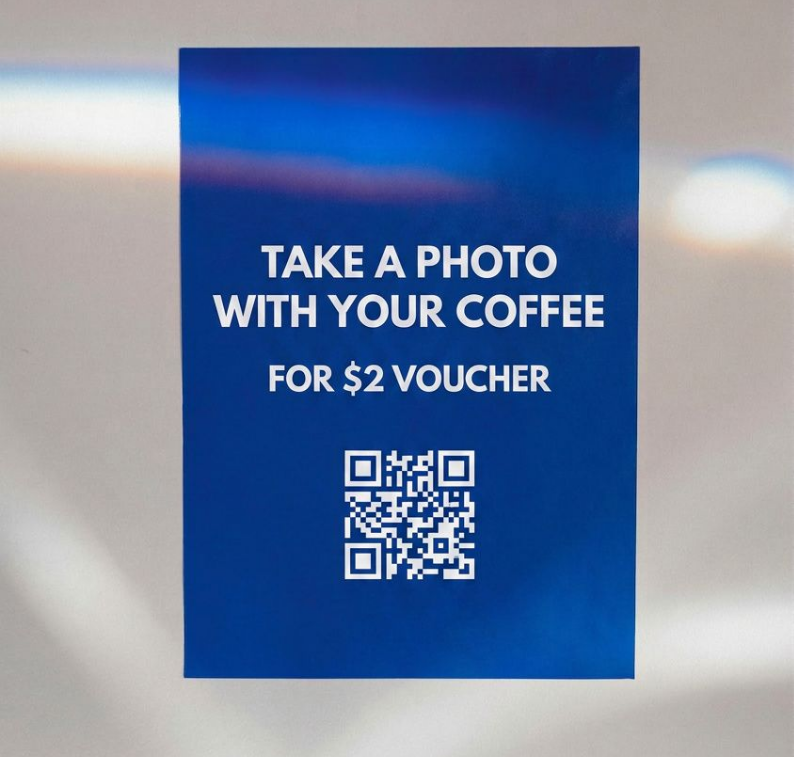
Wallet pass reward sized to the value of the rights granted. The reward should reflect the breadth of what the customer is licensing. A 15-25% off wallet pass is appropriate for content with packaging rights; a small discount code is not.
Disclosure-ready record. Every submission carries a record of the customer's identity, the reward provided, the date, and the scope of permission. When the brand later uses the photo on packaging, the disclosure obligation is satisfied by the record-plus-design combination.
This is the workflow 82DASH is built around. The rights agreement at the submission point includes explicit packaging language by default. Brands that need narrower rights can configure that; the default is broad enough to support every channel including packaging.
The Growth plan at $82/month covers up to 400 photo and 200 video submissions per month with rights cleared at upload. Install directly from the Shopify App Store.
Dynamic QR Codes: Print Once, Update Anytime
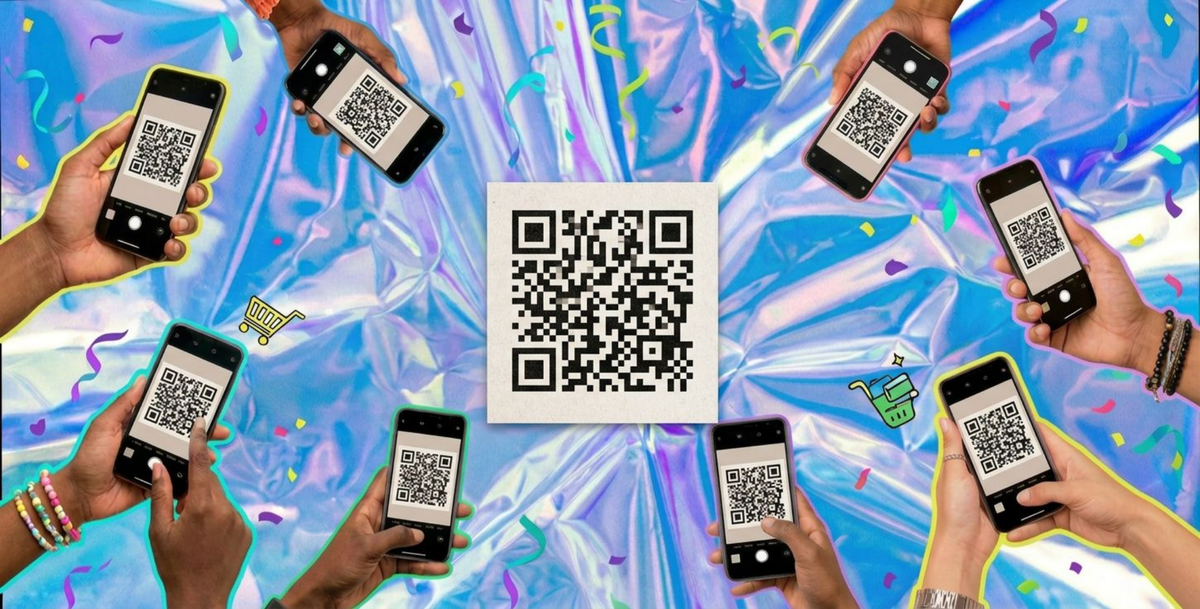
One of the practical problems with putting a QR code on packaging is that print is permanent. If the URL the QR code points to changes - a campaign ends, a page is restructured, a collection flow is updated - the code becomes a dead link on tens of thousands of units already in market.
82DASH solves this with Dynamic QR codes. A Dynamic QR code is a physical code you print once and can redirect to any URL at any time from your 82DASH dashboard - without touching the packaging, without a reprint, and without any cost beyond your existing plan.
A packaging insert printed today pointing to your autumn content-submission flow can be redirected to your spring campaign in March. A box printed for one product line can have its QR destination updated when the product line relaunches. A flyer printed for a venue can point to different campaigns by month without reprinting a single sheet.
This matters for rights clearance specifically because it removes the pressure to lock the submission flow URL before print. You can print the QR code now, finalise the flow, and point the code at it later. It also means brands that print large runs across multiple SKUs can manage all QR destinations from one place rather than printing product-specific codes for every variant.
For brands comparing dedicated QR management tools like qr.io, Dynamic QR codes are included in every 82DASH plan. There is no separate subscription, no per-code fee, and no cap on redirects. For most Shopify brands using 82DASH to collect packaging-grade content, it removes the need for a standalone QR tool entirely.
Practical uses for Dynamic QR codes on physical goods:
- Packaging inserts - point to your content submission flow; redirect to a seasonal campaign at relaunch without reprinting
- Product boxes - a single QR code on the outer box handles all campaign changes across the product's life in market
- Thank-you cards - redirect from a discount flow to a content-submission flow depending on the post-purchase journey stage
- Flyers and catalogues - update destination when stock changes, an event passes, or a campaign ends
- Point-of-sale materials - one printed card in a retail location, destination updated remotely as often as needed
Pre-Print Review: The Last Stop Before Production
A short review checklist for the team approving packaging artwork:
- For every customer-sourced asset on the packaging, can we produce the rights record in 60 seconds?
- Does the rights record explicitly cover print and packaging?
- Is the term sufficient for the planned product life?
- Is the territory adequate for the markets we ship to?
- Are all identifiable people in the asset covered by the permission?
- Has the customer's compensation, if any, been disclosed appropriately on the packaging?
- Is the customer still active or has permission been withdrawn?
- For customers whose permission is at risk of withdrawal, do we have replacement assets available?
Print is forever. Get this checklist signed off before the file leaves design for the printer.
What to Do With Tagged Customer Photos You'd Like to Use on Packaging
If you have a customer photo on social you'd love to feature on packaging, the path is:
- Reach out directly. Explain specifically that you'd like to use the photo on packaging that will be in market for a defined period.
- Send a clear, plain-language rights agreement that explicitly covers print and packaging, perpetual or matched-to-product-life, worldwide territory.
- Compensate at a level that reflects the value of the rights. A small discount is not appropriate for packaging-grade rights; consider a meaningful fee or a curated product gift.
- Document the response in writing (email is sufficient if it's specific) and store the record alongside your other rights documentation.
- Only after all four steps complete should the asset go into the packaging artwork.
The cost and effort of this process is one reason most brands operating at any scale move to a direct submission flow with packaging rights baked in by default.
Isabelle Simon - Communications Lead - 82DASH
Frequently asked questions
Can I use a customer review quote on packaging without their photo?
Sometimes. Short factual quotes ("I love this product") attributed by first name only often clear copyright thresholds. Longer, more substantive quotes that constitute creative expression are protected like photos. The cleanest approach is to treat any customer-submitted content - photo, video, quote - under the same rights agreement.
Do I need different rights for instructional inserts versus the box itself?
Same standard. Instructional inserts, leaflets, gift cards, and any printed material distributed inside or with the product all sit at the same rights level as the packaging itself.
What if I'm only using the customer photo on the limited-edition gift packaging for one season?
A defined-window use is operationally cleaner than perpetual use, but the practical risk is similar. The packaging still goes out into the world and recall is still impossible. Treat the rights bar as the same and just narrow the term in the rights agreement.
Does the FTC's 2024 rule on incentivised content apply to packaging?
Yes. The rule applies to "any form of advertising," and packaging is a form of advertising for the product. If the customer received compensation for the photo, the disclosure obligation extends to the packaging. A small disclosure line on the packaging closes the gap.
What's the right compensation level for packaging-grade rights?
Higher than digital-only rights. A wallet pass with a meaningful discount (20-25%) plus a free product is typical for a Shopify brand. For high-value packaging features (front of pack, large image), some brands move to a small fee plus product. The principle: the customer is granting permanent, worldwide rights to use their image on the brand's most-trafficked surface; the compensation should reflect the asymmetry.
What happens if I print packaging with a customer photo and the customer later asks for it to come off?
Honour the request for future production runs. Acknowledge in writing that already-distributed units cannot be recalled. Most reasonable customers will accept this if the brand engages quickly and respectfully. The rights agreement should set this expectation upfront so the customer isn't surprised.
Further reading
Shopify Customer Content Strategy: The Complete Guide 2026
Rights-Cleared UGC for Shopify Ads: The Complete Guide
How to Collect Customer Photos on Shopify and Reward via Apple Wallet