How to Collect Product Reviews
Most brands capture a fraction of the reviews available to them - not because customers won't write them, but because the ask is wrong. Here is what the right timing, prompt, and incentive look like.

Product reviews are the most trusted content on a product page. They are also, for most brands, the hardest to collect consistently.
The average ecommerce brand captures a small fraction of the reviews available to it. Customers who would write a review if asked at the right moment, in the right way, with a genuine reason to respond - do not write one because the brand never asked, asked too late, or sent a request so vague that the customer did not know what to say.
This post covers the mechanics of building a review collection flow that generates reviews consistently: when to ask, how to ask, what to offer, and which platforms handle the process at scale.
"The biggest improvement I've seen is giving people something specific to answer rather than just asking for a review." — r/ecommerce
What Does "This Review Was Collected as Part of a Promotion" Mean?
It means the reviewer received something in return for the review, usually a free or discounted product, and the retailer is disclosing that incentive. The label is common on retailer sites that syndicate reviews from brand sampling campaigns. US FTC rules require that kind of material connection to be disclosed, which is what the label does.
Why Product Reviews Matter
Reviews matter because trust has not moved online. A shopper who cannot handle a product before buying resolves uncertainty the same way they always have - by looking at what other customers said about it.
PowerReviews research shows measurable conversion uplift for products with customer reviews compared to those without. Bazaarvoice data consistently shows that shoppers who interact with customer content on product pages convert at significantly higher rates than those who do not. The mechanism is simple: a review from a real customer answers questions that product photography and brand copy cannot.
The second reason is search. Product pages with a volume of genuine customer reviews attract long-tail search traffic that no brand can anticipate or target directly. A customer typing "does this work for [specific use case]" often finds their answer in a review, not in the product description.
Both effects compound with volume. A product with three reviews converts differently from one with 50. There is no ceiling on the impact.
When to Ask
Timing is the variable most brands underestimate. A review request that arrives one day after delivery asks the customer to review a product they have not yet used. A request that arrives six weeks later has missed the window when the experience is still fresh.
For most physical products, the right window is 10-14 days after confirmed delivery. This gives the customer time to use the product and form a genuine opinion, while the experience is recent enough to write about without effort.
For products where results take longer - skincare, supplements, fitness equipment - the window shifts to 3-4 weeks. The customer needs to have seen enough of the result to have something to say.
For consumables, consider timing the review request to when the customer is likely approaching reorder. A customer who finished a product and liked it is more likely to write a review than one who has barely started it - and the proximity to reorder means a positive review experience flows directly into a second purchase.
For services and experiences, ask within 24-48 hours of the visit or interaction. The experience is still fresh and the emotional response - positive or negative - is still active.
How to Ask
The request itself is where most brands lose customers who were willing to respond.
"How was your experience?" is not a review prompt. It asks the customer to decide what to write, how long to write it, and whether the effort is worth the time. Most will choose not to engage.
A review request that works answers those questions before the customer has to ask them.
Be specific about the subject. "What did you notice in the first week?" or "How does it compare to what you were using before?" gives the customer something concrete to write about. The more specific the prompt, the lower the barrier to starting.
Tell them how long it should take. "Two minutes" or "just one or two sentences" signals that this is a low-effort ask. Customers who assume a review requires a long, considered response will not write one.
Explain where it will appear. "Your review will appear on our product page" gives the customer context for why the submission matters. A review request with no stated destination feels like content disappearing into a void.
Name the reward upfront. If there is an incentive, lead with it - not in the footer. A customer who sees the reward before reading the rest of the email has a reason to keep reading.
How to write a content request that actually gets responses covers brief structure decisions that affect response rates across all types of customer content requests.

What to Offer
Incentivising review submissions is permitted under FTC endorsement guidelines and the terms of most review platforms, with one constraint: the incentive cannot be conditional on positive sentiment.
"Write a review and get $10 off your next order" is permissible. You are rewarding the act of submitting regardless of what the customer says. They could write a two-star review and still receive the incentive.
"Write a five-star review and get $10 off" is not permissible. This purchases a verdict rather than rewarding a submission, which violates Trustpilot terms, most major marketplace policies, and FTC guidelines.
Within those constraints, a genuine incentive meaningfully increases response rates. Yotpo research puts incentivised review request response rates at 15-30% for brands who ask at the right post-purchase moment, compared to 1-3% for unincentivised requests.
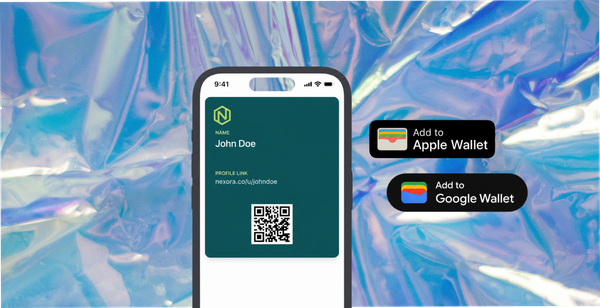
Wallet pass delivery outperforms email coupon codes as a reward format because it lands on the customer's home screen immediately after submission, is accessible from the lock screen, and resurfaces at the point of the next purchase rather than getting buried in a promotions folder.
Platforms for Review Collection
Several platforms handle review collection at scale for ecommerce businesses.
Yotpo collects and displays reviews, photos, and Q&A. Strong Shopify integration and a review widget that displays on product pages with structured data for Google Shopping.
Okendo focuses on reviews and product attributes - customers can tag specific features (fit, quality, value) that aggregate across the review set. Particularly useful for products where specific attributes drive purchase decisions.
Bazaarvoice is the enterprise option, with review syndication across major retail partners. Relevant for brands that sell through third-party retailers who display reviews on their own product pages.
Trustpilot handles company-level reviews rather than product-level reviews - more relevant for service businesses and overall brand reputation than product page conversion.
For Shopify brands, 82DASH connects review requests to photo and video collection in a single post-purchase flow - so the same sequence collects a written review, a photo submission, and rights clearance rather than running separate flows for each content type.
Reviews vs Customer Content
A review is a text-based rating and comment that appears on a product page or third-party platform. Customer content - photos and videos - is a separate category that serves different purposes.
Reviews provide verbal social proof: what customers say about the product. Photos and videos provide visual social proof: what the product actually looks like in real use. A product page with 50 reviews and no customer photos answers "is this good?" but not "does this look like the marketing images in real life?" A product page with customer photos and no reviews has the opposite problem.
The most effective post-purchase sequences treat reviews and content collection as distinct asks at different points in the sequence - a review request at day 10, a photo or video request at day 14 - rather than one combined request that tries to do everything at once. Separate asks convert better than combined ones because each is a clear, single-purpose brief rather than a menu.
Can you ask your customers for UGC? covers the full picture of what brands are allowed to request. CGC vs UGC: rights, quality, and ROI explained covers the distinction between customer-generated and user-generated content and why it matters for how brands structure their content operations.
What Steady-State Review Collection Looks Like
A review collection flow running on every order cohort - timed correctly, with a specific prompt and a genuine incentive - generates a consistent stream of new reviews rather than a one-time spike.
At steady state, brands using structured post-purchase review requests with a genuine incentive see submission rates of 15-30%. For a store processing 300 orders per month, a 15% submission rate adds 45 new reviews per month. After six months, that product has 270 reviews. The conversion impact of moving from 3 reviews to 270 is not linear - it compounds, because volume independently signals credibility before a shopper reads a single word.
The key difference between a review collection flow and a one-time review campaign is that the flow runs automatically on every cohort without any ongoing effort beyond the initial setup. Reviews arrive consistently at volume across every product. That is the outcome a campaign cannot replicate.
The Shopify post-purchase flow that builds a content library covers the sequence structure that makes consistent review and content collection possible at scale.
Isabelle Simon - Communications Lead - 82DASH
Frequently Asked Questions
When is the best time to ask customers for a product review?
For most physical products, 10-14 days after confirmed delivery is the right window. This gives the customer time to use the product and form an opinion while the experience is still recent. For products where results take longer - skincare, supplements - extend to 3-4 weeks. For services and experiences, ask within 24-48 hours while the experience is still fresh.
Can you offer an incentive in exchange for a product review?
Yes, with one constraint: the incentive cannot be conditional on positive sentiment. "Write a review and get $10 off" is permissible - you are rewarding the submission regardless of what it says. "Write a five-star review and get $10 off" is not - this purchases a specific rating. The distinction matters for FTC compliance and the terms of most review platforms.
How do you get customers to write a detailed review rather than just clicking a star rating?
Give them a specific subject to write about rather than an open invitation. "What did you notice in the first week?" or "How does it compare to what you were using before?" gives the customer a starting point and reduces the cognitive effort required. A specific prompt consistently produces more useful, detailed reviews than an open question.
What is the difference between a product review and a customer photo?
A review is a text-based rating and comment that appears on a product page or third-party platform. A customer photo shows the product in real use. Both serve different purposes: reviews answer "is this good?", photos answer "does this look like the images in real life?" The most effective post-purchase sequences collect both, with separate requests timed at different points.
How many reviews does a product need before it starts affecting conversion?
Even a small number of genuine reviews improves conversion compared to none - the presence of any social proof signals that real customers have bought and used the product. The effect compounds with volume: a product with 50 reviews converts differently from one with 5. There is no threshold, but research consistently shows meaningful conversion uplift from the first few reviews onwards.