Yotpo Alternatives for Shopify in 2026: Which Part Are You Actually Leaving?
Yotpo is four products sold as one. Most alternatives replace the review part. Which of the four you are actually leaving for decides what you should buy instead.
Yotpo is four products sold as one: reviews, visual UGC, loyalty and referrals, and SMS. Almost every "Yotpo alternatives" article treats it as a review tool and stops there.
That is why so many merchants switch, save money for a quarter, and then find themselves paying for two or three replacements that add up to roughly what they were paying before.
The useful question is not which tool replaces Yotpo. It is which of the four you are actually leaving for, because the answer is different in each case and one of them is not a review problem at all.
From r/ecommerce:
"Social media manager here. From my experience if people send you stuff it's because they want you to be able to use it. That's true in all organic contexts however people can get weird about it if it's paid marketing. Mostly they won't mind, but you should ask first to avoid any issues. Something like 'Hey, great video, mind if we use this in some promotional content?' generally works."
That works once. It is not a system.
Asking retrospectively, one photo at a time, gives you no rights documentation for paid media, does not scale past a handful of pieces, and only reaches customers who posted publicly in the first place. Most will not. Our own figure is that 79% of customers who would share content about a brand will not do it publicly, but will submit directly when given a private, structured flow.
That gap between what customers will do publicly and what they will do privately is the whole reason review tools and content platforms are different categories.
Which Part of Yotpo Are You Leaving?
Work down the column that matches your reason for looking.
| Reviews | Visual UGC for marketing | Loyalty and referrals | SMS | |
|---|---|---|---|---|
| What you were using it for | Star ratings and text on product pages | Customer photos and video in ads, email, social | Points, tiers, referral rewards | Campaign and transactional messaging |
| What replaces it | A dedicated review app | A customer content library | A loyalty app, or wallet passes | A dedicated SMS platform |
| Rights position needed | Display on your own site | Explicit clearance for paid media | Not applicable | Not applicable |
| Does a review tool cover it? | Yes, this is their job | No. Different consent, different format | Some bundle it | No |
| Does 82DASH cover it? | No, and it does not try to | Yes, this is the whole product | Wallet passes and rewards, not points and tiers | Wallet push notifications instead |
| Typical entry cost | Free to low monthly | 82DASH: free tier, then $50 | Varies widely | Per-message |
| Common mistake | Assuming review photos are ad-ready | Buying a review tool and hoping | Rebuilding points when a pass would do | Paying per send for reach you can get free |
The row that decides most switches is the third one. A customer who submits a photo with a review has consented to it appearing on your product page. That is not the same consent as running their face in a paid Meta campaign, and the distinction has become sharper since the FTC tightened its guidance on social proof in advertising.
If you take review photos into paid ads without confirmed rights, you have a liability, not a content library.
If You Are Leaving Because of Cost
This is the fastest-growing reason, so it deserves a direct answer rather than a feature table.
Yotpo's pricing scales with order volume and bundles modules you may not use. Merchants tend to reach the switching point in one of two places: early, before revenue justifies the platform fee, or later, when they realise they are paying for four products and using one and a half.
Two honest points about replacing it cheaply.
Unbundling usually costs less, but not always. One review app plus one loyalty app plus one SMS tool can total more than the bundle you left, particularly at higher order volumes. Price the full replacement stack before you switch, not just the component that annoyed you.
The content piece is where the pricing is most misleading. Review apps look cheap because they are solving the smaller problem. If what you needed was usable marketing content, a cheap review app has not replaced it, it has postponed it.
82DASH pricing is deliberately simple: a free tier for form-based campaigns with wallet passes, then $50, $82 and $120 a month as volume and features grow. The pricing page sets out what is in each.
If cost is the reason you are here, the free tier is the honest place to start, because it lets you test whether customer content actually performs for your brand before any of this becomes a budget line.
If You Are Leaving for the Reviews
Then you want a review app, and you should buy one.
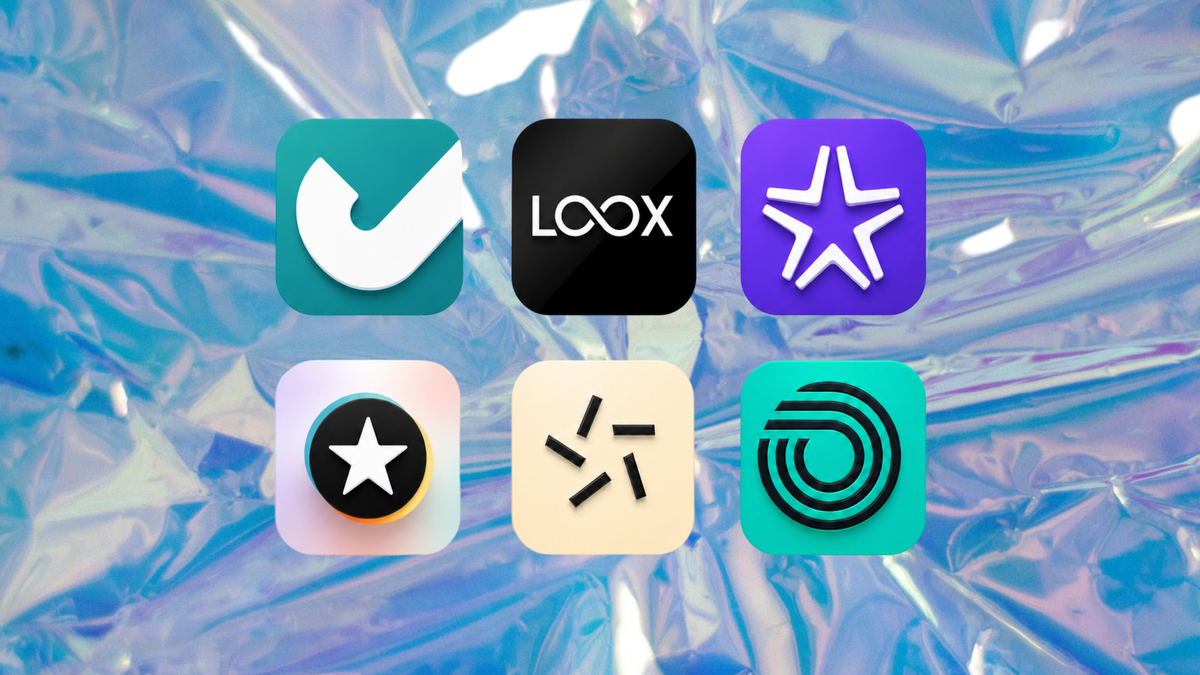
Loox, Okendo and Stamped are the three most commonly chosen by Shopify merchants moving off Yotpo. They differ on photo-first submission flows, review attribute data, Klaviyo integration depth, and whether loyalty is bundled. Their own documentation covers the comparison better than we can, and we have no interest in pretending otherwise.
82DASH is not a review tool and is not an alternative to those three. It does not put star ratings on your product pages. Anyone telling you a content platform replaces a review app is selling you something.
Saying that plainly costs us nothing, because the merchants who need a review app were never going to be well served by us, and the ones who need both are better off knowing it now.

If You Are Leaving for the Content
This is the case the standard alternatives article misses, and it is the one where switching to another review tool will not help.
Three things separate a content library from a review platform, and none of them is a feature you can add later.
Rights cleared at the point of submission. The customer agrees to marketing use, including paid media, at the moment they hand the content over. Not retrospectively, not in a terms-of-service clause they did not read. This is what makes the content usable behind ad spend rather than only on your own site. Our rights management page sets out how it works.
A request, not a prompt. A review tool asks for a review. A content campaign asks a specific segment for a specific thing: a photo of the product in use, a ten-second video, an answer to one question, with a stated reward. Different ask, different output.
Content shaped for where it is going. A photo taken while writing a review looks like a review photo, because that is what the customer was doing. A photo submitted to a campaign the customer knows is for the brand's marketing looks different, and performs differently as ad creative.
If You Are Leaving for the Loyalty or the SMS
These are the two modules people forget to price, and they are where unbundling most often goes wrong.
Loyalty. Yotpo's loyalty module is a points-and-tiers system: customers accumulate a balance, unlock rewards at thresholds, and are meant to return in order to spend down what they have earned. Replacing it like-for-like means buying another points engine, and those price on order volume in much the same way.
Before you do, it is worth asking whether the points were working. Points programmes carry a real overhead: liability on the balance sheet for unredeemed balances, a settings page nobody maintains, and a mechanic that assumes customers are tracking a number. For a brand doing a few hundred orders a month, an immediate reward that lands on the phone in a wallet pass does the same job of bringing someone back, without the accounting or the tier logic.
That is not true for everyone. If your repeat rate genuinely depends on customers grinding toward a threshold, a points engine is the right purchase and a wallet pass is not a substitute.
SMS. This is the module most likely to be doing real work, and the one least likely to be replaced by anything cheaper, because you are paying for delivery rather than for software. Per-message pricing does not go away.
What can change is how much of your messaging needs to be SMS at all. A wallet pass sits on the lock screen and supports push notifications at no cost per send. That does not replace transactional SMS, and it will not reach customers who never took the pass. But for the campaign messages that make up most SMS volume, a channel with no marginal cost per send is worth testing against one that charges per recipient.
The honest summary on both: check whether the module was earning its line before you replace it. A cheaper version of something that was not working is not a saving.
How 82DASH Does It
82DASH is a customer content library. It collects photos, videos, feedback and reviews directly from customers, with rights cleared at submission, and makes them usable across paid ads, email, product pages and social.
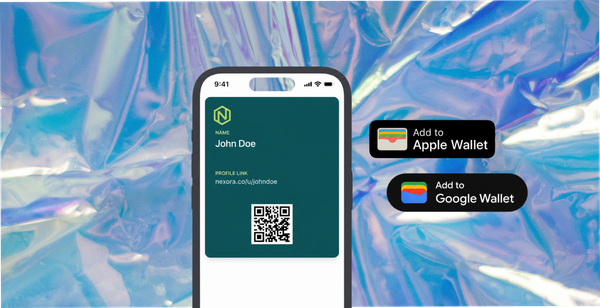
The flow is short. A customer scans a QR code or taps an NFC tag, on packaging, a receipt, at a counter, or in a follow-up message. They submit. A reward lands on their phone in an Apple Wallet or Google Wallet pass within seconds, so the exchange completes while they are still holding the phone. No app to install, on either side.
The wallet pass does a second job that a discount code cannot. It stays on the phone, which means the next request goes to someone who has already said yes once, and costs a fraction of the first.
Worth naming the terminology, because it is the distinction this whole post rests on. CGC, customer-generated content, is submitted directly to you, structured, rights-cleared. UGC in the older sense is publicly posted, uncontrolled, rights-uncertain. Review platforms collect neither: they collect reviews, which is a third thing. The glossary covers it in full.
Underneath sits the reallocation the category is built on: pay your customers, not creators. The budget going to commissioned creative could go to the people who already bought the product, and their version carries more weight precisely because nobody paid them to hold the opinion.
Start free with a form-only campaign
The common setup for Shopify merchants leaving Yotpo is a dedicated review app for product page social proof, and 82DASH alongside it for the marketing content library. They are not competing purchases. One handles what buyers expect to see on a product page; the other builds the rights-cleared photo and video library that runs in ads and email.
Install 82DASH on the Shopify App Store
Before You Migrate
Export everything first. Reviews, photos, customer records. Do it while the account is still active, not during the cancellation window.
Check what your rights actually cover. Photos collected under Yotpo's terms may not carry the consent you need for paid media under a new tool. Content collected for display is not automatically content licensed for advertising.
Price the whole stack, not the piece that annoyed you. Unbundling can cost more.
Keep your review history. Loox, Okendo and Stamped all support imports from Yotpo. Star ratings that took two years to accumulate are worth more than the migration effort.
Decide whether you have a review problem or a content problem before you buy anything. They look similar from inside a Yotpo invoice and they are not remotely the same job.
Isabelle Simon, Communications Lead, 82DASH
FAQs
What is the cheapest Yotpo alternative for Shopify?
It depends which module you are replacing. For reviews alone, the dedicated review apps start well below Yotpo's entry pricing and Judge.me has a free tier. For customer content you can run in ads, 82DASH has a free tier for form-based campaigns with wallet passes, then plans at $50, $82 and $120 a month. Price the full replacement stack, because unbundling one product into three can cost more than the bundle.
Is 82DASH a Yotpo alternative?
Only for the visual UGC part. It does not do star ratings or product page review widgets and does not try to. If you are leaving Yotpo for reviews, buy a review app. If you are leaving because you need rights-cleared photos and video for advertising, that is a different category and it is the one 82DASH is built for.
Can I use review photos from a review app in paid ads?
Not safely without confirmed rights. Review platforms collect photos for display on your own product pages. Paid advertising requires the customer to have granted rights for that specific use, and the FTC's guidance on social proof in ads has tightened. Content collected with a rights agreement at the point of submission avoids the question entirely.
Can I migrate my reviews out of Yotpo?
Yes. The major review apps support Yotpo imports. Export your reviews, photos and customer records while the account is still live rather than during the cancellation window, and check the destination platform's migration documentation before you commit.
Do I need both a review app and a content platform?
Many merchants do, and it is often cheaper than the bundle they left. The review app puts star ratings and testimonials where buyers expect them. The content platform builds the library that runs in ads and email. Buying one and expecting it to do the other job is the most common and most expensive mistake in this decision.