Pay Your Customers, Not Creators: The Alternative to Influencer Marketing
The creator economy is worth $250 billion and its returns are flattening. A second model is forming alongside it: pay the customers who already bought. Here is how the approaches differ and which fits what.
The creator economy is worth more than $250 billion and somewhere north of 200 million people now describe themselves as content creators. It is a real industry with real infrastructure, and for a decade it has been the default answer to the question of how a brand gets content and reach.
The returns have been flattening for a while. Rates keep rising, engagement keeps falling, and audiences have become fluent at spotting a paid post within about a second of seeing one. Around 59% of creator revenue now comes from sponsored content, which tells you what the relationship between creators and brands has actually become.
A second model has been forming alongside it, with a straightforward premise: pay your customers, not creators.
The people who already bought the product, already like it, and already talk about it are a better source of both content and credibility than someone being paid to say they like it. Several companies are now building on that idea from different angles. Social Tip is one. 82DASH is another. This piece is about the model itself, where the different approaches diverge, and how to work out which one fits what you are trying to do.
From r/marketing:
"Influencers don't make for a sustainable marketing strategy. You get a little bump in traffic 5-6 sales then nothing after a week. Most campaigns for startups and SMBs are just burning cash on influencers. $5-10k for a few posts and a handful of sales. ROAS is like 0.2x spend?"
That frustration is common enough to be worth taking seriously, though the diagnosis is only half right. Influencer marketing is not broken. It is being bought as a growth strategy when it is a production and reach channel, and the disappointment usually comes from that mismatch rather than from the creators themselves.
The sustainability point, though, is the real one. A campaign that ends and leaves nothing behind is a cost, not an investment, and that is true regardless of how well any individual post performs.
What the Creator Economy Actually Sells You
It is worth being precise about what a brand buys when it pays a creator, because the model is not without merit.
You buy access to an audience that someone else has built. You buy production, because the creator makes the content. You buy predictability, in that you brief a deliverable and receive it on a schedule. For a brand that needs volume quickly, those are real advantages and no amount of enthusiasm for customer content makes them disappear.
What you cannot buy is belief. The audience knows the arrangement is commercial, disclosure rules require it be labelled, and the credibility discount is applied automatically. You are renting attention, and the rental ends when the invoice does.
There is a second issue that gets less attention. Creator content is a cost that resets. Every campaign starts from zero, because the relationship is with the creator and the creator's audience, not with anyone who will ever buy from you again. Spend for three years and you own no more of the channel than you did in month one.
The Shift: Reward the People Who Already Bought
The second approach starts from an observation that is almost embarrassing in its simplicity. A brand's own customers are already producing the thing brands commission creators to approximate.
They photograph the product. They talk about it to friends. They know how it actually works, in a real house, on a real person, in normal light. And their credibility is intact precisely because nobody paid them to have an opinion in the first place.
The industry's own language has started to reflect this. Creator economy commentary now describes a move from attention-driven to ownership-driven, with brands wanting reliability and measurable performance rather than borrowed reach. That is the same argument arriving from the other direction.
The premise of the second model: some of the budget that would have gone to someone with no relationship to your product could go instead to the people who already bought it. Not all of it, and not for every objective, but some.
This is where Social Tip and 82DASH are working on the same problem.
The Three Ways Brands Actually Get This Content
Before comparing anything it helps to see the shape of the category, because the three models do genuinely different jobs and are regularly confused with each other.
1. Creator marketplaces. You brief a creator, they make the video, you pay per deliverable. Billo is the clearest example, built for fast turnaround at accessible budgets, and it is a reasonable answer when you need volume quickly.
These are production services. You are buying content made to order by someone who may never have bought the product, and the credibility question sits with the viewer.
2. Paid-to-post customer networks. The customer buys, posts, and is paid for the post. Social Tip is the most visible of these.
3. Direct content collection. The brand asks its own customers for content, rewards them for submitting, and clears rights at the point of submission. No posting required. 82DASH sits here.
Models two and three both pay customers rather than creators, which is what makes them a category rather than two isolated products. The next two sections look at each in turn.
Social Tip: Reward Customers for Posting
Social Tip built a network model, and it is worth describing accurately because the mechanics are genuinely well thought through.
A customer makes a verified purchase. They post about it on Instagram or TikTok. The brand rewards them with cash, calculated on engagement rather than follower count. Around 147,000 people are in the network, and it works with brands including HelloFresh, BrewDog, Octopus Energy, TALA and Magic Mind.
The receipt verification is the part that deserves credit. Every creator is a confirmed purchaser, which solves a problem influencer marketing has never solved: the person recommending the product has actually bought it. Social Tip publishes a cost of around $20,000 per million verified views, against roughly $200,000 for influencer marketing on their own comparison.
Notably, the model does not require a large following. Members with private accounts and fewer than 200 followers can participate, which is a deliberate rejection of reach as the unit of value.
It is also worth being accurate about their position, because it is more nuanced than the shorthand suggests. Social Tip is not arguing against creators. Their own case is that creators and customers both understand what actually gets shared, and that both are usually brought in at the end of a process to execute a brief rather than at the beginning to shape it. That is a point about sequencing, not a rejection of professional creators.
What it is built for: brands that want reach and word of mouth, from real purchasers rather than professional creators, with performance measured in views and engagement.
82DASH: Reward Customers for Content, With No Post Required
82DASH approaches the same premise from a different starting point.
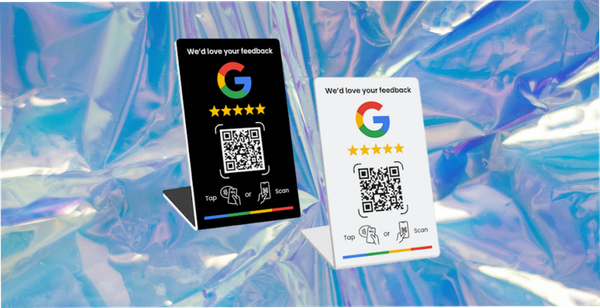
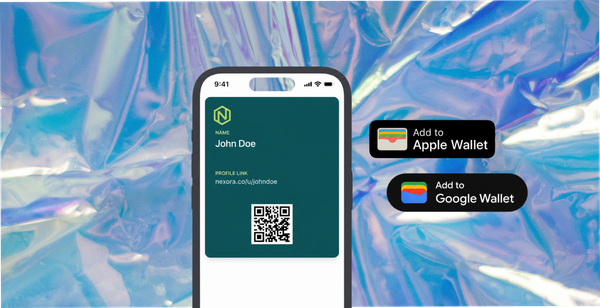
A customer receives a content request, by QR code on packaging, an NFC tap in store, or a link after purchase. They submit a photo, a video, or written feedback. Rights clearance is captured at the point of submission. The reward lands immediately as a pass in Apple Wallet or Google Wallet.
The customer never posts anything. There is no requirement to publish, tag, share, or involve their own social media at all.
The request itself also works differently, and this is less obvious than the posting question. A creator brief specifies a deliverable, because the brand needs consistency across several of them: format, length, hook, product visible within two seconds. Handed to a customer, that same brief describes a job, and jobs need paying for properly. A customer request has to do the opposite, asking for one small specific thing they can do while still holding the product. The difference is between commissioning a performance and asking someone to describe what already happened.
That is the fork in the road between the two approaches, and it comes down to what the brand actually wants out of the exchange.
What it is built for: brands that want a library of rights-cleared content to run in their own paid ads, email, product pages and social, plus an ongoing channel to the customers who supplied it.
Where the Two Approaches Diverge
Both models pay customers rather than creators. Inside that shared category, four things differ, and each one determines which route suits a given goal.
| Reward for posting | Reward for content | |
|---|---|---|
| Customer has to post | Yes | No |
| Reward timing | After the post is published and measured | On submission |
| Reward basis | Calculated on engagement | Fixed and known in advance |
| Primary output | Reach and views | Rights-cleared content library |
| Relationship afterwards | Sits with the network | Direct, via wallet pass |
| Best when you want | Word of mouth and awareness | Ad creative and owned channel |
1. Whether the customer has to post. This is the largest practical difference. Posting has a social cost that no reward fully compensates, because the cost is not financial. The customer is spending their own reputation, in front of people whose opinion of them matters. 82DASH data suggests around 79% of customers who would happily share something about a brand will not post it. A model requiring a post reaches the minority who will. A model requiring no post reaches everyone.
2. When the reward arrives. Immediately, or after the post has run and been measured. Immediacy matters more than size in getting people to participate at all.
3. Whether the reward is performance based. If the payout depends on engagement, the customer carries the uncertainty. They act first and discover what it was worth afterwards. A fixed reward removes that entirely, and the customer knows exactly what they are getting before deciding.
4. Who owns the relationship afterwards. In a network model, the customer's relationship is with the network. They joined the platform, they post through the platform, they get paid by the platform. The brand receives content and reach. In a direct model, the customer submits to the brand and the wallet pass leaves a channel on their phone, so the second request costs a fraction of the first.
None of these make one approach better. They make them suited to different jobs.

How to Choose
The question that resolves it is what you need the output to be.
If you need reach and word of mouth, a posting model is the right shape. You want the content in front of the customer's own network, and the social distribution is the entire point.
If you need content you own and can run in paid media, a collection model fits better. What matters is volume, variety and clean rights, and the customer's audience is irrelevant to that.
If you need a channel back to those customers, the direct model is the only one that provides it, because in a network model that relationship stays with the network.
If you need both, they are not mutually exclusive. A brand can run a posting campaign for reach and a collection campaign for library, and several do. The budgets come from different places: one is a media line, the other is a content production line.
If you need volume fast and have no customer base yet, a creator marketplace is the honest answer. A brand with forty customers cannot collect its way to a content library, and Billo will get usable video into an ad account this month. The credibility trade is real, but so is the timing problem.
A rough sequence suits most brands: use a creator marketplace early when there is no customer base to draw on, add direct collection once there is, and add a posting network when reach becomes the constraint rather than content.
There is a useful test. Ask whether you would still want the customer's contribution if nobody else ever saw their post. If yes, you want content. If no, you want reach.
How 82DASH Works in Practice
82DASH is a customer content platform. It collects rights-cleared photos, videos, feedback and reviews from real customers, and delivers the reward as an Apple Wallet or Google Wallet pass.
You build a content request, naming what you want and setting the reward. It reaches customers by QR code, NFC tap, or a link after purchase. They submit. Rights clearance is captured in that same step, covering paid ads, email, product pages, social, print and packaging, so nothing needs chasing afterwards.
The reward lands in the wallet immediately, as either a reward card or a contact card depending on whether there is an offer attached. That pass then becomes a direct channel: push notifications reach the lock screen, and the next request costs nothing to send.
The form builder also runs standalone, so a campaign can collect feedback, NPS or survey responses with no content request at all.
Where a brand does want the social distribution as well, Amplify prompts customers to post on their own channels after submitting. That is optional and additional rather than a requirement, which means the content arrives either way.
Plans start at $50 per month. See how the flow works.
Install 82DASH on the Shopify App Store
How to Test It Without Committing to Anything
The sensible way into this is a pilot small enough that being wrong costs very little.
Pick one moment, not a programme. The strongest single test for most brands is the post-delivery window: a card in the box with a QR code, one specific request, one small reward. It reaches every customer, needs no segmentation, and costs almost nothing to run.
Ask for one thing. Name the format and the quantity. One photo, or ten seconds of video. A request that reads as a job will be ignored, and the response rate will tell you the ask was wrong rather than the channel.
Run it for a month and count three numbers. How many people were asked, how many submitted, and how many submissions were usable. That gives you a cost per usable piece of content you can put next to a creator marketplace quote or a studio invoice.
Then compare like with like. A creator video at $80 and a customer video at $12 are not the same product, and the comparison only means something once you know which job each is doing. If the customer content performs in an ad account, the cost difference is decisive. If it does not, you have learned that cheaply.
Most brands who run this find the constraint is not customer willingness. It is that nobody had asked them directly before.
Why This Category Matters
The interesting thing is not that anyone is going away. Creator marketing will keep working for the jobs it is good at. It is that brands now have a genuine second option, and the underlying assumption behind creator marketing is being examined properly for the first time in a decade.
That assumption was that influence is something you buy from people who have accumulated it. The second proposition is that influence also already exists, distributed across your own customer base in small quantities, and that the job is to make it easy for those people to use it and to acknowledge them when they do. Both can be true at once, and for most brands both will be.
Brands have extracted free marketing from loyal customers for years without ever closing that loop. Whether the mechanism is a cash payment for a post or a wallet reward for a photo, the change worth noticing is that customers are finally being paid for value they were already creating.
That is a better arrangement for the brand, because the credibility is real. And it is a better arrangement for the customer, who was previously doing it for nothing.
Isabelle Simon is Communications Lead at 82DASH.
Frequently Asked Questions
What does "pay your customers, not creators" mean?
It describes a model where marketing budget goes to existing customers who create content or advocate for a brand, rather than to professional creators and influencers with no prior relationship to the product. Platforms including Social Tip and 82DASH operate on this premise from different angles.
What is Social Tip and how does it work?
Social Tip is a platform where customers who have made a verified purchase post about the product on Instagram or TikTok and receive a cash reward, calculated on engagement rather than follower count. It works with brands including HelloFresh, BrewDog and TALA, and does not require members to have large followings.
How is 82DASH different from Social Tip?
Both pay customers rather than creators. Social Tip rewards customers for posting to their own social channels, so the output is reach. 82DASH rewards customers for submitting content directly, with no post required, so the output is a rights-cleared library plus a wallet channel back to the customer. They suit different goals and can be used together.
Do customers have to post on social media to get rewarded?
It depends on the model. Posting-based platforms require it, since the social distribution is the product. 82DASH does not: the customer submits content directly and never posts anywhere. This matters because roughly 79% of customers willing to share something about a brand will not post it publicly.
Is paying customers cheaper than influencer marketing?
Generally yes, though the comparison depends on what you are buying. Social Tip publishes around $20,000 per million verified views against roughly $200,000 for influencer marketing. Content collection platforms are priced as software subscriptions plus reward costs, which is a different cost structure again.
Further Reading
- Social Tip: customer posting and reward platform
- Billo: creator marketplace for on-demand video
- Nielsen: consumer trust across advertising and earned media
- Bazaarvoice: conversion research on customer content
- FTC: endorsement and disclosure requirements