How to Request Content from Your Customers
The bottleneck in most customer content programmes is not the product or the audience - it is the request. Here is what a content brief that actually generates submissions looks like, and why "share your experience" produces almost nothing.

The bottleneck in most customer content programmes is not the product, the platform, or the size of the customer base. It is the request.
Brands that collect customer content consistently do not have some secret audience of unusually enthusiastic customers. They have a content request that is specific enough, timed well enough, and rewarded well enough that customers who would otherwise do nothing choose to respond.
Brands that collect almost nothing are usually sending some variation of "share your experience with us" to their entire post-purchase list and wondering why the response rate is close to zero.
The difference is not the customers. It is the brief.
"Photo incentives work better, 'include a photo for 15% off' tends to produce better content than generic incentives." — r/ecommerce
Why "Share Your Experience" Does Not Work
"Share your experience" is a request without a brief. It asks the customer to solve a creative problem from scratch: what should I share? In what format? How long? Of what specifically? On which platform?
Most customers will not solve that problem. It requires effort that the request does not justify and provides no guidance that would make the effort lower. The customer reads the email, does not know what to do, and moves on.
This is not a sign that the customer does not value the brand. Nielsen data consistently places peer recommendations as the most trusted content format - above advertising, influencer content, and brand communications. Customers want to help brands they like. What they will not do is figure out how to help when the brand has not told them.
A customer who receives a specific request - "a 30-second video of how you use it in the morning, filmed near a window, and we will put $15 in your Apple or Google Wallet" - has a completely different decision to make. The subject, the format, the length, the context, and the reason to respond are all resolved before they have to ask. The only remaining decision is whether to do it.
That is the difference a well-structured brief makes.
The Five Elements of a Request That Works
A good content request does not need to be long. In practice the most effective ones are two or three sentences, because brevity reduces friction. But they include five elements that the average "share your experience" request is missing entirely.
The subject - what specifically to capture. Not the customer's "experience" or their "thoughts" but a concrete subject: how they use the product, what they noticed when they first tried it, how it fits into a specific part of their day. The more concrete the subject, the lower the barrier to starting. A customer who knows exactly what to film or photograph can begin immediately. A customer staring at a vague open brief will not begin at all.
The format - medium, length, orientation. "A 30-second video" or "a photo in natural light" or "a short written account of one thing you noticed" tells the customer what they are making. Without format guidance, submissions are inconsistent - too long, the wrong medium, the wrong orientation, unusable for the channels where you need them. One line of format guidance prevents most of the submissions that arrive unusable.
The context - what you will do with it. "We use customer content on our product pages and in our ads" is a more compelling brief than a generic "we would love to feature our customers." It tells the customer that their submission has a destination and a purpose, which makes participating feel like a contribution rather than a favour done into a void.
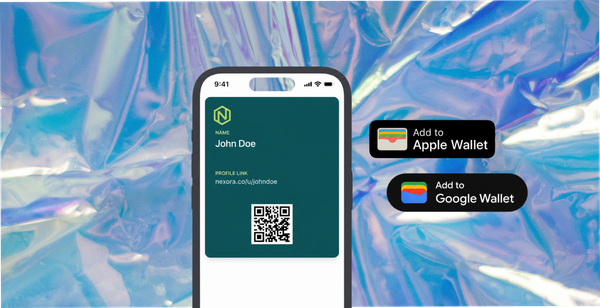
The reward - the reason to respond. Customers do not need an incentive to buy the product. They do need a reason to do additional work on behalf of the brand. A reward tells them their time and effort has value beyond goodwill. The format of the reward matters: a wallet pass delivered to Apple or Google Wallet immediately after submission lands on the home screen and resurfaces at the point of the next purchase, rather than getting buried in a promotions folder alongside everything else.
The submission path - how to actually do it. A content request that requires the customer to find the brand on Instagram, take a photo, write a caption, tag the account, and hope the brand sees it has too many steps. A single link to a mobile-optimised form that collects the content and consent in under two minutes removes every unnecessary obstacle between "I want to do this" and "done."
How to write a content request that actually gets responses covers the brief structure decisions that affect submission rate in more detail.

When to Ask
Timing is the element most brands get wrong even when the brief itself is reasonable.
A content request that arrives one day after delivery asks the customer to share an experience they have not yet had. Most products need to be used before there is anything worth sharing. A request that arrives too early gets a non-response not because the customer does not care but because they have nothing to show yet.
For most physical products, the right window is 10-14 days after confirmed delivery. This gives the customer enough time to use the product, form an honest opinion, and have something concrete to capture. For consumables or skincare products where results take longer to appear, the window may be 3-4 weeks.
Timing also affects what you can ask for. A request at day three might work for an unboxing photo - the packaging is still fresh and the first-impression moment has not faded. A request at day fourteen is better for an in-use photo or video, where the customer has genuinely integrated the product into their life.
A single request is not the limit. A follow-up two to three weeks later - sent only to customers who did not respond to the first - recovers submissions from customers who missed or deferred the first ask without pestering the customers who already responded.
The Shopify post-purchase flow that builds a content library covers where each content request type sits in the sequence and how to structure the full flow.
What to Offer
The reward conversation makes some brands uncomfortable. The concern is that incentivising content makes it less genuine - that a customer who shared a photo because they received $10 off is somehow a less credible source than one who shared spontaneously.
This concern conflates two different things. Genuine means the content came from a real customer with a real experience. Incentivised means the customer received something in return for the effort of sharing it. These are not in conflict. A customer who was happy with a product, was offered $10 for a photo, and chose to submit one is still a real customer sharing a genuine experience. The incentive changed whether they sent it, not what their experience actually was.
What the incentive changes is the response rate. Yotpo research puts incentivised content request response rates at 15-30% for brands who ask at the right post-purchase moment, compared to 1-3% for those relying on unprompted organic sharing.
The one constraint is that the reward cannot be conditional on positive sentiment. "Send us a photo and get $10 off" is permissible - you are rewarding the submission. "Send us a five-star review and get $10 off" is not - you are purchasing a verdict. FTC endorsement guidelines draw a clear line between the two. Content rewards sit on the right side of that line; sentiment purchases do not.
How to reward customers for photos, videos and feedback covers reward formats and why wallet pass delivery outperforms email coupon codes for conversion from submission to repeat purchase.
Making It Easy to Submit
A well-written brief delivered through a difficult submission process will still generate almost nothing. The submission path is where willing customers drop off.
The standard points of friction are: requiring platform login, requesting email attachment, asking customers to post publicly and tag the brand, or sending them to a form that is not mobile-optimised. Most customers will complete a content request on their phone. If the process does not work natively on mobile in under two minutes, a significant proportion of the customers who intended to participate will not.
The submission path should be a single link that opens a mobile-optimised form. From that form, the customer uploads or records directly from their phone, reads the terms covering how the content will be used, and submits. No account creation. No multi-step navigation. No steps that require leaving the form and returning.
Rights clearance happens at this same point. When the submission form includes clear terms covering the brand's intended uses - including paid advertising - every piece of content that arrives is rights-cleared from the moment of submission. This matters because the alternative is chasing retroactive permission from customers who posted something publicly, which has a low response rate and produces weaker legal documentation than consent collected at the source.
How 82DASH looks after rights management covers what the consent model looks like in practice and why rights collected at submission are more robust than retroactive permission requests.
What a Well-Structured Request Produces
The immediate result is volume. A collection flow running on every order cohort - a specific brief, a genuine reward, a single-link submission path, timed at day 10-14 - generates a consistent stream of new content. Skeepers research on UGC collection methods puts submission rates at 15-30% for brands actively requesting content at the right post-purchase moment, compared to 1-3% for those relying on unprompted organic sharing. At steady state for a structured flow, brands typically see 3-6% of order cohorts submitting content.
For a store shipping 400 orders per month, that is 12-24 new pieces of content per month. Bazaarvoice data shows that shoppers who interact with customer content on product pages convert at significantly higher rates than those who see brand photography alone - which means each piece of content entering the library has a measurable downstream value on conversion.
The compounding result is the library. Content collected this month is still in rotation twelve months from now. A brand running a collection flow for a year has built a content asset of hundreds of pieces - photos, videos, and written reviews arrived consistently, rights documented from the moment of submission, at a fraction of the cost of commissioned creative.
The strategic result is the shift from reactive to proactive. Brands waiting for customers to share spontaneously are at the mercy of what customers choose to share, when, and where. Brands running a collection flow decide what they ask for, in what format, and at what moment. The library that results is the one the brand actually needs - not whatever happened to get posted.
82DASH runs the collection flow, rights clearance, reward delivery, and content library for Shopify brands that want to move from waiting to asking.
Isabelle Simon - Communications Lead - 82DASH
Frequently Asked Questions
What should a customer content request include?
A content request that generates submissions should include five things: a specific subject (what exactly to photograph or film), format guidance (length, medium, orientation), context (what the content will be used for), a genuine reward (delivered via wallet pass for best results), and a single low-friction submission link. Remove any one of these and response rates drop. Include all five and the request becomes something customers can act on immediately rather than a question they will not bother answering.
How specific does a content request have to be?
Specific enough that the customer knows exactly what to do without making a creative decision themselves. "A 30-second video showing how you use it in the morning" is specific. "A photo of your experience" is not. The test is: if a customer reads this brief, do they know what to film or photograph without any further thought? If the answer is no, the brief needs to be more specific.
Is it better to ask for one type of content or give customers a choice?
Ask for one thing. A choice between photo, video, and written review sounds more accommodating but produces lower response rates because it reintroduces a decision the customer has to make. The brief should tell the customer exactly what format you want. If you need multiple content types, run separate requests at different points in the post-purchase sequence rather than offering options in a single ask.
How often can you ask customers for content?
Once per purchase at the right moment is the standard approach. A follow-up two to three weeks after the first - sent only to customers who did not respond - can recover submissions from customers who missed the initial ask. Asking more frequently than this risks being perceived as pestering and affects the brand relationship. Quality of timing matters more than volume of asks.
What is the difference between a content request and a review request?
A content request asks the customer to submit a specific piece of content - a photo, a video, a short written account - usually to a brand-controlled submission form. A review request asks the customer to post a rating on a third-party platform. The rights, the format, and the use cases differ. Content requests produce material the brand can deploy across paid advertising, email, and product pages. Review requests produce publicly visible social proof on platforms the brand does not control. Both have a place in a post-purchase sequence; they are not the same ask and should not be conflated.