How to Get Customer Photos You Can Use in Meta Ads
Customer photos outperform brand creative in Meta ads - but most brands can't collect enough of them, and the ones they do collect arrive without the rights documentation needed to run them commercially. Here is how to fix both.
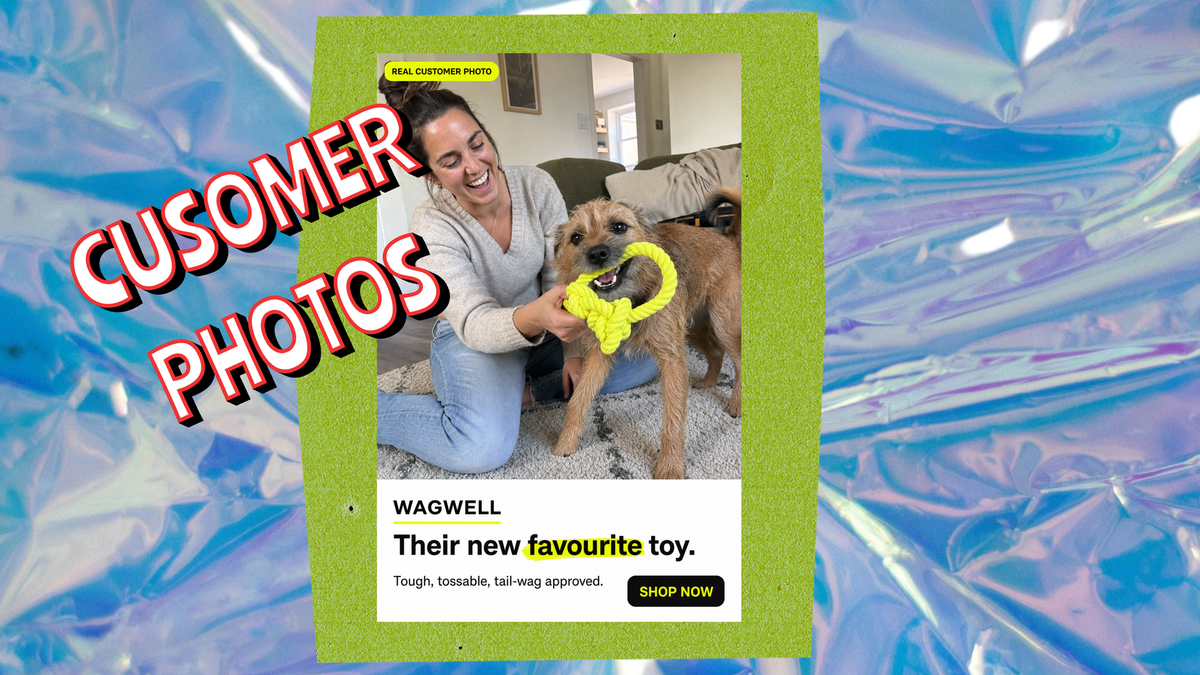
The best-performing creative in most Meta ad accounts is not brand photography. It is not influencer content. It is a photo taken by a real customer on their phone, in their home, of a product they actually bought.
This is not a new insight. Creative teams have known for years that authentic, lo-fi content outperforms polished studio work in paid social. The problem is that most brands cannot get enough of it, and the photos they do manage to collect arrive without the rights documentation needed to use them in paid advertising.
Getting customer photos you can actually use in Meta ads is a two-part problem: collecting the content and clearing the rights to run it commercially. Most brands solve neither consistently.
"UGC is definitely pulling strong right now, especially for certain niches (beauty, fitness, local food, etc). People just vibe with real faces and unpolished content. It lowers the 'ad radar.'" — r/FacebookAds
Why Customer Photos Outperform Brand Creative in Meta Ads
Meta's ad platform rewards content that looks native to the feed. An image that reads as an ad - polished backgrounds, professional lighting, carefully composed product shots - signals paid content before anyone reads a word. The scroll continues.
A photo taken by a real customer in natural light, with an actual background, product in hand or in use, reads differently. It appears in the feed the way organic content does. The signal is weaker, so attention persists for a fraction longer. That fraction is what converts.
A July 2026 study by Social Tip - one of the largest ever conducted into customer-created marketing, spanning 10,000 consumers and 17 brands - found that exposure to customer content increased purchase intent by an average of 37 percentage points. Advocacy, brand love, and consideration each moved by more than 30 points. These are not awareness metrics. They are purchase behaviour metrics, and they moved consistently across every brand in the study.
Meta itself recommends mixing authentic, creator-style assets into ad sets alongside brand creative. The algorithmic logic matches the data: content that looks like it was created by a person, not a brand, wins more attention.
The second reason is trust. A photo showing a real customer using a product in their real kitchen, real wardrobe, or real garden carries a credibility signal that studio photography cannot replicate. It demonstrates that a real person bought this product and thought it was worth photographing. That provenance is visible in the content even without a caption.
The Rights Problem
Most brands that want to use customer photos in Meta ads run into the same problem: the photos exist, but the rights documentation does not.
A customer who posts a photo of your product on Instagram has given the world permission to see it. They have not given you permission to use it in paid advertising. Running a customer's photo in a Meta ad without explicit consent covering commercial use is a rights violation, regardless of how the content was obtained.
Retroactive permission chasing - DMing customers who have already posted, asking for permission after the fact - has a low response rate and produces weak documentation. The customer may agree in a message, but a DM thread is not a rights licence. If the content is used in advertising and the customer later disputes the usage, the documentation does not hold.
The only reliable approach is rights clearance at source: collecting consent at the moment of submission, through a form with explicit terms covering commercial use including paid advertising. Every piece of content collected this way arrives rights-cleared from the moment it enters the library.
CGC vs UGC: rights, quality, and ROI explained covers why content collected through a brand-controlled process is legally distinct from content scraped from public platforms - and why the difference matters for ad use.
What Makes a Customer Photo Usable in Meta Ads
Not all customer photos are equal. The ones that work in Meta ads share a set of characteristics that can be built into the brief before a customer picks up their phone.
Natural light, real environment. A photo in a kitchen, garden, bedroom, or living room - with the kind of light that exists there - reads as authentic in a feed. Studio-style lighting reads as artificial regardless of the subject.
Product in active use, not arranged. A photo of a product being used, worn, poured, prepared, or experienced tells a more compelling story than a flat lay. The customer's hands, their space, and the context of use carry information that product shots cannot.
Reasonable image quality. Modern smartphones produce images sharp enough for digital ad use. The constraint is not megapixels - it is orientation and crop. Brief customers for a 9:16 vertical (for Stories and Reels) or 1:1 square (for Feed) from the start. A landscape photo cannot be used in placement where only square or vertical assets are accepted.
Person visible or implied. Content that shows the customer - or at least their hands, environment, or point of view - performs better than product-only images. It signals that a person is present without requiring a formal portrait.
A brief that specifies these parameters does not require the customer to be a photographer. It tells them: use the light from your window, hold the product, take a vertical photo. The result is something a brand creative team could not produce at scale.
Building the Collection Flow
The collection flow has four components that determine whether photos arrive and whether they are usable.
The request. The brief should be specific about subject, format, and context. "A vertical photo of you using [product] in natural light" is a complete brief. "Share your experience" is not. A customer who receives a clear brief can act immediately. A customer facing an open question will not act at all.
The timing. Sending a photo request on day one of delivery asks the customer to photograph a product they have not used. For most physical products, the right window is 10-14 days after confirmed delivery - enough time for the customer to use the product and find a moment worth photographing.
The reward. A genuine reward changes response rates from the 1-3% typical of unrewarded requests to 15-30% for well-timed, incentivised ones. The format of the reward matters. A wallet pass delivered to Apple or Google Wallet immediately after submission is accessible from the lock screen and resurfaces at the next purchase. A coupon code emailed to an inbox competes with the promotions folder.
The submission path. A single mobile-optimised link that opens a form allowing direct upload from the camera roll, with rights terms included, removes every unnecessary step between "I want to do this" and "done." A process that requires Instagram tagging, email attachment, or account creation will lose most of the customers who intended to participate.
The Shopify post-purchase flow that builds a content library covers how to structure the full post-purchase sequence and where each content request sits within it.
What Rights Clearance Needs to Cover for Meta Ads
Meta ad usage is a specific commercial use that rights documentation must name. Generic consent ("82DASH may use your content") is not sufficient for running paid advertising - the terms need to explicitly cover:
- Commercial use, including paid advertising
- Digital distribution across social media platforms
- Crop, resize, and editorial adaptation
- No expiry on the licence period
These are standard terms for a UGC submission form. Most customers will not read them in detail before submitting, but the documentation needs to exist in case of a future dispute. The consent is what makes the content legally deployable in ads, not the quality or the post.
Can you ask your customers for UGC? covers the full legal and practical framework for customer content collection, including what the terms need to say.
Testing Customer Photos in Meta Ads
Customer photos should be treated as a creative pool to test systematically, not a single asset to run until fatigue.
The approach that works consistently: take the best three to five customer photos from a given collection cycle, create separate single-image ads using each, run them against the same audience with the same copy, and let performance data determine which continues. A photo that outperforms brand creative in the first week gets budget. The others are paused and replaced with new customer photos the following cycle.
This requires a library that grows consistently - not a one-time campaign. A collection flow running on every order cohort adds new photos every month, which means the ad account has a refreshed creative pool without any manual sourcing effort. The photos arriving in month six were requested in month five. The system is automatic; the creative is always current.
82DASH connects the post-purchase collection flow to wallet pass reward delivery for Shopify brands, so customer photos arrive rights-cleared and organised by product ready for use in Meta ads.
Isabelle Simon - Communications Lead - 82DASH
Frequently Asked Questions
Can I use customer photos from Instagram in my Meta ads?
Not without explicit consent covering paid advertising. A customer who posts publicly on Instagram has not given you permission to run their content as a paid ad. You need a rights agreement that specifically covers commercial use including paid advertising. Collecting consent at the moment of submission - through a form with explicit terms - is the only approach that produces legally sound documentation.
What resolution do I need for customer photos in Meta ads?
Meta accepts images as small as 1080 x 1080px for Feed placements and recommends 1080 x 1920px for Stories and Reels. Modern smartphones produce images that exceed these thresholds. The practical constraint is orientation, not resolution - brief customers to shoot vertically (9:16) or square (1:1) from the start so the photos work across all placements without cropping.
How do I get customers to take photos for my ads?
A specific brief, genuine reward, and simple submission path. Tell the customer exactly what to photograph ("a vertical photo of you using [product] in natural light"), offer a wallet pass reward of $10-$15 off their next order, and send them a single mobile-optimised link where they can upload and submit in under two minutes. Response rates for well-structured requests with a genuine incentive run at 15-30%, compared to 1-3% for generic unprompted requests.
Do I need a model release for customer photos used in Meta ads?
If the photo includes a recognisable person - including the customer themselves - you need documentation that covers their image rights for commercial advertising use. A well-constructed submission form includes model release language alongside content rights terms, so consent for both arrives in a single submission.
How many customer photos do I need to run effective Meta ad tests?
Three to five per test cycle is workable. Run each as a separate ad against the same audience and copy, identify which outperforms, put budget behind it, and replace underperformers with new submissions from the next cohort. A collection flow running on every order provides a steady stream of fresh material - the creative testing cycle continues as long as the collection flow runs.