Wallet Pass Marketing for Retail: The Complete Guide
A complete guide to wallet pass marketing for retail - how Apple Wallet and Google Wallet passes drive loyalty, push notifications and engagement, with key use cases.

Retail marketing is getting harder in every direction. Average email open rates have slipped below 20% for most retail senders, according to Klaviyo benchmarks. SMS has risen as a channel but so have costs and opt-out rates. Paid social reach on Facebook and Instagram now costs significantly more per impression than it did three years ago, and creative fatigue is accelerating - Adweek data shows audiences tiring of ad formats faster than brands can refresh them.
Meanwhile, there is a channel sitting on essentially every customer's phone that most retail brands have barely touched: their digital wallet.
Apple Wallet and Google Wallet are not apps in the usual sense. They do not require a download. They live on the phone's lock screen, right alongside payment cards and boarding passes. A brand that delivers a pass to a customer's wallet has earned a genuinely persistent presence on that phone - not an app that gets deleted after three months, but a card that sits there every time the customer opens their wallet to pay.
This is wallet pass marketing, and for retail businesses of any size - whether you run a single boutique, a multi-location chain, a DTC e-commerce brand, or a hospitality operation - it is one of the most underleveraged tools available right now.
What Is Wallet Pass Marketing for Retail?
Wallet pass marketing uses loyalty cards, offers and vouchers saved to Apple Wallet or Google Wallet as a direct channel to customers. The pass sits on the phone without an app, updates remotely, and can trigger a notification when it changes, which is what separates it from a paper or emailed coupon.
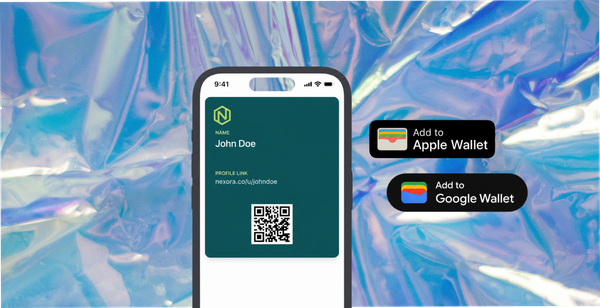
A wallet pass is a digital card delivered to a customer's Apple Wallet or Google Wallet. It looks like a loyalty card, a stamp card, a discount voucher, or a contact card, depending on how you build it. The customer receives it via a link - in an email, a QR code at the till, an NFC tap, or a post-purchase confirmation - and adds it to their wallet in two taps.
No app download. No account to create. No password to remember.
Once the pass is in the wallet, the brand can update it remotely. The balance changes, the reward appears, the offer refreshes - and none of that requires any action from the customer. The pass is just there, updated, the next time they open their phone.
That is the fundamental proposition. A direct, persistent, updateable channel from brand to customer, sitting on the device the customer checks dozens of times per day.
Statista reports that mobile wallet adoption has grown sharply across all major markets over the past three years, driven primarily by contactless payment behaviour during and after the pandemic. The audience is there. The infrastructure is there. The channel is massively underused for marketing.
How Do Wallet Notifications Work for Retail?
A wallet pass saved to a customer's phone can receive a push notification from the retailer when the pass updates. 82DASH sends at most one per pass per day, on both Apple and Google Wallet. No app install is required, because Wallet is already on the device.
What Can Retailers Do With Google Wallet Marketing?
Retailers can issue loyalty cards, offers and tickets to Google Wallet, update them remotely, and trigger a notification when a pass changes. Google allows up to three notifications per pass in any 24 hours and sets the lock-screen wording itself. 82DASH keeps to one a day, below that ceiling.
Why wallet pass marketing works
Three things make wallet passes distinct from email and SMS.
First, push notification open rates. A wallet pass can trigger a lock screen notification - the kind that appears whether or not the customer has the phone open. Open rates on wallet push notifications run significantly higher than email, in some analyses reaching 80-90% for well-timed messages. That is not because customers love being notified. It is because the notification appears in a context they trust: the same place their bank tells them a payment went through.
Second, placement. A loyalty or reward pass lives in the wallet section of the phone, not in an inbox that accumulates thousands of messages. Every time a customer opens their wallet to tap and pay, the pass is visible. There is no algorithm deciding whether to surface it. There is no inbox competition.
Third, updateability. This is the feature most brands overlook. Once a customer holds a pass, the brand can change what is on it without sending any new communication. A new reward appears on the pass. A stamp gets added. An offer refreshes. The relationship continues without requiring the customer to opt in to anything new. For retention and loyalty purposes, this is significant - you are not starting a new campaign each time, you are maintaining a live connection.
The four use cases for retail
Wallet pass marketing is versatile. Retail and DTC businesses are using it in four main ways.
Loyalty cards are the most common entry point. A digital stamp card or points card delivered to the wallet replaces the paper card that ends up in a drawer. Because it is always on the phone and can be updated in real time, the loyalty mechanic actually functions - customers see their progress, receive rewards when they hit a threshold, and return to redeem.
Reward delivery is the second use case. When a customer earns a voucher, a discount, or a free product, delivering it as a wallet pass means it travels with them to the next purchase. It does not get lost in an inbox. It does not expire unnoticed. It is in the wallet, visible at checkout.
Content collection rewards are a growing application. When a customer submits a photo, video, or piece of feedback - directly to the brand rather than publicly on social media - a wallet pass is the most effective delivery mechanism for acknowledging that contribution. More on this below.
Contact cards are a fourth format, particularly useful for service businesses, advisors, or any brand with a named team member the customer should be able to reach. The pass sits in the wallet as a persistent contact record, richer than a saved phone number and easier to access than a business card. For more on choosing between contact card and reward card formats, see this guide on the 82DASH site.
Wallet passes vs email vs SMS - an honest comparison
Each channel has a legitimate place in a retail marketing stack. The question is not which one to use, but which one fits the job.
Email is strong for detailed communication - product announcements, editorial content, long-form seasonal campaigns. It is inexpensive to send at scale, and it is the right format when the customer needs time and context to engage. The weakness is deliverability and open rate decline. Promotional email increasingly lands in filtered folders and competes with hundreds of other senders.
SMS is strong for time-sensitive, short messages - flash sale alerts, appointment reminders, order updates. Open rates remain high because the format demands attention. The weakness is cost per message and customer sensitivity to over-messaging. Opt-out rates rise sharply when brands use SMS as a broadcast channel rather than a transactional one.
Wallet passes are strong for persistent presence and push notification delivery. They do not replace email for detailed communication, and they do not replace SMS for urgent one-off messages. What they do is maintain an always-visible relationship between sends. Between the email campaign and the SMS reminder, the pass is still on the phone. And when the brand does push a notification through the pass, the context is one the customer already trusts.
For retail specifically, the most effective approach treats wallet passes as the retention layer - the channel that holds the customer relationship between active campaigns - and uses email and SMS as the broadcast layer on top. For a deeper look at wallet pass platforms available to retail brands, this comparison covers the main options in 2026.
The content collection angle
Wallet passes are not just for loyalty mechanics. They are also the most effective delivery mechanism for one of the highest-value things a retail brand can collect: genuine customer content.
Customer photos and videos - submitted directly by people who actually bought the product or visited the venue - are among the most persuasive materials a brand can use in paid social, on product pages, and in email. Bazaarvoice research has found conversion rates 161% higher when shoppers interact with customer content rather than brand-produced imagery. Nielsen reports that 92% of consumers trust earned media - content from real people - above all paid advertising formats.
The problem is collection. Most customers who would happily share content with a brand they like will not post it publicly. 82DASH's own data shows 79% of customers willing to submit content directly will not post it publicly. The mechanism has to be private, easy, and immediate.
When a customer submits a photo or video through a post-purchase or post-visit flow, a wallet pass is the ideal reward delivery channel. No email to get lost in spam. No link to click. The reward - a discount, a stamp, a free product offer - arrives directly on their phone as a wallet card the moment the submission is confirmed.
This matters for the brand in two ways. The submission is rights-cleared from the moment of collection, meaning the brand can use that content in advertising without the legal exposure that comes with reposting social media content without permission. And the customer now holds a pass, which means the brand has a persistent, updateable connection to that customer going forward.
For the mechanics of how this kind of content collection flow works in practice, this page on the 82DASH site is a useful starting point. And for more on why directly-submitted CGC (customer-generated content) differs from uncontrolled social UGC in terms of rights and reliability, this post covers the distinction.
How 82DASH approaches this for retail
82DASH builds the connection between post-purchase or post-visit content collection and wallet pass reward delivery. The platform works across retail and DTC contexts - whether you run on Shopify, Lightspeed, Square, SumUp, or operate entirely offline via NFC tap.
The flow is straightforward. A customer completes a purchase or visit. They receive an invitation - via email, QR code, NFC tap, or a link in the order confirmation - to share a photo or video and receive a reward. They submit the content. The reward arrives as a wallet pass, added to Apple Wallet or Google Wallet in two taps.
From that point, the brand has two things it did not have before: a rights-cleared piece of customer content it can use in advertising, and a wallet pass holder it can re-engage with future offers without depending on email deliverability or SMS opt-ins.
For Shopify merchants specifically, this post covers the technical integration in detail. For offline and NFC-triggered flows - relevant to hospitality, independent retail, and events - this article explains how the tap-to-wallet mechanic works in those contexts. And for the broader case for why wallet passes specifically make post-visit content collection more effective, this piece is worth reading.
Start free with forms to Apple and Google Wallet
The double output
The thing that makes wallet pass marketing particularly efficient for retail brands running content collection is what it produces in parallel.
Most marketing investments produce one thing. An email campaign produces opens and clicks. A paid ad produces impressions and conversions. A loyalty programme produces repeat visits. A content collection campaign with wallet reward delivery produces two distinct outputs simultaneously: a retained customer who now holds your brand in their wallet, and a rights-cleared content asset - a real customer photo or video - that can be used in paid social, on the product page, or in email.
The customer who submits a piece of content has also deepened their own relationship with the brand. The act of contributing is itself a loyalty behaviour. Sprinklr research consistently shows that customers who engage with a brand's content programme have higher retention and repeat purchase rates than those who do not. This is the compounding dynamic: the customer becomes more loyal by contributing, and the brand gets content it can use to convert new customers who are in the early stages of deciding whether to trust the brand.
Real customers who already believe in the product are, as Retail Dive has documented in its coverage of creator economy trends, more persuasive than paid creators precisely because they are not paid. Their contribution carries no financial incentive. The wallet reward they receive is an acknowledgement, not a payment. That distinction matters to the people who see the content.
How to get started
Starting with wallet pass marketing does not require a full loyalty programme build. The lowest-friction entry point is a single-use reward pass.
Set up a post-purchase or post-visit content collection flow. Invite customers to submit a photo or video in exchange for a reward - a discount on their next order, a free item, an upgrade. Deliver the reward as a wallet pass. Collect the content with rights clearance built into the submission flow.
From there, you have the foundation for a retention layer: a group of customers who hold your pass, plus a library of rights-cleared content you can deploy in advertising.
The 82DASH tips page on using wallet passes to keep customers coming back is a practical starting point for the pass mechanics. For the content collection side, this tips page covers how to structure the reward incentive.
Isabelle Simon - Communications Lead - 82DASH
FAQ
What is the difference between a wallet pass and a loyalty app?
A loyalty app requires a download, an account, and ongoing engagement to stay installed. A wallet pass requires none of those things. It lives in the native Apple or Google Wallet that already exists on the phone, and it stays there passively between active moments. For retail brands without the resources to build and maintain a native app, wallet passes deliver most of the retention benefit at a fraction of the cost and complexity.
Do customers need a smartphone to use wallet passes?
Apple Wallet is available on all iPhones from iPhone 6 onwards, running iOS 6 or later. Google Wallet is available on Android devices running Android 5.0 or later. For practical purposes, any smartphone purchased in the last several years will support wallet passes. Customers without a compatible device would receive the reward via an alternative mechanism - typically email.
Is the content collected through 82DASH actually rights-cleared for use in advertising?
Yes. When a customer submits a photo or video through an 82DASH campaign flow, they grant the brand explicit rights to use that content in marketing and advertising as part of the submission. The rights grant is documented at the point of collection. This is meaningfully different from reposting a photo a customer shared publicly on Instagram, where the legal basis for commercial use is often unclear. For a detailed explanation of why this distinction matters, this post on CGC vs UGC covers it thoroughly.
What retail business types is wallet pass marketing most suited to?
Wallet passes work for any business with repeat customers. The format is well suited to independent retail, multi-location chains, DTC e-commerce brands, hospitality businesses, cafes, restaurants, and event venues. The mechanic is the same across contexts - the pass is delivered after a purchase or visit, lives on the customer's phone, and can be updated with new offers or rewards. The NFC-triggered flow makes it particularly useful for offline businesses that do not have a post-purchase email mechanism.
How do wallet pass push notifications work compared to email?
When a brand sends a wallet pass notification, it appears on the customer's lock screen in the same way a bank transaction alert would. The customer does not need to open an email app or navigate an inbox. Open rates for wallet push notifications are substantially higher than for promotional email, precisely because the delivery context is different. The notification arrives in a trusted, low-noise environment rather than competing with dozens of other promotional messages.
Further Reading
- Best wallet pass platforms for retail and hospitality in 2026
- CGC vs UGC - what's the difference and why it matters for rights clearance
- How to add Apple and Google Wallet passes to Shopify
- Wallet passes and customer content collection after every visit
- NFC tap to wallet - replacing paper loyalty cards in cafes and restaurants
- How to use Apple and Google Wallet passes to keep customers coming back
- Contact card or reward card - which should you offer?
- How to reward customers for photos, videos, and feedback