How to Balance Organic UGC and Paid UGC
Organic UGC and paid UGC are not the same thing. They perform differently, cost differently, and serve different purposes. Here is how to run both in parallel - and what each one is actually for.
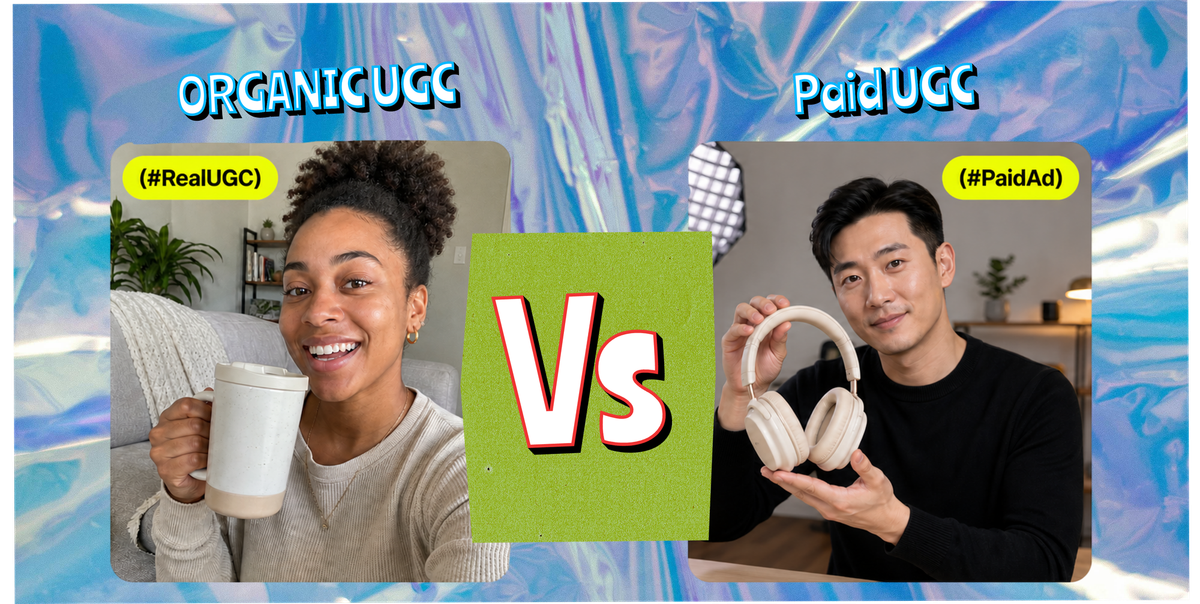
Most conversations about UGC strategy collapse two different things into one. Organic UGC and paid UGC are not the same thing. They do not perform the same way, cost the same way, or produce the same kind of content. Treating them as interchangeable explains why most UGC strategies underperform.
The brands getting the best results from customer content are running both in parallel - but with clarity about what each one is for.
"UGC is massively outperforming traditional branded content for us right now. People trust real voices way more than polished ads and the engagement numbers back that up." — r/SocialMediaMarketing
What Organic UGC and Paid UGC Actually Are
The distinction matters because the content itself is different, not just the cost.
Organic UGC is content created by real customers who bought the product, used it, and chose to document the experience. The customer is a genuine buyer. Their content reflects a real purchase and a real opinion. They may have received a reward for submitting - a discount, a wallet pass credit - but they are not being paid as a content creator. The content exists because the customer had an experience worth sharing.
Paid UGC is content commissioned from creators who are paid to produce content that looks like organic UGC. The creator may or may not have purchased the product. The content is scripted, art-directed, and produced to a brief. It has the aesthetic of authentic content - handheld camera, casual voiceover, real-looking environments - but the person on screen is being paid for their creative work, not their genuine experience.
The distinction is not about quality. Paid UGC can look more polished and be easier to art-direct at scale. Organic UGC can arrive in unusable formats or miss the brief entirely. Neither is categorically better. They serve different purposes and the right balance depends on what stage the brand is at and what the content is being used for.
What Organic UGC Is Good For
Organic UGC carries a signal that paid UGC cannot replicate: provenance. A real person bought this product, used it, and thought it was worth photographing. That signal is visible in the content - not in the caption or the staging, but in the authenticity of the environment, the context of use, and the fact that the person has no commercial reason to be enthusiastic.
This signal performs best in:
Product pages. A customer who is deciding whether to buy will look at reviews and customer photos to answer the question "does this look like the marketing images in real life?" Paid UGC on a product page, if identified as such, undermines the credibility it is trying to build. Organic UGC from real verified buyers does not have this problem.
Paid social mid-funnel. In Meta ad sets, organic UGC from real customers consistently outperforms polished brand creative for consideration-stage audiences. Social Tip's 2026 research across 17 brands found a +37 point average purchase intent lift from exposure to customer content. The mechanism is trust: the content looks like a recommendation from a peer, not a brand.
Social proof across owned channels. Organic UGC in email, on the website homepage, and in retargeting carries a credibility signal that branded photography and paid creator content do not. The buyer knows this content was created by someone like them.
The constraint on organic UGC is volume and control. You can influence what customers create with a well-constructed brief, but you cannot fully control it. Some submissions miss the mark. Response rates, even with strong incentives, sit at 5-15% of order cohorts. Organic UGC compounds over time but it does not arrive on demand.
What Paid UGC Is Good For
Paid UGC solves the volume and speed problems that organic UGC cannot.
New product launches. A product that has just launched has no customer base from which to collect organic content. Paid UGC lets brands have launch-ready creative from day one - content that performs well in paid social before any real customers have submitted anything.
Testing creative angles at scale. Paid creators can be briefed on specific hooks, formats, and messaging angles that would be difficult to request from real customers. A brand testing ten different hooks for a Meta ad campaign can commission ten paid UGC variations in a week. That speed is not achievable with organic collection.
Filling format gaps. If the brand needs 9:16 vertical video for Reels and Shorts but organic submissions are arriving as square photos, paid creators fill the gap immediately. Organic collection can be briefed for specific formats, but it takes months of steady collection to build a library across all needed formats.
High-production situations where polish matters. Some placements - hero video on a landing page, above-the-fold creative in a brand campaign - benefit from the higher consistency and production control that paid creators offer.
The constraint on paid UGC is authenticity and ongoing cost. At scale, paid UGC requires a meaningful creator budget. And in channels where audiences have developed strong instincts for synthetic or commissioned content, paid UGC can underperform organic UGC even when the production quality is higher.
The Disclosure Question
Paid UGC has a compliance dimension that organic UGC does not.
When a brand commissions a creator to produce content and uses it in advertising, FTC endorsement guidelines require disclosure that the relationship is commercial. In organic UGC, a real customer submitting content through a brand's collection flow - in exchange for a product reward rather than a creator fee - sits in a different disclosure category: the content is genuine, and the reward is for the submission of an authentic experience, not payment for a creative performance.
The practical implication is that organic UGC can be used in paid advertising with cleaner legal standing, provided the rights documentation is collected at submission. Paid UGC requires disclosure either in the creative itself ("paid partnership") or through Meta's branded content tools.
CGC vs UGC: rights, quality, and ROI explained covers why the collection process determines both the legal standing and the credibility of the content.
How to Run Both in Parallel
The most effective UGC strategies use organic as the foundation and paid as the accelerant.
Organic first, always. A brand that launches a paid UGC programme without an organic collection flow is renting its content library indefinitely. Every piece of paid content requires a budget. Every piece of organic content, once collected and rights-cleared, is an asset with a cost that does not recur. The organic collection flow is the compounding asset; paid UGC is the top-up.
Use organic for trust, paid for volume. In a Meta ad set, organic UGC typically carries higher CTR and lower CPM for consideration-stage audiences, because the trust signal is stronger. Paid UGC typically offers more creative variety and format flexibility. Running both as separate creative pools and letting performance data determine allocation uses each where it performs best.
Let organic UGC inform paid UGC briefs. The organic submissions that perform best in ads contain the authentic language, use cases, and customer moments that resonate. A brand that collects organic UGC systematically can read those signals and brief paid creators to amplify the specific angles that are already working. The organic content library becomes a research tool for the paid content strategy.
Scale organic collection with order volume. Organic UGC compounds automatically if the collection flow runs on every order cohort. A brand shipping 300 orders per month at a 6% submission rate adds 18 new pieces of rights-cleared content per month without any additional creator spend. After twelve months, that library has grown by over 200 pieces. Paid UGC does not compound - the cost is the same for every piece.
The Shopify post-purchase flow that builds a content library covers how to structure the organic collection flow that makes compounding possible.

Common Mistakes in Blending Both
Using paid UGC as a substitute for organic collection. Paid UGC fills short-term gaps but does not build an owned asset. A brand that relies entirely on paid creators has no content library the day the budget stops. Organic collection builds something the brand owns permanently.
Treating all UGC as equivalent in performance data. Organic and paid UGC should be tracked as separate creative pools in ad accounts. Mixing them into a single "UGC" label makes it impossible to see which type is driving performance. The data from running both clearly will show where each performs best.
Requesting content that only paid creators can deliver. An organic collection brief that asks for a highly produced, multi-scene video will produce almost no submissions. Organic UGC briefs should be achievable by a real customer with a phone in five minutes. The brief shapes what arrives.
Neglecting rights documentation on paid UGC. Paid creators should sign agreements covering the brand's intended uses including paid advertising before any content is commissioned. Retroactive rights chasing from creators is as problematic as retroactive rights chasing from customers.
Can you ask your customers for UGC? covers the consent and rights framework that applies to organic collection. For paid creator agreements, the documentation requirements are different but equally important.
The Right Question
The question is not whether to use organic or paid UGC. It is: what is each one for in your specific content strategy?
Organic UGC from real verified customers is the most credible content a brand can hold. It is harder to collect, slower to scale, and requires a systematic collection flow to build at volume. Once built, it is a compounding asset that does not require ongoing spend.
Paid UGC is faster, more controllable, and useful for filling gaps. It requires continuous budget and carries disclosure obligations that organic UGC does not.
The brands that perform best in paid social and on product pages have built both: an organic library from real customers that grows with every order, and a paid creative layer that fills the gaps organic collection cannot cover quickly enough.
82DASH runs the organic collection flow, rights clearance, and wallet pass reward delivery for Shopify brands - building the compounding content asset that makes the organic side of this equation possible at scale.
Isabelle Simon - Communications Lead - 82DASH
Frequently Asked Questions
What is the difference between organic UGC and paid UGC?
Organic UGC is content created by real customers who genuinely purchased and used a product. They may receive a reward for submitting (a discount, a wallet pass credit) but they are not paid as creators. Paid UGC is content commissioned from creators who are paid to produce content that has the aesthetic of authentic customer content. The creator may or may not have bought the product. The key difference is provenance: organic UGC reflects a real purchase and a genuine experience; paid UGC reflects a creative brief.
Which performs better in Meta ads - organic or paid UGC?
It depends on the objective and the stage of the funnel. For consideration-stage audiences, organic UGC from real customers typically outperforms paid UGC because the trust signal is stronger. For top-of-funnel awareness, paid UGC often offers more creative variety and format flexibility. Most brands see the best results running both as separate creative pools and letting performance data determine budget allocation.
Do you need to disclose paid UGC in ads?
Yes. FTC endorsement guidelines require disclosure when a creator has been paid to produce content. In Meta ads, this typically means using the branded content tool or including a disclosure in the creative itself. Organic UGC collected from real customers through a submission form - in exchange for a product reward rather than a creator fee - has different disclosure requirements, provided the rights documentation is properly collected at submission.
How much organic UGC do you need before paid UGC makes sense?
There is no fixed threshold, but a useful benchmark is having enough organic content to run a meaningful creative test: at least five to ten strong organic assets across the main product lines. Without an organic baseline, you cannot benchmark whether paid UGC is genuinely improving performance or just adding volume. Most brands benefit from running an organic collection flow for at least two to three months before introducing paid UGC as a supplement.
Can organic UGC be used in paid advertising?
Yes, provided the rights documentation covers commercial use including paid advertising. Content collected through a submission form with explicit terms covering these uses is immediately deployable in ads. Content taken from public social posts without explicit consent is not, regardless of how authentic it appears. The rights clearance is what makes organic UGC legally safe to run as paid advertising.