Fairing Alternative for Shopify: When You Need More Than Post-Purchase Surveys
Fairing answers where a customer came from. It will never produce a photograph. If you have the attribution answer and still have nothing to market with, that is a different problem and a different tool.

Fairing does one thing and does it properly: it asks a question at the checkout, at the moment a customer is most likely to answer, and it tells you where they came from.
If that is your problem, Fairing solves it and this article is not going to talk you out of it.
From r/shopify:
"There's simply no better way to know what a visitor wants, likes, or dislikes than to ask them. Getting that feedback is one of the best ways to improve conversions, and sales in general. That's what post-purchase surveys do."
The reason people search for an alternative is usually different. They have the attribution answer and have realised it does not produce anything they can use in marketing. A survey response is a fact about a customer. It is not a photograph, a video, or a testimonial, and it will never become one.
What Fairing Is Genuinely Good At
Worth being accurate about, because the decision only makes sense if you know what you would be giving up.
Fairing puts a question on the post-purchase page, which is the highest-response moment in the entire customer journey. The customer has just paid, they are not going anywhere for a few seconds, and the question costs them one tap.
It exists because attribution broke. After Apple's App Tracking Transparency changes, click-based attribution stopped being reliable, and asking the customer directly became the practical substitute. That is zero-party data, and it is more durable than anything the pixel will tell you.
It also integrates with the tools that consume that answer, so the response lands where your team already works rather than in a separate dashboard nobody opens.
If your primary need is attribution, keep it. 82DASH does not replace that and does not try to.
Where the Scope Ends
Four gaps, and they are structural rather than roadmap items.
It cannot ask for a photo or a video. Fairing collects answers. A brand that needs customer imagery for ads, product pages or email is not going to get it from a survey tool, however good the response rate.
There is no rights clearance, because there is nothing to clear. Text answers do not require a licence. The moment you collect a photograph, you need an agreement that names the channels you may use it in, and that agreement has to be captured at submission.
There is no reward mechanism. The customer answers and receives nothing. That is fine for one question at checkout and it is why Fairing keeps surveys short. It is not a model that scales to a bigger ask.
There is no ongoing channel. Once the answer is submitted, the interaction is over. Nothing persists on the customer's phone, so the second request costs exactly as much as the first.
Two Different Problems, Often Confused
| Attribution survey | Content collection | |
|---|---|---|
| The question | Where did you hear about us? | Will you show us the product in use? |
| When it fires | At checkout, immediately | Days later, after delivery |
| What you get back | A data point | A photograph, video, or testimonial |
| Rights needed | None | A licence naming the channels |
| Reward | None, the ask is tiny | Required, the ask is real |
| What it feeds | Your media plan | Your product pages and ad creative |
| Leaves behind | A row in a report | Content you can run, and a channel |
The timing row is the one that explains why these are not the same tool. A content request fires days after delivery, because a customer who has not opened the box has nothing to photograph. A post-purchase survey fires at checkout, because attention is highest and decays immediately. One tool cannot fire at both moments and be good at both jobs.
That is also why running both is common and sensible rather than wasteful.
Which Situation Are You In
You want attribution and content. Run both. Fairing at checkout for the attribution question, a content platform a few days later for the photo or video request. They do not overlap, and the combined cost is usually lower than people expect.
You are paying for Fairing and using it as a general feedback tool. This is where the switch makes sense. If the attribution question is not the thing you actually care about, you are paying for a specialist tool to do a generalist job, and the thing you probably want, content you can market with, is not on its roadmap.
You have never had either. Start with the one that produces something you can use. A content library compounds; an attribution answer is consumed once.
What a Content Request Looks Like, If You Have Only Run Surveys
Worth spelling out, because the two asks are written completely differently and survey habits transfer badly.
A survey question is closed. A content request is an instruction. "How satisfied were you?" has an answer set. "Show us where it ended up" has no answer set, which means the customer needs more guidance rather than less. Give them three prompts and most people follow them. Give them an open invitation and most freeze.
Timing moves from immediate to delayed. A survey fires at checkout because attention peaks there. A content request fires days after delivery, because a customer who has not opened the box has nothing to show you. Sending a photo request at checkout is the single most common way to get a zero response rate.
The reward stops being optional. Nobody needs paying to click one radio button. Photographing a product, framing it, and uploading it is real work, and the response rate tracks whether the exchange feels fair. This is also where disclosure enters: content given in exchange for a reward is an incentivised endorsement, and the FTC requires that material connection to be disclosed wherever the content is used.
And the output needs storing properly. A survey response is a row. A photograph is a file with rights attached, and it needs to be findable in six months by someone who was not there when it arrived.
None of this is difficult. It is just a different discipline from the one a survey tool teaches.
What Each One Actually Costs You to Run
Software pricing is the smaller half of this. The larger half is what the tool asks of you every week.
An attribution survey is nearly free to operate. One question, set once, and the answers accumulate. The work is in reading them, and most teams under-do that rather than over-do it. The failure mode is a dashboard nobody opens, not a workload.
Content collection has a real operating cost, and anyone telling you otherwise is selling. You have to decide what to ask for, write the request, set a reward you can afford, and review what comes back. None of that is heavy, but it is not zero, and it recurs.
What you get for that effort is the difference: an attribution answer is consumed once and informs a media decision. A photograph runs on a product page, in an ad, in an email, and keeps running. One is a data point, the other is inventory.
The honest version of the comparison is therefore not "which is cheaper" but "which problem is costing you more". If you are guessing at channel attribution, that is expensive and Fairing is cheap against it. If you are paying for photography or running ads with stock imagery, that is expensive too, and a survey tool will never touch it.
Two practical notes on switching, if you are considering it.
Export before you cancel. Survey responses accumulate into something genuinely useful over a year, and you want them in your own storage rather than trapped in a tool you have stopped paying for. Do it while the account is live rather than during the cancellation window.
Check what your Shopify post-purchase page can hold. Attribution surveys live there because attention is highest, and it is a constrained surface. Anything you put there competes with everything else you might put there, which is a reason to keep the checkout question short regardless of who supplies it.

How 82DASH Fits
To be direct about the boundary first: 82DASH is not a survey tool and is not an alternative to Fairing for attribution. If that is your use case, this is not your answer.
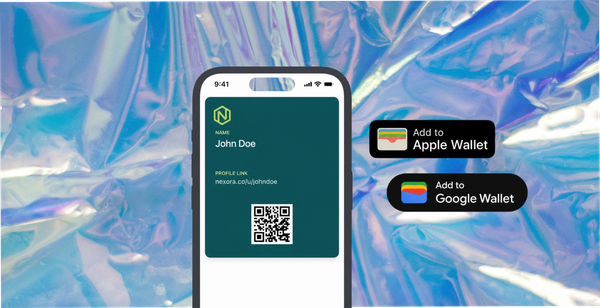
What 82DASH does is collect content, with feedback and questions attached to the same submission. A customer scans a QR code or follows a link, submits a photo, a video, an answer or all three, and a reward lands on their phone in an Apple or Google Wallet pass within seconds.
Three things separate that from a survey.
The reward is the mechanism, not a courtesy. A photograph is a real ask and it needs a real exchange. The reward arriving immediately is what makes the exchange feel fair, and it is why the response rate on a rewarded content request bears no relation to an unrewarded survey.
Rights are cleared at the point of submission. The customer agrees to marketing use, including paid media, when they hand the content over. Our rights management page covers how it works. This is the step that makes the difference between a photo you have and a photo you may run.
The pass stays. It remains on the customer's phone after the reward is spent, so the next request goes to someone who has already participated once.
Pricing is $50, $82 and $120 a month, with a free tier for form-based campaigns. The free tier is the honest place to start if you are weighing this against a tool you already pay for, because it answers the only question that matters: do your customers actually respond. The pricing page has the detail.
Worth keeping the terminology straight, because it is doing work here. CGC, customer-generated content, is submitted directly to you, structured and rights-cleared. UGC in the older sense is publicly posted and rights-uncertain. A survey response is neither. The glossary sets out the terms.
Underneath it all: pay your customers, not creators. The people who already bought the product will photograph it for the price of a small reward, and their version is more believable because nobody paid them to like it.
Start free with forms to Apple and Google Wallet
Isabelle Simon, Communications Lead, 82DASH
FAQs
Is 82DASH a Fairing alternative?
Only if what you actually want is content rather than attribution. Fairing asks one question at checkout and tells you where a customer came from. 82DASH collects photos, videos and feedback with rights cleared at submission, and rewards the customer for it. If attribution is your use case, keep Fairing.
Can I run both?
Yes, and many brands do. They fire at different moments: Fairing at checkout while attention is highest, a content request days later once the product has arrived. Because the timing differs, they do not compete for the same response.
What does Fairing not do?
It does not collect photos or video, has no rights clearance mechanism because text answers do not need one, offers no reward to the customer, and leaves no ongoing channel once the answer is submitted. None of that is a criticism; it is a survey tool doing survey things well.
Which is cheaper?
It depends on order volume and what you are replacing. 82DASH runs $50, $82 and $120 a month with a free tier for form-based campaigns. Rather than comparing headline prices, price the whole job: if you need attribution and content, you are buying two things either way.
Do I need a rights agreement for survey responses?
Generally no. Text answers submitted to your own tool do not require a licence in the way imagery does. The moment you collect a photograph or video of a person, the position changes, and the agreement needs to name the channels you intend to use it in.