Best Digital Wallet Pass Tools for Restaurants and Hotels (2026)
A honest comparison of five digital wallet pass tools for restaurants and hotels. What each does best, real limitations, and when to choose which platform.

Digital wallet passes have moved past the bleeding edge. By mid-2025, 65% of US adults used a digital wallet. The behaviour is established. The adoption gap is now on the business side.
And it matters more in 2026 than ever before.
Restaurant owners and hoteliers are caught between two trends. On one hand, platform costs are rising - OTA commissions eat into margins, Instagram's organic reach keeps shrinking, and algorithm changes mean you can't rely on free discovery. On the other, your customers are carrying phones that already have wallet software built in. No app download required. No competition with Netflix for home screen space. No algorithm deciding whether your message gets through.
A digital wallet pass sits between a customer's bank card and their boarding pass. That positioning - that proximity to financial intent - is the whole point. A loyalty app competes for attention. A wallet pass doesn't.
This buying guide looks at five tools that deliver wallet passes to Apple Wallet and Google Wallet, and honestly assesses what each does well. We'll focus on hospitality operators - restaurants and independent hotels - evaluating which tool actually fits your business.
Why Digital Wallet Passes Work for Hospitality
Let's be direct: a digital wallet pass is not a new idea. Apple Passbook launched in 2012. But adoption is only now hitting the threshold where operators without venture funding can build direct customer channels this way.
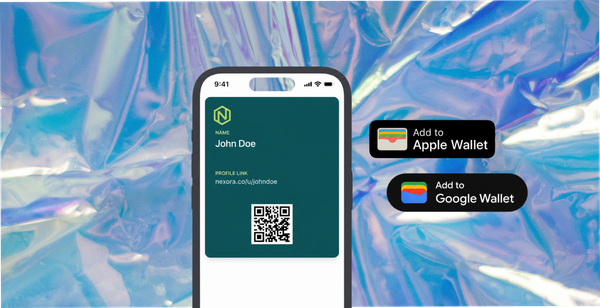
Here's what a wallet pass actually is: a card that sits in a customer's wallet app (Apple Wallet or Google Wallet) containing your branding, a unique code (QR or barcode), and optionally a push notification capability. A customer taps it at your POS. They scan it. They get a reward, points, or access.
What makes this better than a loyalty app?
- No friction to join. Customers don't download anything. They scan a QR code, tap an NFC point-of-sale reader, or click a link in a confirmation email. The pass appears in their wallet instantly.
- Direct access to lock screen. Push notifications from wallet passes get 4x higher click-through rates than email. A notification arrives on the lock screen, not buried in an inbox.
- Owned channel. You control the message, the timing, and the data. It doesn't depend on Instagram's algorithm or Google's search visibility. Your customers opted in by using the pass.
- Lower cost than OTA reliance. For hotels, a direct booking from a wallet pass costs you nothing in commission. An OTA booking costs 12-15% of revenue. For restaurants, repeat visits driven by wallet loyalty reduce dependency on paid acquisition and delivery platforms.
The case for owning a direct channel has become urgent because the cost of renting reach has become unsustainable. A wallet pass database is an owned asset. It doesn't disappear when an algorithm changes.
What to Look for in a Wallet Pass Tool
Before comparing specific platforms, evaluate any tool against these criteria:
- Pass types supported
Can it deliver loyalty cards, contact cards, event tickets, or reward passes triggered by actions other than purchases? Some tools only handle points-based loyalty. Others can reward content submission or survey completion.
- Push notification capability
Can you send notifications directly to customers between visits? This is the difference between a static card and a channel. Not all tools support this. It's often a paid feature.
- Physical trigger options
Does it support both QR code scanning and NFC tap? Or just one? For independent restaurants, QR is usually sufficient. For hotels, NFC at check-in adds premium feel. Some tools are QR-only.
- Online trigger options
Can the pass be delivered via a link in an email or post-purchase confirmation? Critical for restaurants that also do delivery or catering, and for hotels sending confirmations.
- POS integration
Does it connect to Shopify POS, Square, Lightspeed, or SumUp? Or do you manually log rewards? Integration saves labour and reduces errors.
- Content collection
Can it do more than deliver loyalty? Can it collect photos, video, feedback, NPS responses, or reviews? Most loyalty tools can't. This matters if you want wallet passes to drive user-generated content.
- Rights clearance
If content is collected, is consent and rights clearance built in? Critical for any hospitality brand collecting customer photos or videos for marketing.
- Price point
Is the tool realistic for an independent operator, or is it priced for multi-unit groups and enterprise? Starter plans range from $30/mo to $300+/mo.

Five Wallet Pass Tools: What Each Does Best
1. 82DASH - Wallet Passes Plus Content Collection
82DASH is built on a specific premise: wallet passes should reward any action, not just purchases.
Most wallet pass tools reward loyalty transactions - you buy something, you get points, you unlock a reward pass. But what if you want to reward a customer for submitting a photo from their meal, or for completing a survey about their stay, or for leaving a review? That's a different use case.
82DASH combines three product pillars:
- Content collection - customers upload photos or videos directly in response to your prompt
- Form-based insights - collect NPS, surveys, feedback, or reviews without requiring an upload
- Wallet reward delivery - the moment they submit, they can claim a reward pass sent instantly to Apple Wallet or Google Wallet
This makes it useful if you're operating a hospitality brand and you want your wallet passes to also function as a content acquisition machine. A restaurant can offer a $5 reward pass for uploading a meal photo (rights cleared). A hotel can offer a discount code for completing an NPS survey, delivered as a wallet pass.
Pricing starts at $50/month (Starter plan: 200 image uploads, 200 form requests, 2 campaigns, Apple/Google Wallet, no video). Growth is $82/month (400 images, 200 videos, unlimited forms, 8 campaigns, push notifications). Pro is $120/month (1000 images, 400 videos, unlimited campaigns, push notifications).
POS integrations include Shopify POS, Lightspeed, Square, and SumUp.
Strengths:
- Only tool that combines wallet delivery with content collection and rights clearance in one system
- Rights-cleared content is useful for restaurants and hotels building social proof
- Push notifications (Growth and Pro) get direct lock-screen access, critical for re-engagement
- Pricing is accessible for independent operators
Honest limitations:
- Not the strongest pure loyalty tool. If you just want points, tiers, and referrals, other platforms do it more deeply
- Requires content mindset - you need a reason to collect photos or feedback beyond "loyalty programme"
- Video collection is on Growth and Pro plans only
- Content collection workflow adds a step compared to pure point-of-sale loyalty
Best for: Restaurants and hotels that want to collect customer-generated content (photos, feedback, reviews) alongside loyalty, with wallet pass rewards triggered by submissions.
2. JeriCommerce - Loyalty-First Wallet Passes
JeriCommerce specialises in loyalty for hospitality on Shopify POS and Square. Its wallet pass strength is focused entirely on points, tiers, gift cards, and referral rewards - all delivered to wallet.
The tool is mature, polished, and purpose-built for QSR and casual dining restaurants. You can build tiered loyalty (bronze, silver, gold), gift cards in wallet, referral rewards, and birthday offers. Push notifications are available to re-engage lapsed customers.
Pricing is typically in the $50-150/month range depending on features and volume.
Strengths:
- Deep focus on loyalty mechanics means points tiers and referral systems are sophisticated
- Strong Shopify POS integration
- Wallet push notifications work reliably
- Designed specifically for restaurants
Honest limitations:
- Loyalty-focused means it doesn't collect content, feedback, or reviews
- If you want wallet passes for non-transactional actions (survey completion, content submission), this isn't the right tool
- Less suitable for hotels than restaurants
- Custom branding and white-label options may cost extra
Best for: Independent and multi-unit restaurants wanting to build a sophisticated, purchase-driven loyalty programme with wallet delivery.
3. PassKit - Developer-Friendly Wallet Infrastructure
PassKit is an API-first wallet pass platform. It's powerful, flexible, and increasingly popular with medium-sized hospitality operators building custom loyalty systems.
You can use PassKit to manage passes across Apple Wallet and Google Wallet, send push notifications, integrate with custom CRM systems, and track redemption. It works well if you have in-house development resources or a technical partner.
Pricing scales with volume - typically $500-2000/month depending on pass distribution scale.
Strengths:
- Highly customisable - can build almost any pass type or loyalty mechanic
- Strong API and documentation for developers
- Enterprise-grade reliability
- Flexible content and data capture if you code it
Honest limitations:
- Requires technical implementation - not a plug-and-play tool for non-technical operators
- Pricing jumps quickly with volume
- You're responsible for building loyalty logic, not just deploying passes
- Best suited to mid-market operators with development budgets
Best for: Restaurants and hotels with development resources wanting maximum customisation and integration with proprietary systems.
4. Wallet.ly - Simple Pass Creation
Wallet.ly offers straightforward wallet pass creation and distribution. Design a pass, set up basic loyalty logic (points per transaction), distribute via QR code or link. Good for operators wanting to start with wallet passes without complexity.
Pricing is entry-level, typically $20-60/month.
Strengths:
- Simple interface, low barrier to entry
- Affordable for very small operators
- Decent design templates
Honest limitations:
- Minimal POS integration - mostly manual or CSV upload
- Limited push notification capability or not available on lower tiers
- Loyalty features are basic (points only, no tiers or referrals)
- Less suitable for multi-location or high-volume businesses
Best for: Solo operators or small restaurants just experimenting with wallet passes and wanting minimal cost and complexity.
5. Loyalty Now (or Comparable Tiered Loyalty Platform)
Several platforms in this space (Loyalty Now, Smile.io on Shopify) focus on points-based tiering and rewards without necessarily featuring wallet passes as the primary channel. Wallet pass delivery may be a bolt-on feature rather than core functionality.
These tools excel at sophisticated loyalty mechanics - earning rules, tier benefits, referral bonuses - but wallet delivery may be secondary to a dedicated loyalty app or website dashboard.
Strengths:
- Flexible reward types and tiering
- Can work across multiple channels (app, web, wallet)
- Good for multi-location operators
Honest limitations:
- Wallet pass delivery often feels like a secondary feature
- Higher pricing tiers for full feature access
- Less focused on hospitality specifically
Best for: Multi-unit restaurant groups wanting comprehensive loyalty tooling where wallet passes are one of several customer touchpoints.
The Content Collection Gap: Why It Matters
Here's a specific category gap worth understanding.
Most wallet pass tools reward purchases. You buy a coffee, you get a point. You book a room, you get a night of points. The loyalty mechanic is transactional.
But what if your business case isn't just loyalty - it's content collection? You want wallet passes to become a trigger for collecting reviews, photos, feedback, or user-generated content that you can repurpose for marketing.
A restaurant owner might want a customer to snap a photo of their meal and upload it to get a $5 reward pass delivered instantly to their wallet. A hotel might want guests to complete an NPS survey and receive a discount code pass for their next stay. A catering company might ask for testimonial videos in exchange for a $50 credit.
With most wallet pass tools, the answer is no - you can't deliver a wallet pass triggered by content submission. You'd need separate tools: one for content collection, another for loyalty, another for wallet passes. You'd need to manually check for uploads, approve rights, and then manually issue rewards.
82DASH is the only tool combining content collection, consent/rights clearance, and instant wallet delivery in one system. That's not because wallet passes are new - they're not. It's because the workflow of content + wallet reward is still rare enough that it's not standard in most loyalty platforms.
Why does this matter? Because as AI floods social media and organic reach costs more, the brand content you own becomes more valuable. A wallet pass that collects rights-cleared customer photos is simultaneously a loyalty tool and a content acquisition tool. That's efficient.
Most operators don't need this. But if you're building social proof or need customer photos for marketing, it changes the calculation.
The Direct Channel Argument: Why 2026 is Different
Five years ago, a wallet pass was a nice-to-have. A brand could get away with relying on Deliveroo, TripAdvisor, Instagram, and Google Business Profile for customer reach.
That's not true anymore.
OTA commissions have climbed. Deliveroo takes 30% from restaurants. Airbnb takes 3% from hotels, plus the booking site handles the customer relationship, not you. Instagram's algorithm now prioritises paid content. Google's organic reach in local search is declining. Algorithm changes arrive monthly.
Meanwhile, the cost of owned channels - email, SMS, push notifications - keeps rising because everyone is competing for attention. But wallet push notifications get 4x higher engagement than email. A wallet pass doesn't compete for lock screen space. It lives there.
For a hotel, a direct booking sourced from a wallet pass notification is worth 12-15% more than an OTA booking (no commission, direct relationship, repeat data). For a restaurant, a customer who receives a wallet pass notification about a limited-time offer before they check Instagram has higher intent than a paid Instagram ad to a cold audience.
The direct channel isn't new. What's changed is that it's become economically necessary, not optional. A wallet pass database is an owned asset. It doesn't depend on algorithm changes, platform policy, or commission rates you don't control.
Honest Recommendation: Match the Tool to Your Use Case
There's no single "best" tool for all operators. Here's how to choose:
If you want pure loyalty:
JeriCommerce is built for this. Strong points mechanics, tiers, referrals, and wallet delivery. Good Shopify POS integration. Designed for restaurants.
If you want loyalty plus content collection:
82DASH. Only platform that combines wallet passes with rights-cleared content and form-based feedback in one system. Push notifications are valuable for re-engagement. Pricing is accessible for independents.
If you want maximum customisation:
PassKit. Requires development resources but gives you full flexibility in pass design, loyalty mechanics, and system integration.
If you're experimenting or operating solo:
Wallet.ly. Entry-level pricing, simple interface. You can always upgrade later.
If you're multi-unit and want sophisticated loyalty across channels:
Loyalty Now or comparable platforms. Wallet passes are one channel among many.
The decision comes down to two questions:
- Do you just want points-based loyalty, or do you also want to collect content, feedback, or reviews?
- What's your scale - solo operator, small group, or multi-unit?
Answer those and you'll know which tool is worth trying.
Isabelle Simon - Communications Lead - 82DASH
FAQs
What is a digital wallet pass for a restaurant or hotel?
A digital wallet pass is a card that lives in a customer's Apple Wallet or Google Wallet (built into their phone) containing your branding, a unique code (QR barcode), and optionally a message or offer. It's like a digital loyalty card that appears next to their bank card. No app download required - customers scan a QR code or click a link and the pass appears in their wallet instantly.
Do customers need to download an app to use a wallet pass?
No. That's the whole advantage. The wallet app (Apple Wallet, Google Wallet) is already built into their phone. They don't download anything. They scan a QR code, tap an NFC reader, or click a link in an email, and the pass appears in their wallet.
How do wallet passes compare to loyalty apps?
Wallet passes sit next to a customer's bank card. Loyalty apps compete with Netflix, Spotify, and news apps for home screen space. Wallet pass push notifications get 4x higher engagement than email. Loyalty apps require users to open them. The friction is different. For most hospitality operators, wallet passes are more effective at driving repeat visits.
Can I send push notifications through a wallet pass?
Yes, but not all tools support it equally. Some platforms (82DASH Growth and Pro plans, JeriCommerce, PassKit) offer push notifications that arrive on a customer's lock screen. This is a paid feature on some tools. Lower-tier plans may not include it. Push notifications are the primary way to drive repeat visits between transactions.
What's the best wallet pass tool for an independent restaurant?
Depends on your needs. If you want straightforward loyalty, JeriCommerce or Wallet.ly. If you want to also collect customer feedback or content, 82DASH. If you're just experimenting, Wallet.ly is cheapest. If you want content collection with wallet rewards, 82DASH is the only option that handles rights clearance in-built.
Further Reading
- Digital Wallet Cards vs Loyalty Apps for Hospitality
- Google Wallet vs Apple Wallet for Small Business Hospitality
- NFC Tap Wallet in Cafes and Restaurants: Replacing Paper Loyalty Cards
- Push Notification Playbook: Re-engage Customers After First Visit
- Google and Apple Wallet Passes for Restaurants: Complete Guide