Wallet Pass SaaS: How Brands Issue Apple Wallet and Google Wallet Passes Without Building an App
You don't need a development team to issue Apple Wallet and Google Wallet passes. Here's what wallet pass SaaS platforms actually do, and how to choose the right one.
If you have spent any time looking at wallet pass marketing, you have probably hit the same wall. The Apple and Google documentation is written for developers. The tools built on top of that documentation range from raw API infrastructure to polished campaign platforms, and it is not immediately obvious which type of tool you actually need.
This guide is for marketers and brand teams, not developers, who want to issue Apple Wallet and Google Wallet passes for loyalty, content rewards, or customer engagement, and want to understand what a wallet pass SaaS actually does, and how to choose the right one.
From r/shopify:
"the points/tiers/rewards model was borrowed from airlines and grocery stores. it works for them because purchase frequency is high enough to make tiers meaningful. for most DTC brands where customers buy once every 3-6 months, customers never accumulate enough points to feel rewarded before they forget the brand exists. so you end up with a complex setup that adds friction without actually driving the behavior you wanted."
That structural mismatch is what wallet passes are designed to solve. Instead of accumulating points toward a distant reward, a wallet pass sits in a customer's phone and creates a direct communication channel, without requiring the purchase frequency that most DTC brands cannot deliver.
What a Wallet Pass Actually Is
A wallet pass is a digital card stored in Apple Wallet or Google Wallet on a customer's phone. It can be a loyalty card, a membership card, an event ticket, a coupon, or a branded card with a specific function.
What makes wallet passes useful for marketing is that they behave differently from other digital touchpoints. They sit on the customer's lock screen or home screen rather than inside an app or an inbox. Push notifications sent to a pass appear as phone notifications, the same way a text message or bank alert would, without the customer needing to have an app installed or to be subscribed to SMS.
The adoption numbers are significant. Apple Wallet is native on every iPhone. Google Wallet is the default on Android. Unlike branded apps, which require deliberate downloads and ongoing engagement to stay installed, wallet passes are added in a single tap and persist on the phone until the customer removes them.
What Wallet Pass SaaS Covers
A wallet pass SaaS platform handles the technical and operational infrastructure that sits between your brand and the customer's phone. Specifically:
Pass creation and design: Building the pass template, applying your branding, and configuring what the pass displays and does.
Pass issuance: Generating individual passes for customers and delivering them via a link, QR code, or email. Each customer gets a unique pass instance with their own data.
Pass updates: Changing what appears on the pass after it has been issued, updating a loyalty stamp count, changing a reward tier, displaying a new offer.
Push notifications: Sending a notification to all pass holders, or to a segment of pass holders, that appears as a phone notification. This is the channel most marketers want wallet passes for.
Analytics: Tracking how many passes were issued, how many are active, what notification open rates look like, and which campaigns drove pass additions.
The underlying technical work, registering with Apple and Google, managing cryptographic certificates, handling pass update payloads, is what the SaaS handles. You interact with a dashboard or an API, not the raw infrastructure.
The Different Types of Wallet Pass Platforms
Not every wallet pass SaaS is designed for the same use case. The category broadly splits into three types.
General-purpose pass builders
These are infrastructure tools designed for developers or technical marketers who want full control over pass design and logic. Platforms like Wallet Passes and PassSlot fall into this category. They provide the API and a basic dashboard, but the campaign design, trigger logic, and customer experience are left to you.
They are flexible and relatively affordable, but they require a meaningful technical setup to get to a working campaign. They are best suited to teams with developer resource who want a custom implementation.
Campaign-focused pass platforms
These tools are designed around marketing campaigns rather than pass infrastructure. They have pre-built campaign templates, customer-facing submission or enrolment flows, and built-in reward logic. The technical layer is handled entirely behind the scenes.
The typical flow: a brand creates a campaign (a loyalty programme, a content submission campaign, a referral scheme), sets the reward structure, and shares a link or QR code. Customers tap the link, add the pass, and interact with the campaign through the pass. The brand manages everything from a dashboard.
This is the category most relevant to marketing teams that want to launch a wallet pass programme without developer involvement.
Integrated commerce platforms
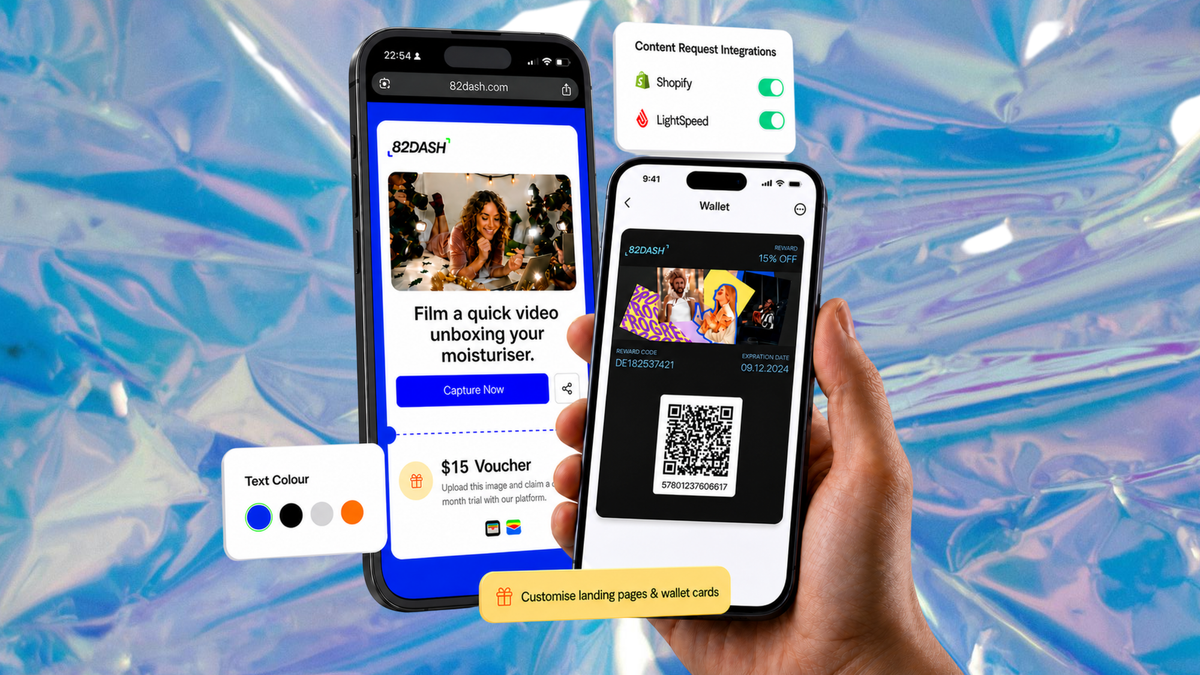
Some Shopify-specific tools include wallet pass issuance as one component of a broader customer engagement platform. 82DASH falls into this category: it combines campaign creation, content collection, wallet pass rewards, and push notification management in a single Shopify integration. The pass is the reward layer for a content or feedback campaign, rather than a standalone loyalty card.
The integration with Shopify means the platform knows which customers purchased which products, when, and how often, which makes targeting and reward logic more precise than a generic pass platform.
What to Look for When Comparing Wallet Pass SaaS Options
Shopify integration. If your store is on Shopify, a platform that integrates directly is significantly easier to set up than one that requires a manual customer list export. Native integrations with platforms like Shopify also enable purchase-triggered pass issuance and targeting by product or purchase history.
Push notification capabilities. Not all wallet pass platforms include push notifications in their base pricing. Some charge per notification or restrict the channel to higher tiers. If push notifications are the primary reason you want wallet passes, confirm this is included before committing.
Pass update logic. For loyalty programmes, the ability to update pass data (stamp counts, tier status, reward availability) without re-issuing the pass is important. Check whether the platform supports this natively or whether each update requires a new pass.
Customer enrolment flow. How does a customer get the pass? Some platforms generate a pass link that can be embedded in email or on a page. Others provide a QR code for in-store or packaging use. The best platforms support both and make the mobile experience smooth.
Rights clearance (if collecting content). If you are using wallet passes as part of a content collection campaign, rewarding customers who submit photos or videos, check whether the platform handles rights clearance in the submission flow. Without this, content submitted by customers through the campaign may not be legally usable in paid advertising.

How 82DASH Handles This for Shopify Brands
82DASH is built for Shopify merchants who want to combine content collection and wallet pass rewards in a single campaign flow. The wallet pass is what the customer receives when they complete a campaign action, submit a photo, answer a survey, refer a friend, or make a repeat purchase.
The platform handles pass issuance, update logic, and push notifications without any developer involvement. Campaigns are set up via a Shopify-integrated dashboard. Customer targeting is based on purchase history, product type, or order recency, data already in your Shopify store.
Push notifications can be sent to all active pass holders or to specific segments. Content submitted through campaigns is stored in a rights-cleared library, ready for use in paid ads and email without an additional rights step.
For Shopify merchants who are weighing a general-purpose wallet pass SaaS versus a commerce-integrated platform, the practical difference is setup complexity and what the pass is connected to. A general-purpose platform gives you the pass infrastructure. An integrated platform like 82DASH connects the pass to purchase data, campaign logic, and content collection in a single workflow.
Install 82DASH on the Shopify App Store
Isabelle Simon - Communications Lead - 82DASH
Frequently Asked Questions
Do I need a developer to issue Apple Wallet and Google Wallet passes?
With a campaign-focused SaaS platform, no. These tools handle all the technical infrastructure, Apple and Google certificates, pass generation, update payloads, behind a dashboard. Setup typically takes an afternoon, not a sprint.
What is the difference between a wallet pass SaaS and building a native app?
A native app requires a full build, App Store submission, ongoing maintenance, and customer downloads. Wallet passes are issued in a single tap via a link or QR code and sit natively in Apple Wallet or Google Wallet, which every phone already has. For most loyalty and engagement use cases, wallet passes are faster to launch, cheaper to maintain, and have higher adoption rates than native apps.
Can I send push notifications to wallet pass holders?
Yes, this is one of the main reasons brands choose wallet passes. Push notifications sent to a pass appear as phone notifications, regardless of whether the customer has email notifications enabled. Confirm that push notifications are included in the pricing tier you are considering, some platforms restrict this to higher plans.
How do customers add a wallet pass?
Customers receive a link, via email, SMS, QR code, or a page on your site, and tap it on their phone. On iPhone, it opens in Apple Wallet. On Android, it opens in Google Wallet. The process takes about ten seconds and requires no app download.
Is there a limit to how many passes I can issue?
Limits vary by platform and pricing tier. General-purpose infrastructure tools typically charge by pass or by volume. Campaign-focused platforms more commonly charge a monthly subscription with a pass limit that scales with the plan. Check the pricing page for the specific platform before committing.
Further Reading
- Apple Developer, Wallet, Apple's documentation on wallet pass formats and capabilities
- Google, Wallet Passes, Google's documentation on wallet pass types and API
- Shopify App Store, Browse wallet pass and loyalty apps with Shopify integration
- Passkit, General-purpose wallet pass infrastructure platform for developer-led implementations
- Shopify, Shopify's app ecosystem and partner directory for loyalty and wallet integrations
- Klaviyo, Email and SMS platform commonly paired with wallet pass tools for post-purchase flows