Square POS + Customer Content: A UGC and Loyalty Guide for Hospitality Businesses
Square merchants process millions of transactions but capture almost none of the customer content that comes with them. Here's how to build a rights-cleared content library that compounds, and why 2026 is the year to start.
Square processes millions of transactions for independent businesses every day. After each one, the customer walks out knowing exactly what they thought of the experience. Most Square merchants capture the payment. Almost none capture what came with it - the opinion, the photo, the moment.
That's the gap we're looking at here.
The Square merchant content problem
Square is brilliant at what it does: the payment, the transaction, the receipt. The platform has built layers around it too - Square Loyalty for repeat purchase incentives, Square Marketing for email campaigns, automated receipt emails that hit customers within minutes.
What Square doesn't have is a system for collecting rights-cleared customer photos, videos, or feedback - and rewarding customers for providing them. That work still falls to the merchant. Most of the time, it doesn't happen at all.
The result? A Square merchant with 50 customers a day never asks a single one for a photo or review. They hope customers tag them organically. They run the occasional "post a photo and win" competition and pray someone enters. They wait for Google reviews to arrive naturally. None of it scales. None of it produces content that's actually usable in paid ads because rights are unclear.
They're leaving a goldmine untouched.
Why this matters more in 2026
Here's the truth: AI-generated content is becoming the default. Every brand has access to the same image generation tools. Every competitor can spin out product shots from a generator in seconds. The result is a feed full of identical, synthetic, forgettable material.
Real content - photos of actual dishes, actual spaces, actual products in the hands of actual customers - is becoming the scarce asset. It's not in any competitor's generator. It's unique to your business.
A Square merchant with 200 rights-cleared customer photos collected over the last 90 days has something nobody can synthesise. That's a structural advantage. That's content that performs in ads, ranks better on Google Business, and gets shared because it's real.
The data backs this up:
- Product pages with customer photos convert 74% higher than those without them, according to Salsify.
- Customer content drives 161% higher conversion lift compared to brand-generated content Bazaarvoice research shows.
- Customer-generated content generates 2.4x more engagement than brand content on social platforms, per Stackla's research.
The merchants who build a system to collect this content now are building something that compounds. Every month, the gap widens between them and the competitor relying on generated imagery.
What most Square merchants do instead
The current approach is fragmented and it fails because it's not built into the transaction.
Hoping for organic tags: Customers mention the business on Instagram or TikTok. Sometimes it happens. Mostly it doesn't.
Running occasional competitions: "Post a photo of your order for a chance to win." There's a spike in submissions, then silence. It requires constant restarts. Rights are murky - you're never sure what you can use in ads.
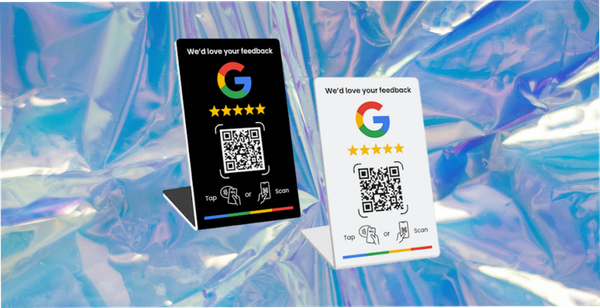
Waiting for Google reviews: Google reviews come naturally from repeat customers and loyal people. But reviews aren't photos. And even when someone does upload a photo to Google, you can't repurpose it in your own ads without asking.
Begging staff to photograph dishes: Your team snaps photos in-house. It's consistent but it's expensive, it doesn't scale to every product, and it's obviously brand-generated. It doesn't convert like real customer content.
None of these approaches are systems. They're all reactive, all reliant on goodwill, and none of them produce a rights-cleared content library you can use in paid ads.
What actually works: Rights-cleared collection + instant reward
The merchants winning this are the ones who've built a collection mechanism directly into the customer experience. They make it easy, they make it rewarding, and they make it clear that rights are being licensed when the customer submits.
Here's what that looks like:
Trigger on the transaction: The submission request happens right after the customer pays, when they're still at the counter or table, when the moment is fresh. They see a QR code at the point of sale or receive a link in their receipt email. The friction is low - it's seconds to submit a photo.
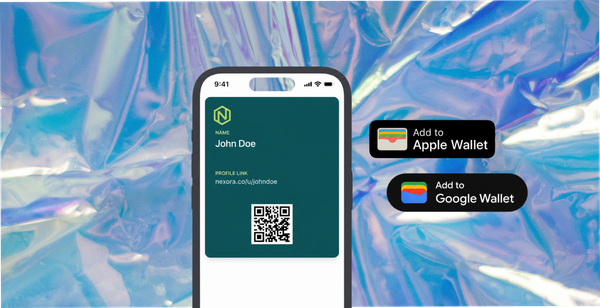
Make it rewarding: The customer gets an instant reward to their Apple or Google Wallet - a discount, a free drink next visit, early access to a new menu item. It's immediate and it works because it's tangible.
Clear the rights at submission: The customer agrees to license the content to you at the moment of submission. No follow-up emails, no ambiguity. You own the rights to use it in ads, on your website, on signage, in email - anywhere.
Use it everywhere: That photo now goes into paid ads, your Google Business Profile, Square Marketing email campaigns, your website, your social channels, in-venue displays. One submission fuels months of marketing leverage.
This is the flow that actually compounds.
How 82DASH integrates with Square
This is where 82DASH slots in. It's built specifically for this problem - collecting rights-cleared customer content and rewarding customers instantly.
The flow is straightforward:
- Connect 82DASH to your Square account. It takes minutes.
- When a customer completes a transaction, you trigger a submission prompt - via a QR code at the counter, an NFC tap on a card reader, or a link in your Square receipt email.
- The customer submits a photo, a short video, or fills out a feedback form (no upload required for feedback).
- Rights are cleared automatically at the point of submission.
- They receive an instant reward to their Apple or Google Wallet - a one-time gift or credit toward their next purchase.
- You receive licensed content and timestamped feedback tied to that visit.
The content library starts compounding immediately. A Square merchant on 82DASH's Growth plan can collect 400 photos and 200 videos per month. Within 90 days, you have a licensed asset library that would cost thousands to produce in-house.
Submission channels: Making it frictionless
The key to high submission rates is offering multiple channels that fit the customer's moment.
At the Square terminal:
- A QR code displayed at the point of sale links to a mobile submission form. The customer scans it, takes a photo, and it's done.
- An NFC tap on a compatible card reader also works - tap, submit, done.
In the post-transaction email:
- Square sends automated receipt emails to every customer. 82DASH can inject a submission link directly into that email - the customer receives their receipt and the content request in the same message, with no additional friction.
- This is particularly powerful because receipt emails have exceptionally high open rates and the customer is already engaged.
On your website or social:
- A link in your Square-linked website or bio directs customers to an ongoing submission form. This works for customers who want to submit photos from home, or share content after their visit.
The combination of these channels means every customer has a path to submission that matches their preference. That drives higher completion rates and builds the library faster.
What you can do with rights-cleared customer content
Once you've collected it, the uses compound:
Paid ads: Meta, Google, TikTok ads with real customer photos consistently outperform studio alternatives. You're running creative that's proven to work with actual customers. Your CPC drops because the CTR is higher. You're not paying for production - you paid for the content with a wallet reward that drove a repeat visit.
Google Business Profile: Authentic customer photos improve both your ranking and your click-through rate from local search. A restaurant or café with 50+ real customer photos on their Google Business profile converts higher from search than competitors with generic shots.
Website and e-commerce: If you sell online through Square Online, customer photos of products in use outconvert brand shots. Add captions showing the customer's location or context. It works.
Square Marketing email campaigns: Run customer photos in your regular email newsletters. They perform better than brand photography and they cost you nothing - you've already licensed them.
In-venue displays: Project customer photos on a screen in your venue. It's social proof, it's community, it's powerful. Customers see themselves or peers reflected in your space, and they're more likely to return.
Press and partnerships: Partner with a coffee wholesaler or food supplier? Submit real customer photos as case material. Media and influencers want real customer content, not brand shots.
The revenue case is concrete. A Square merchant running 82DASH on Growth ($82/month) who collects 50 rights-cleared customer photos per month has built a $2,000+ ad creative library. If even 10 of those photos run in Meta ads and outperform studio alternatives - which research consistently shows - the reduction in CPC compounds. Plus every Wallet reward issued is a repeat transaction. The maths works.
82DASH complements Square Loyalty, doesn't replace it
Square Loyalty is excellent at what it does: it rewards repeat purchases with points. Buy 10 coffees, get one free. It drives retention.
82DASH rewards something different: content and feedback. Submit a photo, get a wallet credit. Fill out a quick survey, get early access to a new menu item.
They're complementary, not competing. A merchant can run both simultaneously. Square Loyalty handles the purchase frequency incentive. 82DASH handles the content and insight collection. The Wallet is the delivery mechanism for both rewards - they stack perfectly.
Why timing matters: Three trends converging
Trend 1: The AI content problem is here. Generated imagery is flooding every platform. Authentic content is scarce and valuable.
Trend 2: Wallet rewards are replacing loyalty cards. Apple and Google Wallet are now the standard for digital loyalty. Your customers carry them already. Printing and distributing loyalty cards is dead.
Trend 3: Square merchants are moving faster on digital. Tap-to-pay is normal now. Receipt emails are standard. QR codes are expected. The infrastructure for frictionless content collection exists - most merchants just haven't built it.
The merchant who moves now - collecting real customer content for the next 12 months - will have a six-month head start on competitors doing the same thing next year. Content compounds.
Making it work in practice: A worked example
Let's say you run a café with 100 customers a day on Square. You set up 82DASH.
Day 1-7: You display a QR code at the counter pointing to a photo submission form. Copy says "Buy a coffee, share a photo, get a free pastry next visit." You collect 15 submissions.
Week 2-4: You add the submission link to your Square receipt emails. Submission rate jumps to 35 per week.
Month 2: You're collecting 40-50 photos per month. You're using the best 10-15 in Meta ads promoting your new seasonal drink. Your CPC is down 18% compared to your previous creative. You're also getting repeat visits from people who received the Wallet reward.
Month 3: You have 120 rights-cleared customer photos. You've added 30 of the best to your Google Business Profile. Your local search click-through rate is up. You're extracting feedback data too - you now know that 73% of customers love your new oat milk option. You haven't run a survey. The data came from the form submissions bundled with photo uploads.
Month 6: You have 240 customer photos. You're running different creative in ads each week because you have the volume. You're pulling insights on product preferences, peak visit times, and customer sentiment. Your repeat customer rate is up 12% - partly from the content rewards, partly because your ads are now getting better engagement.
Month 12: You have a year's worth of real, licensed customer content. Competitors still have generic stock photos. You're operating on a structural advantage.
This isn't hypothetical. This is how it works.
Isabelle Simon - Communications Lead - 82DASH
Frequently asked questions
Does Square have a built-in UGC or content collection tool?
No. Square has transaction processing, payment links, receipt emails, loyalty, and email marketing - but no native content collection or rights-cleared UGC management. That's where tools like 82DASH fill the gap.
Can I collect customer photos through Square?
Not directly through Square's native tools. But you can trigger a submission request in your Square receipt emails (which 82DASH can hook into), or display a QR code at your Square terminal. Square provides the infrastructure - receipt emails, the ecosystem - but you need a separate tool to manage the collection and rights.
How do I get more reviews as a Square merchant?
There are three channels: Google (via Google Business Profile), industry review sites (TripAdvisor, Yelp), and your own website (Trustpilot embeds, etc.). Most reviews arrive organically from repeat customers. You can accelerate this by asking - a simple post-purchase email requesting a Google review helps. But reviews aren't photos, and they're not your property - you can't use them in ads the same way you can with customer-submitted photos.
What's the difference between Square Loyalty and 82DASH?
Square Loyalty rewards purchases: "Buy 10, get one free." 82DASH rewards content and feedback: "Share a photo, get a credit." They complement each other. Square handles transaction loyalty. 82DASH handles content and insight collection. A merchant can run both.
Can I use customer photos collected through Square in my ads?
If you collect them through a customer-submitted form or email link (like a post-purchase survey), the rights depend on what you asked. If the customer hasn't explicitly licensed them to you, you don't own the rights to reuse them in ads without asking. 82DASH clears rights at the point of submission, so you can use the photos you collect in any marketing channel - paid ads, website, email, signage - without follow-up.
Further reading
How offline businesses sit on a content goldmine - and don't use it
The difference between incentivising reviews and buying them
Combining feedback forms and content collection in one flow
NFC tap + Wallet: How cafés and restaurants are replacing paper loyalty cards
Why rewarding customers for photos and videos works better than bribing for social shares