How to Reward Customers for Photos, Videos, and Feedback Without a Loyalty App
Loyalty apps are dead. Here's how to reward customers for photos, videos, and feedback without forcing them to download anything - and build a library of authentic content that converts 74% higher than stock photography.
Your customers are already creating content. They're photographing your products at home, writing reviews about their experience, filming unboxing videos. Some of them would even send it to you if there was a reason to.
The problem is nobody's asking. And if they do ask, the friction is high - download an app, set up an account, maybe earn points that expire. By the time they've jumped through those hoops, the motivation to share has evaporated.
The Real Cost of Doing Nothing
Ignoring this opportunity isn't just a missed chance to collect photos. It's a missed lever on your entire business model.
Customer-generated content (UGC) converts significantly better than brand content. When Bazaarvoice studied conversion impact across 50,000+ transactions, they found customer content delivered 161% higher conversion lift. Salsify's research showed product pages with customer photos convert 74% higher than those without. This isn't marginal - it's structural.
Meanwhile, Stackla's data found authentic customer content generates 2.4x more engagement than brand content across social channels. Engagement wins you the feed algorithm. Better feed placement costs you less per click.
In 2026, as AI-generated imagery floods every platform, real customer photos and videos have become scarce. They're the opposite of commoditised. They're the asset that actually moves the needle because people trust them. A studio photo of your product? Forgettable. A customer's unboxing video shot on their phone in daylight? That converts.
The brands winning right now aren't the ones with the best AI tools. They're the ones who built a library of authentic customer content while everyone else was busy automating themselves into irrelevance.
Why Loyalty Apps Miss the Mark
Your first instinct might be the obvious one: launch a loyalty programme, make it app-based, reward customers for purchases and referrals.
The problem is that approach rewards buying. It doesn't reward contributing.
Loyalty apps have a fundamental adoption problem. Research from Littledata shows only 20% of customers who download a retail app actually use it monthly. You're spending engineering effort, marketing spend, and ongoing maintenance costs to reach an audience that's mostly inactive.
Even when customers do use a loyalty app, they're expecting purchase rewards - discounts, points, free items. They're not thinking "I'll take a photo of myself using this product and upload it to the brand's app for a voucher." The context is wrong. The app is designed around transactions, not contributions.
And here's the thing: by the time someone's downloaded your app, they've already passed peak motivation. They bought the product and used it. If you want the best content, you need to ask them within 24-48 hours of purchase, before the emotional resonance fades. A loyalty app adds friction at the exact moment you need to move fastest.
What Actually Works: Rights-Cleared Content + Instant Rewards
The winning model is inverted.
Instead of trying to lure people into an app, bring the ask to them. Instead of making them earn rewards through purchases, reward them immediately for what you actually want - a photo, a video, a testimonial.
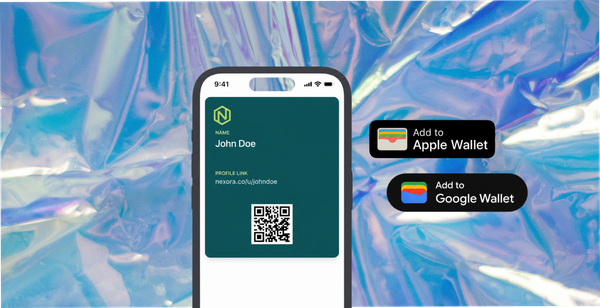
And instead of asking them to wait for a discount code or voucher, deliver the reward instantly to their phone's default wallet.
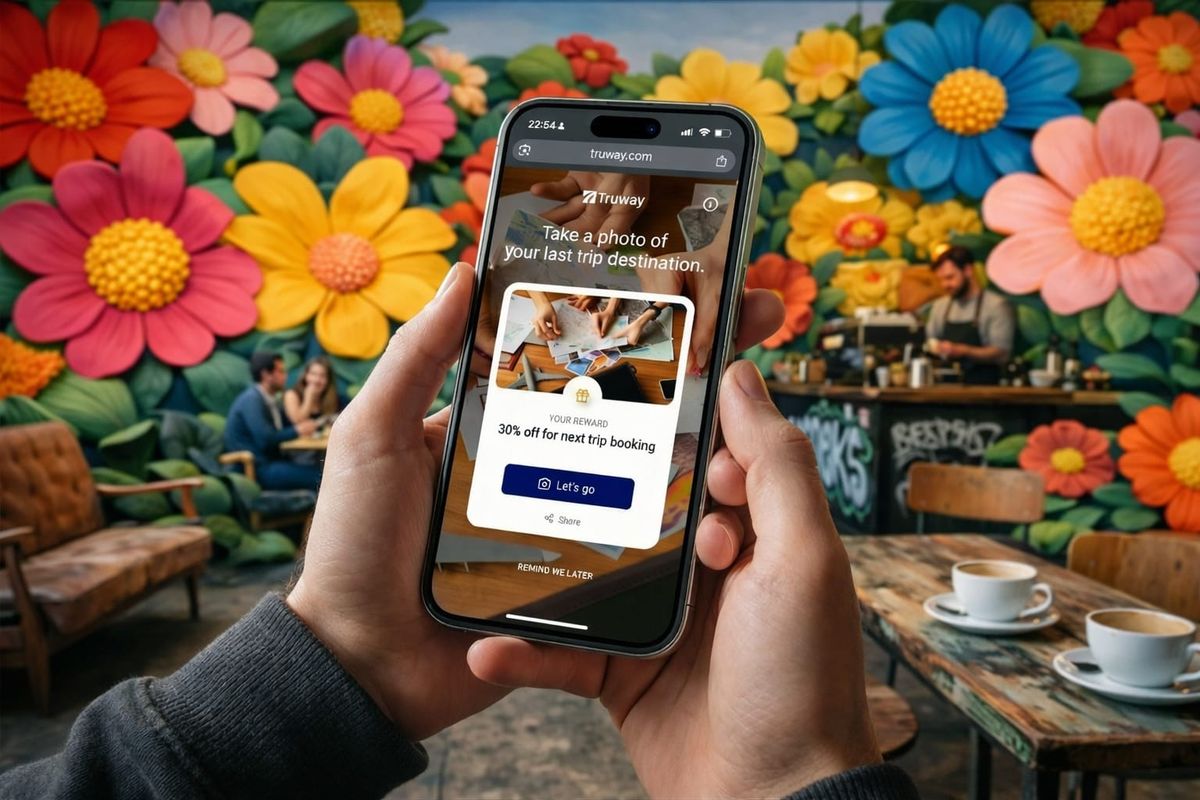
This changes the entire psychology. They're not downloading anything. They're not setting up an account. They click a link from your post-purchase email, submit a photo, and receive a reward to Apple Wallet or Google Wallet within seconds. Done.
The submission channels should meet customers where they are:
- Post-purchase email with a direct link to a simple form
- Order confirmation page with a QR code
- In-store via NFC tap at the counter or POS display
- Website page encouraging ongoing submissions
- Social bio link for followers to contribute
No single channel works for everyone. You need to layer them.
The other critical piece is rights clearance. You can't use customer content in paid ads without legal rights. Most brands either skip collecting content entirely (too legally risky), or they run one-off campaigns with a lawyer reviewing submissions (expensive and slow). You need a system that clears rights at submission time, automatically, so you can use the content the moment it arrives.
When a customer rewards their content, you should get a digital contract they've already signed - rights granted, no negotiation needed, no legal review required. Within 48 hours you should be able to use that photo in your next Google Ads campaign or on a product page.
How This Hits the Numbers
The revenue case is concrete.
Lower customer acquisition cost. Customer content outperforms studio creative in paid advertising. When Bazaarvoice looked at paid social performance, authentic customer photos generated 23% higher CTR and 8% lower CPC than brand-created ads. That reduction in cost per click, multiplied across thousands of ads, rebuilds your media budget. You're paying less to say the same thing.
Higher conversion on product pages. That 74% conversion lift from Salsify isn't theoretical. It means if your product pages get 1,000 visitors a month and your current conversion rate is 3%, adding customer photos moves that to 5.2%. On a £100 AOV that's 22 extra sales and £2,200 of extra revenue every month, month after month.
Repeat purchases. Wallet rewards drive behaviour change. A customer who receives an Apple Wallet pass doesn't just get a discount - they see your brand again in their primary payment interface. McKinsey found that wallet-delivered rewards increased repeat purchase intent by 34%. Not because the discount was generous, but because the brand stayed visible in their daily interface.
Lower CAC over time. As you build a library of authentic customer content, you stop relying on studio photography. You reduce dependency on paid creatives. The content you collect this month makes your ads cheaper next month.
String these together across 3-6 months and you're looking at a fundamentally different unit economics.

The Right Tool Matters: How to Actually Do This
In theory, this model is simple. In practice, execution requires specific capabilities.
You need a system that handles all three components:
- Content collection - photos, videos, form responses (NPS, feedback, surveys)
- Rights clearance - automatic legal agreements, no manual review
- Wallet reward delivery - instant Apple and Google Wallet passes, no separate backend
Most platforms only do one or two. You need all three working together, or you're manually stitching together tools and creating gaps (and legal risk) in the process.
82DASH was built specifically for this. It lets you collect photos, videos, and form-based feedback from customers - across any submission channel, online or in-store. When they submit, you can reward them immediately with an Apple or Google Wallet pass. Rights are cleared automatically at submission time.
The flow looks like this: a customer receives a post-purchase email with a link, or they scan a QR code in your store, or they tap an NFC display at the counter. They upload a photo (or video, or fill a feedback form). They select a reward from your menu - discount code, loyalty points, event invite, anything that fits in a Wallet pass. Within seconds, the reward lands in their Wallet and the content is yours to use.
You get a rights-cleared library. They get an instant reward. No app. No friction.
82DASH's pricing scales with collection volume. The Starter plan includes 200 photo uploads and 200 form requests per month for £50/mo. If you're running a few campaigns, testing the model, this is your entry point. Growth (£82/mo) adds 200 video uploads and push notifications if you want to drive repeat submissions. Pro (£120/mo) unlocks unlimited campaigns and a custom brand domain, for brands running content collection as a core channel.
Most brands find the ROI case clear within 30 days - the content collected, the assets gained, and the repeat purchase lift from Wallet rewards cover the monthly cost by itself.
Rights Clearance Isn't a Nice-To-Have
Before we move on: this matters enormously and is worth spelling out.
You cannot legally use customer content in paid ads without their permission. Every use - a photo in Google Ads, a video on your website homepage, a testimonial in your email - requires a grant of rights from the customer.
Most brands handle this one of two ways:
- They don't ask permission at all (legal risk; you could be sued)
- They run a one-off campaign, collect submissions, then wait weeks for a lawyer to review and request written permission from each contributor (slow, expensive, kills momentum)
Both approaches leave money on the table. You collect amazing content but can't use it. Or you collect content but the legal process takes so long that by the time you have rights, the content feels dated.
Automatic rights clearance - where a customer grants you permission to use their content in exchange for a reward, at submission time - changes this. You're not stealing rights. You're not negotiating. You're offering a fair exchange: they share content, you reward them, they grant you legal permission. Everyone wins. Legally clean. Immediate.
When a customer submits content through 82DASH and claims their reward, they're signing a digital rights agreement automatically. No separate legal process. No delay. You can use that content in ads by the next morning.
This is table-stakes for any content collection system. If the system isn't clearing rights at submission time, you're creating legal liability.
Running Your First Campaign: The Framework
Start narrow and validate before scaling.
Pick a single cohort - maybe customers who bought in the last 7 days. Write a simple post-purchase email with a direct link to your content submission form. Ask for one specific thing: a photo of the product in use. Offer a small reward - a discount code, a free shipping pass, or store credit equivalent to 5-10% of their purchase.
Track four metrics:
- Submission rate - what % of customers who see the ask actually submit content (aim for 5-15%)
- Content quality - how many submissions are actually usable (photos in good light, products visible, no one's face filling the frame)
- Reward redemption - what % of customers who claim a reward actually use it (this tells you if the reward was attractive enough)
- Conversion impact - do product pages with this content convert higher than pages without
If you hit 5% submission rate and usable quality is 80%+, you have proof of concept. Scale the campaign. If submission rate is 2%, the incentive isn't high enough or the ask is too vague. Adjust and test again.
Most brands find the third campaign is their sweet spot - by then you've learned what messaging works, what reward levels drive behaviour, how to write an ask that doesn't feel pushy.
FAQ
Is it legal to reward customers for reviews or photos?
Yes. Rewarding customers for submitting honest reviews or photos is legal and common. What's illegal is paying for fake reviews or undisclosed paid reviews. When you reward a customer for genuine content and require them to grant you legal rights to use it, you're operating well within regulatory bounds. The FTC (and UK ASA) have clear guidance: compensation is fine as long as it's disclosed and the review is honest.
Do customers need to download an app to receive a reward?
No. This is the entire point. Customers click a link in an email or text, submit content, and receive a reward directly to Apple or Google Wallet - the wallet they already have on their phone. No app download required from them.
What types of content can I collect and reward?
Photos and videos of products in use, unboxing videos, customer testimonials, NPS feedback, product reviews, photos of your storefront, photos of your product styled/used creatively. You can also collect form-based insights - feedback on product experience, survey responses, customer suggestions. The more specific your ask, the higher quality the content.
How is this different from a loyalty programme?
A loyalty programme typically rewards purchases - you spend £100, you earn 100 points. This model rewards contributions - you submit a photo, you get a reward. They're complementary. A loyalty programme drives repeat purchases. A content rewards programme builds a library of authentic customer content that converts better than studio photography and reduces your cost per click on paid ads.
Can I use the content I collect in paid ads?
Yes, if rights are cleared at submission. This is why rights clearance matters. When a customer submits content through a platform like 82DASH and claims their reward, they're granting you legal permission to use that content in paid advertising - Google Ads, Meta ads, LinkedIn ads, anywhere. You get licensed content that converts better than stock or studio creative.
What's Really Changed
In 2024, brands were still chasing loyalty apps that didn't work. Today, the winners have abandoned that model.
Instead, they're building lightweight, always-on systems that reward customers for the moments they actually want to contribute - right after a purchase, when they're excited about what they got, when they're most likely to create something worth sharing.
They're not asking customers to change their behaviour. They're rewarding behaviour that's already happening - taking photos, leaving feedback, creating videos. They're just creating the incentive and the channel.
The content they collect isn't better because they spent more on photography. It's better because it's real. And in 2026, when every homepage is flooded with AI-generated mockups, real customer content is the scarce asset. The brands winning are the ones who collected it.
Isabelle Simon - Communications Lead - 82DASH