How to Repurpose Customer Content Across the Funnel
Collection gets all the attention and deployment decides whether it mattered. How to put customer content to work at every funnel stage, and why rights clearance determines what you are allowed to do.
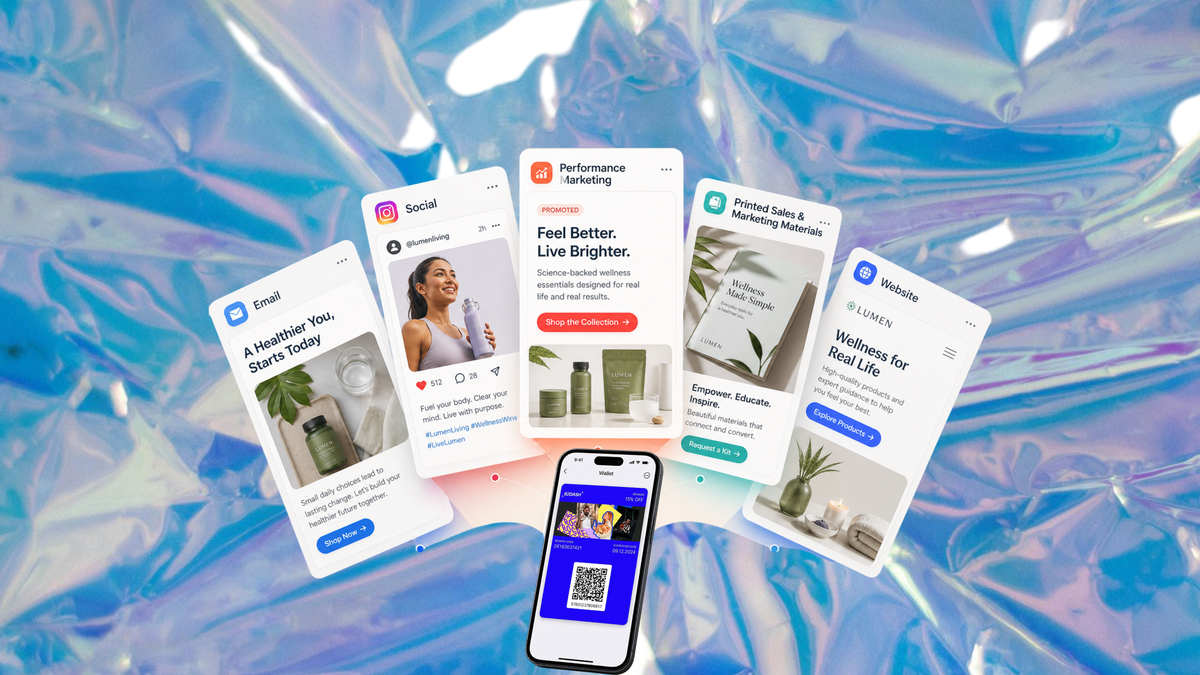
Collection is the part everyone writes about. Deployment is the part that decides whether any of it was worth doing.
A brand that has run one decent campaign might be sitting on a hundred photos and forty videos. Some are on the product pages. A few went out in an email. The rest are in a folder, and every month the folder grows and the proportion actually used falls.
This guide is about the second half of the job: taking what you have collected and putting it to work across every stage of the funnel, deliberately rather than opportunistically.
From r/shopify_growth: "collecting content with no plan. brands just hoard videos but have zero system for permissions or where theyll actually use them. like cool u have 500 videos now what"
The hoarding problem is real and it is almost always structural. The content was collected without a destination in mind, so it has no natural home once it arrives.
Start From the Destination
The single change that fixes most content libraries is deciding where something goes before you collect it.
Working the other way, collecting first and finding a use later, produces exactly the folder described above. Every channel has a different requirement, and content gathered without one in mind tends to satisfy none of them properly.
| Channel | What it needs | Common mistake |
|---|---|---|
| Product pages | Photos in real settings, real people, normal light | Using ad creative, which looks staged in context |
| Paid social | Vertical video, high variety, low polish | Collecting photos when the ad account needs video |
| Photo plus a line of story or context | Photo with no attribution or human detail | |
| Organic social | Anything genuine, posted with credit | Over-editing until it looks like brand content |
| Retention and lifecycle | Content from customers similar to the recipient | Using the same hero images for everyone |
| Sales and wholesale | Volume and consistency of use | Nothing collected with this in mind at all |
That last row is worth noting. Brands selling into retail or wholesale are regularly asked to evidence demand, and a body of customer content does that better than a deck. Almost nobody collects with it in mind.
The Funnel, Stage by Stage
Top of funnel: paid social and discovery
This is where customer content has its clearest advantage, and where variety matters more than quality. The constraint in paid social is rarely production value. It is having enough genuinely different creative to test, because you learn by variation.
Forty customers produce forty perspectives. A studio day produces one, repeated. For testing, that difference decides how fast you find a winner.
Practical guidance: cut long submissions into multiple shorter pieces rather than running them whole. A forty second video is often three usable fifteen second variants with different openings. That is three tests from one submission.
Middle of funnel: product pages and consideration
Here the job changes from attention to reassurance. The shopper is deciding, and looking for evidence the product works for someone like them.
What matters is representativeness rather than aesthetics. A range of body types, room types, skin tones and use cases does more than a smaller set of better photos, because the shopper is looking for themselves.
Bazaarvoice puts the conversion uplift above 160% when shoppers interact with customer photos on a product page, and Salsify reports 74% higher conversion on pages carrying customer imagery versus those without.
Bottom of funnel: email, retention and the second order
The strongest use of customer content in email is not decorative. It is recognition.
Featuring a customer does two jobs at once. It gives every other recipient social proof, and it makes the featured customer significantly more likely to open the next message and buy again. That second effect is the one brands consistently undercount, because it is slow and hard to attribute.
Segment where you can. A first-time buyer responds to different content than a repeat customer. Someone who bought a specific product responds to content featuring it.
Getting More From Each Piece
Most brands use each submission roughly once. The ones getting real return use each piece four or five times, in different forms.
Cut video into variants. One submission, several openings, several lengths. Ad platforms reward volume of distinct creative.
Pull stills from video. A frame from a customer video is often a better product page image than a submitted photo, because the person was not posing.
Extract quotes. What someone says in a video testimonial becomes a product page quote, an email subject line, a social caption, and an ad overlay.
Group into themes. Ten photos of the same product in ten kitchens is a stronger email than one photo, and stronger again as a landing page section.
Re-run winners. Content that performed in paid social nine months ago is usually still good. Audiences turn over faster than creative ages.
The Constraint Nobody Plans For
Everything above assumes you are allowed to use the content that way. Frequently, brands are not.
The distinction that matters is between UGC and CGC. User-generated content is what customers post publicly, on Instagram or TikTok, without your involvement. You did not request it, cannot predict it, and, importantly, do not hold advertising rights to it. Reposting to your own feed is one thing. Running it as paid creative is a different question, and the FTC has tightened its guidance on how social proof is used in advertising.
Customer-generated content is submitted directly in response to a request, with rights clearance captured at the point of submission.
That difference decides the entire repurposing question. If rights were cleared at submission, everything in this guide is available to you. If they were not, most of your library can go on a product page and nowhere else, which is why so many brands have a large folder and a small amount of usable creative.
It is also why retrofitting does not work at scale. Going back to two hundred customers individually to ask permission is theoretically possible and practically never happens.
How to Tell What Is Actually Working
Repurposing without measurement produces a lot of activity and no learning. Three habits cover most of it.
Tag creative by source in the ad account. Distinguish customer content, studio, and AI-assisted in your naming convention. Without this the question cannot be answered at all, and a surprising number of brands cannot say which type of creative is carrying their account.
Judge on cost per acquisition, not engagement. Customer content frequently wins on click-through rate for reasons that do not survive to checkout. Engagement is a leading indicator at best and a distraction at worst.
Test presence, not just placement. Adding customer photos to a product page and watching conversion move is not a test, because too many other things change at the same time. Running with and without across a subset of products gives an answer you can act on.
One caveat worth holding onto: the second-order return, the contributing customer who buys again, will not show up in any of this. It is slow, hard to attribute, and consistently undercounted. Measure what you can, and remember the measured number understates the real one.
How 82DASH Handles Deployment
82DASH is a customer content platform. It collects rights-cleared photos, videos, feedback and reviews from real customers, and the point of the rights clearance is precisely this stage: making the content usable everywhere without a second conversation.
Content arrives via a structured request, by QR code, NFC tap, or a link after purchase. Rights are cleared as part of submission, covering paid ads, email, product pages, social, print, packaging and wholesale. It lands in a library that can be reviewed, tagged and organised by campaign, product and content type, which is what makes it findable nine months later when you need a specific thing.
The reward goes out as an Apple Wallet or Google Wallet pass, which leaves a channel back to that customer for the next request. Where a campaign wants organic reach as well as library content, Amplify prompts customers to post on their own channels immediately after submitting, so you get both the rights-cleared piece and the public post.
The outcome is your existing customers turned into an always-on source of rights-cleared photos, videos and reviews, without constantly paying creators, and with no ambiguity about where any of it is allowed to run.
Install 82DASH on the Shopify App Store
A Simple Deployment Routine
For a brand collecting steadily, a monthly rhythm covers most of it.
Review new submissions and tag by product, content type and likely channel. Untagged content is content you will not find later.
Refresh product pages with the strongest new photos, prioritising variety of person and setting over aesthetic consistency.
Cut new video into ad variants and push three to five distinct pieces into testing.
Feature one customer in the next email, and tell them you have. That single step does more for repeat contribution than any incentive.
Retire nothing. Content that underperformed in one channel frequently works in another, and last year's winners work again on a new audience.
Isabelle Simon is Communications Lead at 82DASH.
Frequently Asked Questions
How do I repurpose UGC across different marketing channels?
Start from the destination rather than the content. Each channel has a different requirement: vertical video for paid social, real-setting photos for product pages, photo plus story for email. Content collected without a destination usually satisfies none of them well.
Can I use the same customer content in ads and on product pages?
Only if rights were cleared for both at the point of submission. Content posted publicly by a customer, or submitted through most review tools, generally does not carry advertising rights. Check what your collection method actually licensed before running anything in paid media.
How many times can I reuse one piece of customer content?
More than most brands do. A single video typically yields several ad variants, a still for a product page, a quote for email, and a social caption. Brands seeing real return from customer content use each piece four or five times in different forms.
How long does customer content stay usable?
Longer than most assume. Audiences turn over faster than creative ages, so content that performed in paid social six to twelve months ago is often worth re-running. Product changes and seasonal cues are the main things that date it.
What should I do with a backlog of collected content I never used?
Tag it first, by product, content type and likely channel, because untagged content stays unused. Then check the rights position, since that determines whether it can go beyond product pages. Anything without clear advertising rights is limited to owned surfaces.
Further Reading
- Bazaarvoice: conversion research on customer photos and product pages
- Salsify: product page conversion data for customer imagery
- Nosto: engagement comparisons between customer and brand content
- Meta: creative volume and testing guidance for paid social
- FTC: endorsement and disclosure guidance for advertising