Prompt Your Customers, Not Your AI
Everyone is obsessing over AI prompt engineering. Most brands are sending their customers the worst brief imaginable - "share your experience." The discipline that makes AI prompts work is identical to what makes customer content requests work. Here is how to apply it.

Everyone in marketing is obsessing over prompt engineering right now. How to write a better brief for ChatGPT. How to get more specific outputs from image generators. How to structure a system prompt so the AI produces something actually usable.
Meanwhile, most brands are sending their customers the most unengineered brief imaginable.
"Share your experience."
"Tag us in your photos."
"We would love to see how you use it."
These are prompts. They are just very bad ones. And the output they produce - almost nothing - is a direct consequence of how little thought went into the ask.
The discipline that makes AI prompts work is the same discipline that makes customer content requests work: specificity, context, format guidance, and a clear reason to respond. The difference is that when a customer responds, what you get back is real. A real person, a real purchase, a real experience. That is the one thing no generation model can produce.
"You can also just ask. If you don't ask for testimonials or reviews why would they share them? If you want to use these materials in marketing outside of sharing in your stories (paid ads or homepage for example) then you have to have some rights agreement either way. So it's easier to use ugc creators for that. Cheaper than influencers but you do not get to use their platform, only content."
The Brief Is the Product
In AI prompting, there is a principle that experienced practitioners repeat constantly: the quality of the output is determined by the quality of the input. A vague prompt produces a vague output. A specific, contextual, well-structured prompt produces something useful.
Customer content requests work identically.
PowerReviews research on guided content requests consistently shows that customers given specific prompts produce higher-quality submissions at higher rates than those given open invitations. The mechanism is the same as with AI: specificity reduces the cognitive load. The customer does not have to decide what to make. They just have to do the thing they have been asked to do.
"Share your experience" asks the customer to solve a creative problem from scratch. What should I share? In what format? What aspect of my experience? How long? For what purpose? Most people will not solve that problem - they will close the email and move on.
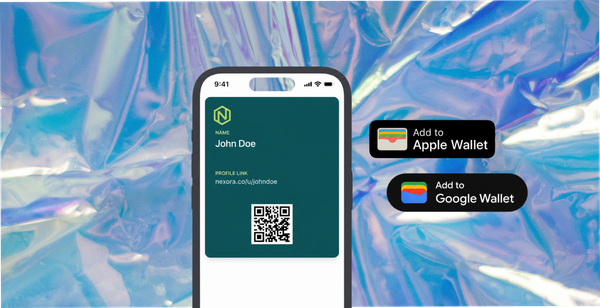
"Film 30 to 60 seconds of how you use it in the morning - on your phone, near a window - and we will put $15 in your Apple or Google Wallet" solves every one of those questions before the customer has to ask them. The what, the format, the length, the context, and the reason to bother are all in the brief.
What Goes Into a Good Customer Prompt
The subject - what specifically to capture. Not "your experience" but a concrete moment: how they use the product, what they noticed when they first opened it, how it fits into their day. The more specific the subject, the easier it is to start. A customer staring at their phone trying to work out what to film will not film anything.
The format - length, orientation, medium. A customer asked for a video with no format guidance will produce something that may not be usable in the channels you need. Thirty to sixty seconds, filmed in landscape, near natural light - one line of guidance in the brief prevents most unusable submissions. It is the equivalent of telling an AI model to respond in a specific structure.
The context - why you are asking and what you will do with it. "We are building a library of real customer content for our product pages and ads" is a more compelling brief than "we would love to feature our customers." It tells the customer that their submission has a purpose, which makes the ask feel like a contribution rather than a favour.
The reward - the reason to respond. AI does not need a reason to respond. Customers do. "Help us improve" is not a reward. A wallet pass delivered to their phone with $10 or $15 of genuine value is. The reward is not separate from the brief - it is the closing argument that makes the whole ask worth acting on.
The submission path - how to actually respond. An AI prompt is answered in the interface you are already using. A customer content request has to provide that path explicitly: a single link, a mobile-optimised form, a process that takes under two minutes. Every additional step is friction that reduces completion rate.
How to write a content request that actually gets responses covers the brief structure decisions that affect submission rate in detail.

The Output Difference
Here is where the analogy between AI prompting and customer prompting diverges - and where the customer prompt wins on the thing that actually matters.
AI outputs can be high quality. They can match a tone, follow a format, fill a brief. What they cannot produce is provenance: the evidence that a real human had a real experience with a real product and chose to share it.
That provenance is the mechanism behind why customer content converts. Nielsen data consistently places peer recommendations as the highest-trust content format above advertising, influencer content, and brand communications. Bazaarvoice research shows shoppers who interact with customer content on product pages convert at 161% higher rates than those who do not. Stackla data shows consumers are 2.4x more likely to engage with customer content than brand-produced creative. eMarketer research finds that 31% of consumers say AI-generated marketing content makes them trust a brand less - a finding that has strengthened every quarter as consumers develop sharper instincts for synthetic creative.
None of that trust signal comes from the quality of the photo or the production value of the video. It comes from the fact that a real person made it. That signal is what AI cannot generate - and as AI content floods every channel, it becomes more structurally scarce, not less.
The well-engineered customer prompt produces something an AI could never replicate. The unengineered customer prompt - "share your experience" - produces almost nothing.
Why Most Brands Skip the Engineering
The honest answer is that prompting AI feels productive and prompting customers feels uncertain.
With AI, the feedback loop is immediate. You write a prompt, you get an output in seconds. You refine. You iterate. The effort has a visible result.
With customer prompts, the feedback loop is slower. You write the brief, it goes out in a post-purchase email, and you wait days or weeks to see what comes back. The causal link between brief quality and submission rate is real but it does not feel as direct.
The result is that most brands put enormous creative energy into AI prompts and almost none into the customer brief. They refine their ChatGPT system prompt seven times. They send "share your experience" without revision for three years.
The investment case is the reverse of what most brands are doing. A well-engineered customer prompt, running on every order cohort, generates a compounding library of real, rights-cleared content that performs better in every channel it touches. A well-engineered AI prompt generates content you own but that carries none of the trust signal.
How to choose the right content request type covers how to match the brief format to what you are trying to collect.
The Rights Dimension
There is one more reason the customer prompt matters in a way the AI prompt does not: what you can do with the output.
The trust gap compounds with volume. HubSpot's 2026 State of Marketing report found that while 77% of marketers believe AI effectively produces emotionally resonant content, only 33% of consumers agree - a 44-point gap that brand teams are largely not accounting for in their content planning.
AI-generated content sits in an evolving legal and platform landscape. Rights to AI outputs, disclosure requirements for AI-generated advertising, platform policies on synthetic content - these are all in motion in ways that create operational uncertainty for brands that have built their content pipeline on generated material.
Customer content collected through a structured submission flow with explicit consent is legally clear from the moment of collection. The rights cover the uses specified in the terms - including paid advertising - with a timestamp attached. FTC guidance and Advertising Standards Authority frameworks both treat genuine customer endorsements differently from synthetic or commissioned content. The evidence of genuine human origin is part of what makes the content compliant as well as effective.
The brief is not just the mechanism that determines quality. It is the mechanism that determines whether the output is usable at all.
What to Actually Do
If you have never thought of your customer content request as a prompt, the immediate exercise is to read what you are currently sending and ask whether you would accept it as an AI prompt.
"Share your experience" would produce nothing useful from an AI either.
Rewrite it with the five elements: a specific subject, a format brief, context for what you will use it for, a genuine reward, and a single low-friction submission link. Send it to the next order cohort and compare submission rates.
82DASH runs this loop on Shopify: the structured content request, the submission form, the rights clearance, and the wallet pass reward delivery are a single connected flow rather than a set of disconnected steps. The brief you write determines what comes into the library.
The brands spending the most time on AI prompts and the least on customer prompts have the equation backwards. The AI content is cheaper to produce. The customer content is harder to replicate.
The Shopify post-purchase flow that builds a content library covers where the content request sits in the sequence and how to time it.
Isabelle Simon - Communications Lead - 82DASH
Frequently Asked Questions
What is a customer content prompt?
A customer content prompt is the brief you send to a customer asking them to share a photo, video, or review. Like an AI prompt, its quality determines the quality of what you get back. A specific, contextual brief with a clear format and a genuine reward produces higher-quality submissions at higher rates than an open invitation like "share your experience."
Why does the specificity of the ask affect submission rates?
Specificity reduces the cognitive load on the customer. "Share your experience" asks them to solve a creative problem from scratch - what to share, in what format, how long, for what purpose. Most customers will not solve that problem and will move on. A specific brief - what to film, how long, in what context, with what reward - removes every decision except the act of actually doing it.
Is customer content better than AI-generated content?
For conversion and trust, yes - because the mechanism behind customer content performance is provenance. Real person, real purchase, real experience. Nielsen data shows peer recommendations are the most trusted content format above advertising and influencer content. AI can produce high-quality visuals and copy but cannot produce the human signal that drives that trust premium.
How do I write a better customer content request?
Include five things: a specific subject (what exactly to film or photograph), format guidance (length, orientation, context), a reason (what you will use it for), a genuine reward (delivered via wallet pass for best conversion), and a single low-friction submission link. Read your current request and ask whether you would accept it as an AI prompt. If not, rewrite it with the same discipline.
What rights do I get from a customer content submission?
Rights collected through a structured submission form with clear terms cover the uses specified at the point of submission - including paid advertising use, if your terms include it. This is legally more robust than retroactive permission chasing from publicly posted content. The timestamp and submission record provide documented evidence of consent for each specific piece of content.