How Customer Content Reduces Customer Acquisition Cost
Customer acquisition cost keeps rising. The brands managing it most effectively are not just finding cheaper channels - they are changing what goes into those channels, and how much conversion work happens before anyone clicks an ad. Here is how customer content fits into that.
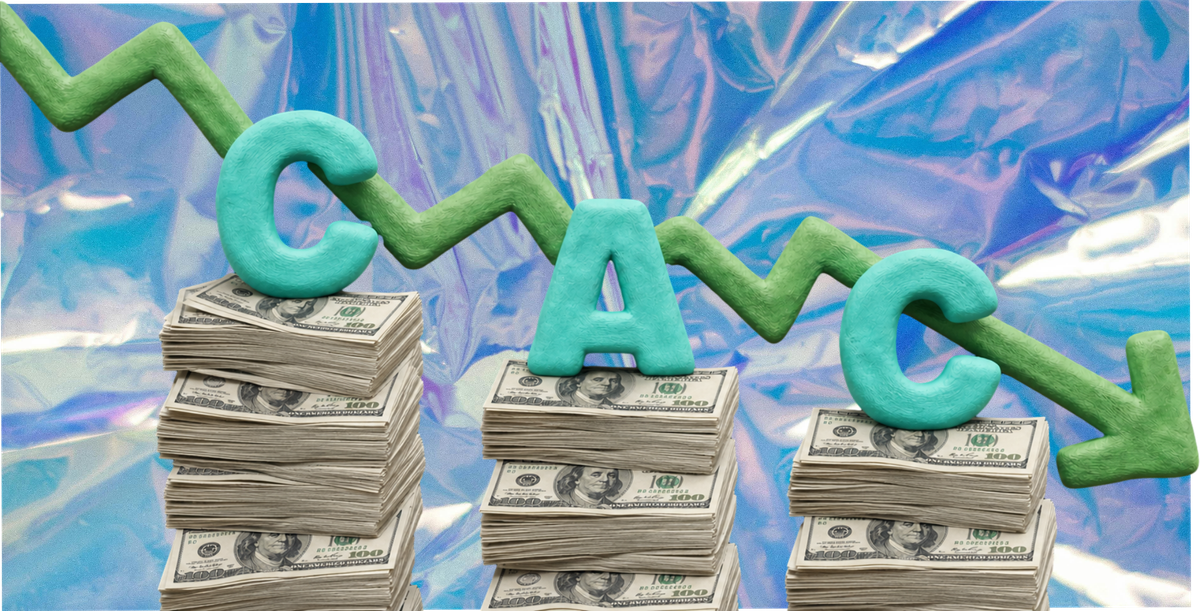
Customer acquisition cost is rising. That is not a prediction - it is the consistent story from Meta and Google ad auction data across the last four years. More brands competing for the same inventory, smarter bidding tools that optimise to the same conversion signals, and diminishing creative differentiation as studios produce content that looks the same regardless of which brand it is advertising. The cost of buying attention keeps going up.
The brands managing this most effectively are not primarily finding cheaper media channels. They are changing what they are putting into the existing channels - and how much of their conversion work they do before a customer ever clicks an ad.
Customer content is a meaningful part of that shift. Here is the mechanism.
"Brands that prioritize community engagement through UGC initiatives report 33% higher customer loyalty (Source: HubSpot). By creating a community around authentic content, brands can cultivate deeper customer relationships that lead to repeat purchases and customer advocacy."
Why Customer Acquisition Cost Keeps Rising
The economics of paid social are not broken - but they are less forgiving than they were three years ago.
Meta auction data published through their quarterly earnings shows average cost-per-click increasing year on year across most ecommerce categories. The reason is straightforward: the auction is more competitive. More brands are running paid social, bidding tools have improved, and the signal quality from iOS privacy changes has made optimisation harder and more expensive.
The response most brands default to is budget adjustment - spending more to maintain the same volume of acquisition. The better response is to attack the variables that affect CAC without requiring more media spend: the conversion rate of the traffic you are already paying for, and the percentage of visitors who convert from channels that cost nothing.
Customer content affects both.
The Conversion Rate Effect
The simplest way to understand customer content's impact on CAC is through the conversion rate on product pages.
Bazaarvoice consistently publishes data showing that shoppers who interact with customer content on product pages convert at 161% higher rates than those who do not. If a product page is converting at 3% with no customer content, adding customer photos and reviews does not just improve the experience - it improves the economics of every paid visit.
At a 3% conversion rate and a $1 cost-per-click, you are spending $33 to acquire one customer. If customer content moves that conversion rate to 5%, the same traffic and the same media spend produces a customer for $20. The media cost did not change. The CAC did.
The mechanism is trust resolution. A visitor from a paid ad arrives with uncertainty: does this product work as advertised? Are there real people using it? Is this brand credible enough to hand over my card details? Customer content answers those questions. Photos of real people using the product in real contexts. Reviews from verified buyers. Testimonials that match the visitor's situation. Each piece reduces the uncertainty gap between interest and purchase.
PowerReviews data shows that products with 11 or more reviews see conversion rates 44% higher than products with no reviews. That conversion uplift is free acquisition efficiency - more customers from the same media spend.
The Paid Ad Performance Effect
Beyond conversion rate on landing pages, customer content directly affects the performance of the paid ads themselves.
Customer photos and video running as Meta or Google ads carry trust signals that studio creative cannot replicate. The content looks like what is already in the feed. A real person showing a product in their actual environment produces engagement patterns that brand creative typically does not.
Better engagement means better auction signals. Better auction signals mean lower CPM. Lower CPM means more impressions, more clicks, and more conversions for the same budget. The customer content does not change the media rate - it improves the brand's position in the auction by making the creative perform better.
Stackla data shows consumers are 2.4x more likely to engage with customer content than brand-produced creative. That engagement difference has a direct effect on ad cost. A creative that generates twice the engagement at the same spend effectively halves the cost of the attention it buys.
The prerequisite is rights clearance. Customer content can only run in paid ads when the consent explicitly covers commercial use. Content collected through a structured submission flow with clear terms is immediately deployable in paid social. Content sourced informally - tagged posts, email replies, DM conversations - is often not covered for paid use and cannot be run without additional permissions. The difference between a content library that reduces CAC and one that sits unused is often the clearance status of what is in it.
How 82DASH looks after rights management explains the clearance model that makes customer content immediately usable in paid channels.

The Organic Reach Effect
Customer content also generates acquisition that does not go through paid channels at all.
A product with 300 genuine reviews ranks differently in Google Shopping and organic search than one with 10. The review volume is a trust signal to the algorithm and to the visitor. Organic search traffic generated by review content and customer-contributed text costs nothing to acquire - it is a compound interest on the collection work done in previous months.
Nielsen research consistently places word-of-mouth and peer recommendations as the highest-trust content format, above advertising, influencer content, or brand communications. A customer who submitted a photo or review and received a wallet pass reward has had a complete interaction with the brand: they were asked, they responded, they were thanked. That customer is more likely to recommend the brand because they have had a meaningful engagement beyond the transaction.
The referral effect compounds. Each customer who mentions the brand to someone in their network - online or offline - generates an acquisition that carries no media cost. The compounding is slow to start but meaningful at scale. It is also not easily replicated through paid spend, because it is built on genuine satisfaction and genuine relationships, not rented attention.
The Content Compound: Building an Asset That Depreciates Slowly
The framing that makes this most useful for budget decisions is asset versus expense.
Paid media is an expense. The moment you stop paying, the traffic stops. The investment resets. There is no carryover value from last month's spend.
Customer content is an asset. A library of rights-cleared photos, videos, reviews, and testimonials continues to work after it is collected. A strong photo collected in January performs in a February ad, and still performs in June. A product review written in Q1 continues to influence Q3 conversion rates. The content depreciates slowly and compounds with each new piece added.
82DASH is built on this asset model: the collection request, submission flow, rights clearance, reward delivery, and content library are a connected system that turns every order cohort into a new round of content acquisition. The content budget works harder over time because the library grows rather than resetting.
Shopify customer content marketing strategy covers how this pipeline fits into the broader content strategy for Shopify brands.
What the CAC Reduction Actually Looks Like
To make this concrete: a Shopify brand spending $10,000 per month on paid social with a 3% conversion rate and a $45 average order value is acquiring customers at roughly $30 each.
If customer content on product pages moves conversion rate from 3% to 4.5%, the same spend generates 50% more customers. The media budget is unchanged. The customer content work - building the collection flow, generating the library, deploying it on product pages and in ads - has effectively cut CAC from $30 to $20 without touching the media plan.
At scale, the organic search and referral effects stack on top of this. The brands that have been building customer content libraries systematically for two or three years typically have significantly lower blended CAC than those still relying on studio creative and paid acquisition alone - because they have more traffic coming from channels they do not pay per click for, and they are converting that traffic more efficiently with content that costs them a reward instead of a production budget.
How to measure UGC ROI for ads covers the attribution methodology for isolating the contribution of customer content to conversion and CAC metrics.
Isabelle Simon - Communications Lead - 82DASH
Frequently Asked Questions
How does customer content reduce customer acquisition cost?
Customer content reduces CAC through three mechanisms: it improves conversion rates on product pages (so you need fewer paid clicks per purchase), it improves paid ad performance (better engagement means better auction signals and lower CPM), and it generates organic traffic through reviews and word-of-mouth that carries no media cost. Each effect compounds over time as the content library grows.
How much can customer content reduce paid social CAC?
The reduction varies by category, starting point, and volume of content. Conversion rate improvements from customer content on product pages typically range from 15-50% depending on how much content is added and how well it matches the visitor's questions. Bazaarvoice data puts the uplift for shoppers who interact with customer content at 161% higher conversion compared to those who do not. The full CAC reduction depends on how much of the traffic is already converting and how much customer content is in the ad rotation.
What kind of customer content has the most impact on CAC?
Video has the highest per-piece impact on paid social performance. Customer photos outperform studio creative on trust metrics. Reviews compound over time through both organic search and product page conversion. For immediate CAC reduction, start with customer video in paid ads and customer photos on product pages. For compounding long-term effects, build review volume first - the SEO and product page effects are durable.
Do I need rights clearance to use customer content in ads?
Yes. Customer content running in paid advertising must be covered by documented consent specifically including commercial use. Organic repost permissions do not cover paid advertising use. The simplest approach is to collect rights at the point of submission through a structured form with clear terms, so the content is immediately deployable when it arrives in the library.
How long before customer content starts reducing CAC?
Product page conversion uplift is measurable from the first cohort of customer content published - typically within four to six weeks of launching a collection flow. Paid social performance improvements from customer content in ads are measurable within the first month of running at scale. Organic and referral effects compound over three to six months. The full CAC reduction is a six-to-twelve month picture.