Lightspeed UGC: How to Collect Customer Content and Insights In Store
A shop has the customer standing in front of it holding the product, at the moment they are most pleased. Almost nobody captures it. Here is how Lightspeed Retail stores collect content and insight at the till.
A physical shop has something almost no online business does: the customer is standing in front of you, holding the thing they just bought, at the moment they are most pleased about it.
Almost nobody does anything with that. The transaction completes, the receipt prints, the customer leaves, and the shop has a sales record and nothing else. No photo, no feedback, no way to reach them again.
This guide is about closing that gap on Lightspeed Retail, whether you are on X-Series or R-Series. Not with a loyalty scheme that takes six months to earn anything, but with a way of asking for UGC and insight at the till and rewarding it immediately.
It rests on a simple reallocation: pay your customers, not creators. A shop that commissions a photographer or hires a creator to shoot its stock is paying someone with no relationship to the product. The people who chose it, paid for it and are carrying it out of the door will do it for a fraction of the cost, and their version is more believable.
From r/marketing: "If you don't ask for testimonials or reviews why would they share them? If you want to use these materials in marketing outside of sharing in your stories (paid ads or homepage for example) then you have to have some rights agreement either way. So it's easier to use ugc creators for that."
The first sentence is exactly right and the conclusion does not follow from it.
Asking is the missing step, and the rights point is true but solvable: a rights agreement is easier to obtain at the moment someone submits than at any point afterwards. Handle it there and the creator route stops being easier. It just becomes more expensive.
For a shop this matters more than for an online business, because the asking problem is already solved. The customer is standing in front of you. What is missing is the mechanism, not the opportunity, and the POS records what left the shop rather than who took it or what they thought.
What Lightspeed Already Gives You, and What It Does Not
Worth being clear on the starting position, because Lightspeed Retail is a capable system and the gap is specific rather than general.
What it does well. Inventory, sales reporting, multi-location, purchasing. On X-Series you get strong retail workflows and a clean interface. On R-Series you get deeper handling for specialist retail: workorders, repairs, serial number tracking, layered cost management. Both are actively developed.
Customer records exist too. You can attach a sale to a customer, build purchase history, and segment on it.
Where it stops. The customer record tells you what someone bought and when. It does not tell you why, what they thought, whether they would recommend it, or what the product looks like in their home. And it gives you no marketing content whatsoever.
That is not a criticism. A POS is for processing transactions and managing stock. It was never meant to be a content system. The gap only matters because the moment of highest customer goodwill happens inside the POS and nothing captures it.
The Moment That Matters
In ecommerce, the strongest moment for a content request is delivery day, and getting to it requires an email that may not be opened.
In retail, that moment is happening in front of you. The customer has chosen the thing, paid for it, and is holding it. Their enthusiasm is at its highest point it will ever reach, and they are physically present.
The three windows worth building around:
At the till. The transaction moment. Highest goodwill, but the customer is often in a hurry and there is a queue behind them. The ask has to be a single tap.
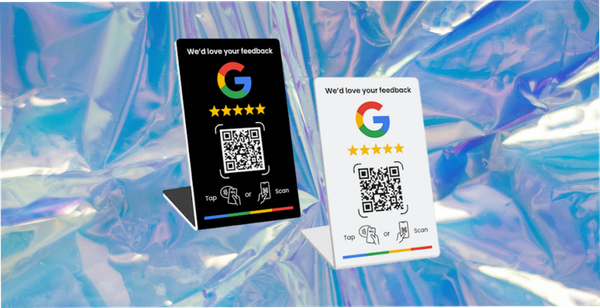
On the receipt. They leave with it, look at it later, and it is the one piece of paper they keep. A QR code here catches people at home when they have time.
In the bag or on the product. For anything the customer will unbox or use at home, an insert or a sticker reaches them at the point of use rather than the point of purchase.
Most shops that succeed at this use two of the three rather than one, because different customers respond at different moments.
What to Ask a Retail Customer For
Retail changes the ask compared with online, because the relationship is briefer and more immediate.
Photos of the product in use or at home. The most valuable thing a shop can collect, and the hardest to get any other way. A clothing shop with fifty customer photos of real people wearing the stock has something no lookbook provides.
Short video. Harder to get at the till, easier from a receipt QR code later. Ten seconds, filmed at home.
Feedback and NPS. What they were looking for, whether they found it, whether staff helped. This is retail insight you cannot get from a sales report, and it is the part most shops undervalue.
Reasons for choosing you. Especially useful for independents competing with larger chains. The answers are usually about staff, range or convenience, and they tell you which of those to invest in.
The prompt matters as much as the channel. "Leave us a review" is a different and weaker request than "show us where it ended up". The second is specific, easy, and produces something you can use.
Why a Reward Has to Be Immediate in Retail
The reward economics work differently in a shop.
Online, a customer can be emailed a discount code weeks later and it still functions. In retail, a delayed reward has a much lower chance of ever being redeemed, because the customer has no automatic reason to return and no record of the offer beyond an email they may not open.
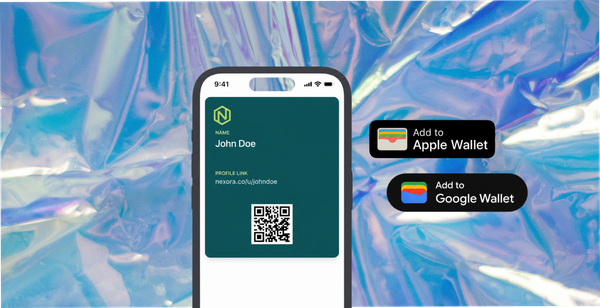
A reward that lands on the phone within seconds solves this, and does two things at once. It gives the customer something for participating, and it puts a card in their wallet that persists after they leave the shop.
That second part is the one worth thinking about. A retail customer who walks out with nothing but a bag is gone until they happen to come back. A retail customer who walks out with a pass in their wallet can be reached again, which is the difference between a transaction and a relationship.
The reward itself does not need to be large. Store credit, a small discount on the next visit, or a third-party voucher all work. Immediacy matters more than value.
Making It Work at the Counter
The operational reality decides whether any of this happens, and it is where most retail programmes quietly fail.
Staff have to mention it. This is the single largest variable and it is not a technology problem. A programme nobody mentions gets used by nobody, regardless of how good the setup is. One sentence at the till is enough, and it needs to be part of the till routine rather than an optional extra.
It cannot slow the queue. If the process adds more than a few seconds, staff will stop offering it during busy periods, which are exactly the periods with the most customers. A QR code the customer scans and completes later is better than anything requiring their attention at the counter.
The customer completes it in their own time. The best version is a scan at the till and a submission from home. The shop gets the goodwill of the moment without the friction of it.
Keep it visible. A card by the till, a sticker on the counter, a line on the receipt. Passive prompts catch the customers staff forget to tell.

The Insight Half, Which Most Shops Skip
Content is the visible output. Insight is usually the more valuable one for a retailer, and it is cheaper to collect because it asks less of the customer.
A sales report tells you what left the shop. It cannot tell you any of the following, and all of them change decisions:
What they came in for. Particularly what they came in for and did not find. A stock gap that never becomes a transaction is invisible in the POS, because a sale that did not happen leaves no record. Asking directly is the only way to see it.
Whether they found staff helpful. For independents this is frequently the whole competitive advantage over a chain, and it is measured almost nowhere.
How they found you. Passing trade, a recommendation, social, local search. Retail attribution is close to impossible from transaction data alone, and one question answers it.
Whether they would come back, and why not. The clearest early warning available, and it arrives long before the numbers show a decline.
None of this needs a survey platform or a research budget. Four short questions attached to the same QR code that collects photos, answered by a few dozen customers a month, gives an independent retailer better decision-making information than most chains generate from far more expensive systems.
The reason to run both together is that the reward covers both. A customer who scans once can be asked for a photo and two questions, and the marginal cost of the second ask is zero.
How 82DASH Works With Lightspeed Retail
82DASH is a customer content platform built on the premise that a brand should pay its customers rather than creators. It collects rights-cleared photos, videos, feedback and reviews from real customers, and delivers a reward as an Apple Wallet or Google Wallet pass.
For Lightspeed Retail specifically, 82DASH integrates with X-Series, so campaigns can connect to the transaction rather than sitting alongside it.
The flow suits a shop counter. You build a content request, naming what you want and setting the reward. The customer reaches it by scanning a QR code at the till, on the receipt, or on a card in the bag, or by tapping an NFC tag on the counter. They submit from their phone, in the shop or later at home.
Rights clearance is captured at the point of submission, covering paid advertising, social, email and print, so the photos are usable in a Meta campaign rather than only on a noticeboard.
The reward lands in Apple Wallet or Google Wallet within seconds. That pass then becomes a channel: you can send a push notification when something arrives in stock, when an offer starts, or when you want more content. For a shop with no email list and no app, that is often the first direct line to customers it has ever had.
Where you want insight rather than content, the form builder handles feedback and NPS through the same flow, with the same instant reward.
There is a fuller walkthrough of collection prompts in the guide on writing a content request that gets responses.
A First Month That Works
For a shop starting from nothing, this sequence avoids most of the common failures.
Put a QR code on the receipt and a card by the till. One request, one reward, no complexity.
Ask for one thing. A photo of the product at home works for most retail. Name it plainly.
Brief the staff on a single sentence and make it part of the till routine. This is the step that decides the outcome, and it takes ten minutes.
Run it for a month and count three numbers: how many scanned, how many submitted, how many submissions you can actually use. That is your cost per usable piece of content and it will be a fraction of any photography quote.
Then use what you collect. Photos on the website and in ads, feedback acted on and mentioned to the team, and a second request to the customers who responded first. Those people are your most likely repeat contributors and the pass in their wallet means asking again costs nothing.
Isabelle Simon is Communications Lead at 82DASH.
Frequently Asked Questions
Does 82DASH integrate with Lightspeed Retail?
Yes, with Lightspeed Retail X-Series. Campaigns can also run standalone through QR codes and NFC tags on any till system, so the integration is useful rather than required.
What is the difference between Lightspeed X-Series and R-Series?
X-Series joined Lightspeed through the Vend acquisition in 2021 and suits general retail workflows. R-Series is the longer-running product and fits specialist retailers needing workorders, repairs, serial tracking and layered cost management. Both are actively developed.
How do you collect customer content in a physical shop?
The practical route is a QR code at the till, on the receipt, or on a card in the bag, which the customer scans and completes on their own phone. Asking staff to capture anything at the counter slows the queue and stops happening during busy periods.
Will customers actually respond to a request at the till?
More reliably than online, because the moment is better. They are holding the product and their goodwill is at its peak. The limiting factor is usually whether staff mention it, not whether customers are willing.
What reward works best for retail customers?
Something immediate. A delayed discount emailed later has a low redemption rate because a retail customer has no automatic reason to return. A reward landing on the phone within seconds performs considerably better, and leaves a pass in the wallet you can use to reach them again.
Further Reading
- Lightspeed: retail POS documentation for X-Series and R-Series
- Apple Wallet: pass format and update mechanics
- Google Wallet: pass platform and notification handling
- Bazaarvoice: research on customer photos and conversion
- FTC: disclosure guidance for incentivised customer content