How Customer Content Reduces CAC on Shopify 2026
Customer content doesn't just make ads look better. It attacks CAC from three angles at once - creative cost, auction efficiency, and on-site conversion.
If you're running paid social to a Shopify store in 2026, you already know the feeling. You open Ads Manager, check your cost per acquisition, and spend the next ten minutes wondering whether this whole thing still makes sense. CPMs are up. Competition is brutal. And every agency you speak to has a deck full of impressive-looking strategies that somehow never quite move the number.
Customer-generated content gets talked about a lot as a creative solution - more authentic, better engagement, that sort of thing. What gets discussed far less is the unit economics case. Not vibes. Actual maths. Because when you look at it properly, customer content doesn't just make your ads feel warmer. It attacks your CAC from three completely different angles at once - and most merchants are only using one of them, if any.
"Results after 2 months: CAC down 34% + Conversion rate up 19%" -
u/Mbennetts
Why CAC Has Become the Number That Defines Everything
CAC - cost per acquisition - is ultimately the product of three things: how much you spend per click, how many clicks it takes to get a session, and how many sessions it takes to make a sale. Touch any of those and CAC moves.
For most Shopify merchants running paid social, the levers available are: bid harder, target differently, or write better copy. None of those are bad ideas. But they're all working on the demand-capture side of the equation. Customer content is different. It works on the cost side - production costs, auction efficiency, and conversion rate - all at once.
Let's go through each lever properly.
Lever 1 - Lower Creative Production Cost
Here's something nobody says loudly: most brand-produced creative on Shopify is expensive to make and mediocre to look at. A decent studio shoot costs between $30 and $100 per usable image once you factor in the photographer, studio time, editing, and the inevitable reshoots. For a store running multiple product lines with regular refreshes, that compounds fast.
Rights-cleared customer content, by contrast, typically costs $10-15 per photo and $15-20 per video in reward value - plus your platform cost. At 82DASH that's $82/month for 400 image and 200 video submissions with rights cleared automatically at upload. Blended per-piece, you're looking at $15-30 for a piece of content that shows a real person, in a real context, using your actual product. Rights included.
The creative quality argument is almost secondary at this point. The cost argument alone is material for any store spending serious money on creative production. Cut creative costs by 40% and that saving comes straight off your blended CAC.
Lever 2 - Better Ad Performance in the Auction
This is where the maths gets interesting. Meta's ad auction is not a flat marketplace. It rewards relevance. Ads that generate higher click-through rates get cheaper CPMs - the algorithm is essentially paying you for making the platform more engaging for its users.
Customer content in paid social placements consistently outperforms polished brand creative on CTR. The range cited across industry research is broad - anywhere from 30% to 80% higher CTR depending on category, creative format, and audience. Stackla's research found customers engage 2.4x more with customer content than with brand content. TikTok's own business data shows similar patterns on their platform with creator and community-style content.
A 40% improvement in CTR doesn't just mean more clicks. In Meta's auction, it means lower CPM for the same number of impressions. Lower CPM means lower CPC. Lower CPC means lower CAC - without changing your conversion rate, your targeting, or anything else.
Lever 3 - Higher On-Site Conversion Rate
The third lever works differently to the other two. It doesn't reduce what you spend per click. It changes what you get from every click you're already paying for.
Bazaarvoice's research found 161% higher conversion rates when shoppers interact with customer content on product pages. That's the ceiling - not every store will hit it - but even a conservative 20% lift in conversion rate has a significant effect on CAC because it means you're turning more of your existing traffic into paying customers without spending an extra dollar on ads.
This matters more than it sounds. If you're spending $5,000/month on ads and getting 1,000 sessions, a 20% conversion lift means you'd need $6,000 of spend to get the same number of customers without it. That $1,000 delta is effectively a reduction in your CAC via better on-site performance. Shopify's own research on social proof backs this up consistently - customer photos and reviews are among the highest-ROI additions to a product page.
For a deeper look at how these benchmarks translate to real stores, see our How to Measure UGC ROI.
The Compounding Effect - Walking Through the Maths
Here's where it gets genuinely compelling. Most CAC improvement strategies are additive at best. Customer content is multiplicative, because all three levers operate at the same time.
Take a fictional but realistic Shopify merchant - let's call them Birchwood Supply Co. Monthly ad spend: $5,000. Current CAC: $45. That gives them roughly 111 customers per month.
Starting point:
- Ad spend: $5,000
- Sessions from ads: 2,500
- Conversion rate: 4.4%
- Customers: 111
- CAC: $45
Now they introduce a customer content programme - collecting and rewarding customer photos and videos, using them in Meta ads and on their product pages.
Step 1 - Creative cost reduction. Not directly a CAC input, but it frees up budget. Assuming they reinvest that saving into spend (or simply note it as margin improvement).
Step 2 - Improved CTR lifts auction efficiency. A 40% CTR improvement leads to lower CPM. At the same $5,000 spend, they now get roughly 3,200 sessions instead of 2,500 - a 28% increase in sessions for the same budget. That alone would bring CAC from $45 to around $35.
Step 3 - Better on-site conversion. Customer photos on product pages lift conversion by 20% (conservative estimate). Conversion rate moves from 4.4% to 5.3%. Applied to 3,200 sessions: 170 customers from the same $5,000 spend.
New CAC: $5,000 / 170 = $29.40
That's a 35% reduction in CAC. Same budget. No new targeting strategy. No agency fees for a creative overhaul. Just customer content working across all three levers simultaneously.

How to Build the Programme Without the Complexity
The standard objection here is operational - collecting customer content at volume sounds like a project. You need to ask people, manage responses, sort out rights, and then actually use the content. Most merchants try it informally via Instagram tags and give up when the rights situation gets murky or the volume doesn't materialise.
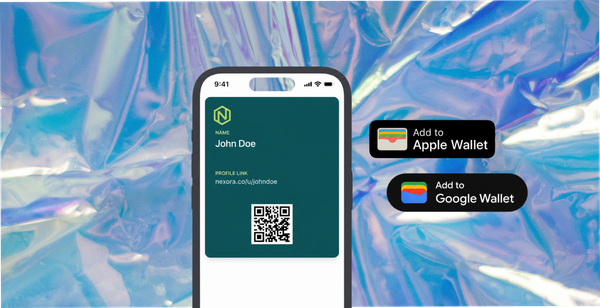
The cleaner approach is a structured post-purchase content flow. After a customer confirms their order has arrived, they're invited to submit a photo or video in exchange for a reward - delivered directly to their Apple or Google Wallet. No app download. No points system to manage. 82DASH handles the rights clearance automatically as part of the submission flow, so anything collected is immediately ready to use in paid ads.
The reward cost is $10-20 for video and $5-15 for photo, which sits comfortably within the content production savings described above. You're paying less per piece than a studio shoot and getting content that performs better. Klaviyo's email integration data shows post-purchase flows with incentives achieve significantly higher engagement than standard transactional emails - the ask lands well when it follows a good experience.
For a full breakdown of how rights clearance works in practice, see our Rights-Cleared UGC Guide for Shopify Ads.
What Makes Customer Content Different From Influencer Creative
It's worth drawing a clear line here because they're often lumped together. Influencer content is hired creative - the person is paid to create something on your behalf. Customer content comes from people who already bought from you, used your product, and are sharing their genuine experience.
The practical differences matter for both performance and cost. Nielsen's trust research consistently shows consumer trust in peer recommendations far outpaces trust in sponsored content. That trust differential shows up in ad performance. Our own piece on influencer vs customer content ROI and rights goes into this in detail if you want the full comparison.
For a solid primer on the terminology, CGC vs UGC is worth a read - the distinction matters for how you structure collection and rights.
Getting the Content Into Your Ad Account Correctly
Collecting the content is half the job. The other half is making sure it's actually used. The most common failure mode is merchants collecting decent content and then leaving it in a folder somewhere because the workflow for getting it into Meta or TikTok feels unclear.
A few practical notes. For Meta, business.facebook.com allows you to upload customer creative directly to your ad account library once rights are confirmed - rights documentation should be in writing, which is why a structured collection flow is cleaner than relying on a DM agreement. For TikTok, the TikTok Business Creative Center provides format guidance for customer-style content by placement type.
Adweek's research on creative fatigue shows ad sets typically start losing efficiency within two to four weeks. A healthy customer content library - rotating fresh pieces regularly - solves the creative refresh problem at a fraction of the cost of ongoing production shoots.
For a strategy-level view of how to run this as a programme rather than a one-off, see our Shopify UGC Strategy Guide.
Isabelle Simon - Communications Lead - 82DASH
FAQ
Does customer content actually improve CTR or is that just theory?
The data is reasonably consistent. Stackla's research found 2.4x more engagement with customer content vs brand content. TikTok's business case studies show similar patterns. CTR improvements of 30-50% are commonly cited in industry reporting, though results vary significantly by category, creative quality, and audience. The mechanism is real - authenticity signals work in social feeds - but you'll want to test against your own baseline to know what uplift looks like for your store specifically.
What kind of reward is realistic without wrecking margins?
For photos, a $5-15 wallet pass reward is the typical range. For video, $15-20. At a content production cost of $82/month for the platform plus reward cost, you're comparing against studio photography at $30-100 per image. The numbers usually work unless your AOV is very low (under $25), in which case it's worth doing the specific maths for your store.
How does rights clearance work when running the content in ads?
With a structured collection platform like 82DASH, rights are granted at the point of submission - the submitter agrees to usage terms before they upload. This means every piece you collect is immediately cleared for paid media use. The alternative - collecting content via social tags or DMs and trying to get rights retrospectively - is both slower and legally shakier. Meta's advertising policies require you to have rights to any creative you run, so documented clearance matters.
Can I use customer content across all Meta placements?
Mostly yes, with some format caveats. Reels placements favour vertical video (9:16). Feed placements work well with 1:1 or 4:5 ratio imagery. Stories and vertical placements are high-performing for customer video. The honest answer is that customer content - shot on phones in real environments - is already naturally formatted for the placements that perform best. That's part of why it works.
How long does it take to build a usable library?
With a properly set up post-purchase flow, most stores with more than 200 orders per month can build a working library of 40-60 pieces within the first four to six weeks. Smaller stores take longer - if you're under 50 orders/month, it's still worth doing but you should set expectations around timeline. The important thing is to start: a collection programme that runs in the background compounds over time.