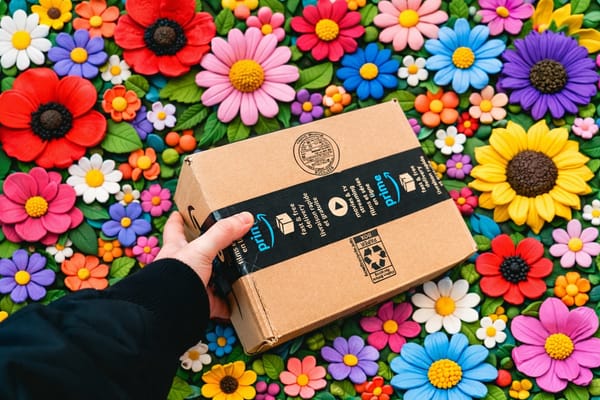
How to Calculate Content ROI: Why Real Customer Photos Outperform AI Content
Learn how to measure content ROI and why authentic customer photos outperform AI images and paid influencers. Includes formulas, benchmarks, and 2024–2025 ecommerce performance data.

User-generated content (UGC) has become one of the highest-ROI marketing channels for ecommerce brands. But how do you actually measure ROI,
and why does authentic customer generated content (CGC) consistently outperform AI-generated images and paid influencer posts?
This guide breaks down the data, formulas, and performance benchmarks you need to prove the ROI of real customer photos - backed by 2024-2025 industry studies.
What Is Content ROI and Why Does It Matter?
Content ROI (Return on Investment) measures the financial return you get from customer-generated content compared to what you spend collecting, curating, and deploying it.
Unlike branded photoshoots or AI-generated imagery, authentic customer photos come with built-in trust signals. Modern consumers can spot artificial content instantly - and they scroll past it. What makes them stop, engage, and buy is proof from real people.
According to CXL's research: "Stock photos and staged shots rarely inspire trust. People can tell when an image is fake - and they respond with hesitation."
That hesitation costs you conversions. Authentic visuals don't.

The Performance Data:
CGC vs. AI vs. Paid UGC
Industry benchmarks from 2024-2025 show consistent patterns:
- Meta Business (2024): Ads featuring authentic customer-generated content delivered 28% higher click-through rates and 19% lower cost per acquisition compared to AI or branded imagery.
- Stackla/Nosto Research: 79% of consumers say UGC highly influences their purchase decisions. Only 12% say the same about brand-created visuals.
- Shopify Case Studies: Ecommerce brands that replaced studio photos with real customer images saw conversion rate increases of 15-35%, depending on product category.
VWO Conversion Study: Adding relatable human images to landing pages increased conversions by up to 48%.
Cratejoy Analysis: Product reviews featuring customer photos outperformed text-only reviews in both engagement metrics and new customer acquisition rates.
As marketing strategist Jay Baer explained on the Social Pros Podcast: "CGC isn't just cheaper content - it's trusted content. And in marketing, trust always beats polish."
Why AI-Generated Images Fail to Convert
AI can create technically flawless images. What it can't create is emotional authenticity.
The problem isn't visual quality - it's the absence of lived experience. AI-generated content simulates realism but lacks the trust signals that come from real customer use:
- No proof of product fit, scale, or real-world performance
- No relatable context (home, lifestyle, genuine reactions)
- No social proof that "people like me" use this product
Customers don't just want to see your product. They want to see themselves using it - and authentic CGC provides that mirror.
AI imagery may cost only a few euros per output, but conversion data shows it underperforms consistently. The cost per impression is low, but the cost per trust is astronomical.
The Hidden Costs of Paid UGC Creators
Paid influencer content occupies an uncomfortable middle ground. It's more relatable than AI but less authentic than real customer photos.
Typical costs for paid UGC creators:
- $100-$800 per post (including fees, revisions, and usage rights)
- Additional costs for exclusivity or multi-platform rights
- Time spent on briefing, feedback loops, and approvals
Even at this price point, audiences increasingly recognise paid creator content as marketing, not proof. One ecommerce marketer on Sociamonials put it this way:
"CGC [Customer-Generated Content] is easy content to get because customers love to tell their story. Your potential customers want to hear from their peers, not you - you just get to be that conduit."
That's the core difference: paid UGC is performed authenticity.
Real customer generated content is actual authenticity.

How to Calculate Content ROI: The Formula
Measuring ROI starts with a simple formula:
Content ROI =
(Revenue from CGC campaigns - Cost to collect CGC)
÷ Cost to collect CGC
What to Include in Costs:
- Incentives or rewards offered to customers (discounts, store credit)
- Platform or tool fees for collecting and managing content
- Rights management and legal review (if applicable)
- Staff time for curation and deployment
What to Track in Revenue:
- Direct sales attributed to CGC-featuring product pages
- Conversion from CGC-based paid ads (Meta, Google, TikTok)
- Email campaign performance using customer photos
- Engagement metrics that correlate with purchase intent
Example Calculation:
A fashion brand runs a CGC campaign with these numbers:
- Total cost: $1,800 ($1,200 in customer rewards, $100 82dash platform fee, $500 curation time)
- Attributed revenue: $30,000 (tracked via UTM parameters and Shopify analytics)
ROI = (30,000 - 1,800) ÷ 1,800 = 15x
For every euro spent collecting authentic content, this brand generated $15 in return.
Compare this to typical paid UGC campaigns (3-5x ROI) or AI-generated content (2-4x ROI), and the performance gap is clear.
Step-by-Step:
How to Measure Content Performance
1. Establish Your Baseline Metrics
Before launching Content collection, document current performance:
- Product page conversion rate
- Email click-through and conversion rates
- Paid ad CTR and CPA
- Average order value
2. Run A/B Split Tests
Test authentic customer content against your current visuals:
- Product pages: A/B test customer photos vs. studio shots
- Paid ads: Run identical ad copy with Content images vs. AI/branded images
- Email campaigns: Compare campaigns featuring customer photos vs. standard product images
Use tools like Google Optimise, Meta's built-in A/B testing, or Shopify's native analytics to track performance.
3. Track Attribution Across Channels
Use UTM parameters and conversion tracking to connect content to revenue:
- Tag UGC-based ads with source identifiers
- Monitor "assisted conversions" in Google Analytics
- Track post-click behaviour for UGC-featuring pages
4. Calculate Cost Per Acquisition (CPA)
Compare CPA across content types:
- CPA with AI-generated images
- CPA with paid creator content
- CPA with authentic customer photos
Industry data shows authentic UGC typically reduces CPA by 15-30% compared to other visual content.
5. Measure Content Lifespan
One overlooked advantage of authentic UGC: longevity.
Real customer photos remain relevant and performant far longer than:
- Seasonal branded campaigns (expire after weeks)
- AI-generated trends (feel dated quickly)
- Paid creator content (limited usage rights)
Factor lifespan into ROI by calculating "cost per month of use" rather than just upfront cost.
UGC ROI Benchmarks by Industry (2025)
Performance varies by vertical, but patterns are consistent:
Fashion & Apparel: 8-15x ROI typical for customer photo campaigns. High engagement due to fit, styling, and aspirational content.
Home & Lifestyle: 6-12x ROI. Customers want to see products in real spaces, not staged sets.
Beauty & Cosmetics: 10-18x ROI. Before/after photos and real skin types drive trust and conversion.
Food & Beverage: 5-9x ROI. Recipe photos and serving suggestions perform well but may have shorter shelf life.
Electronics & Tech: 4-8x ROI. Unboxing and in-use context photos outperform spec sheets.
Brands using systematic UGC collection (via post-purchase email campaigns, social hashtags, or dedicated platforms) regularly achieve 5-12x ROI across categories.
Common UGC ROI Mistakes to Avoid
Mistake 1: Not Securing Usage Rights
Collecting customer photos without explicit permission to use them commercially creates legal risk and limits your ability to deploy content at scale.
Solution: Use clear opt-in language when collecting content, offering incentives in exchange for commercial usage rights.
Mistake 2: Measuring Vanity Metrics Only
Likes and shares don't pay the bills. Focus on conversion metrics, attributed revenue, and CPA reduction.
Solution: Connect UGC campaigns directly to revenue tracking via analytics platforms and UTM tagging.
Mistake 3: Mixing UGC with CGC
When calculating ROI, keep authentic customer content separate from paid influencer posts. They have different cost structures and performance profiles.
Solution: Track separately in your analytics and compare performance side-by-side.
Mistake 4: Ignoring Quality Curation
Not all customer photos perform equally. Blurry, poorly lit, or off-brand images won't convert regardless of authenticity.
Solution: Establish basic quality standards (resolution, lighting, relevance) and curate your best content for high-visibility placements.
The Role of AI in Content Strategy
AI hasn't replaced authentic content - it's made it more scalable.
Smart brands use AI for:
- Tagging and categorisation: Automatically identifying product features, use cases, or customer demographics in submitted photos
- Performance prediction: Analysing which types of authentic content drive the highest engagement
- Rights management: Tracking permissions and usage across platforms
- Content surfacing: Highlighting top-performing customer photos for ad campaigns
The formula that works: AI handles automation and insights, while customers provide authenticity and trust.
How to Start Collecting High-ROI Customer Content
1. Post-Purchase Email Campaigns
Send automated emails 7-14 days after delivery asking for photos. Offer a small incentive (10-15% discount on next order).
Expected response rate: 2-8% depending on product category and incentive.
2. Social Hashtag Campaigns
Create a branded hashtag and feature customer posts on your social channels and website. Recognition acts as the primary incentive.
Expected participation: Varies widely, but consistent featuring builds momentum over time.
3. Dedicated Content (UGC + CGC) Platforms
Tools like Bazaarvoice, Pixlee, Yotpo, or 82DASH automate collection, rights management, and deployment.
Typical costs: $50-$500/month depending on features and scale.
ROI advantage: Automation reduces staff time and increases content volume, improving overall ROI.
4. Review Platforms with Photo Upload
Encourage photo uploads in product reviews by making the process simple and offering small incentives for visual reviews.
Performance lift: Reviews with photos convert 2-3x better than text-only reviews.
Real-World Content ROI Case Studies
Case Study 1: Fashion Retailer
- Challenge: Low conversion rates on new product launches
- Solution: Collected 150+ customer photos via post-purchase campaign
- Cost: $1,800 (discount codes and platform fees)
- Result: $24,000 attributed revenue from CGC-featuring product pages
- ROI: 13.3x
Case Study 2: Home Decor Brand
- Challenge: High return rates due to size/fit expectations mismatch
- Solution: Added customer room photos to product pages showing scale
- Cost: $950 (gift cards and curation time)
- Result: 22% reduction in returns, $18,000 in prevented loss plus $12,000 in new sales
- ROI: 31.6x (including return prevention value)
Case Study 3: Beauty Subscription Box
- Challenge: Low email engagement and repeat purchase rates
- Solution: Monthly CGC-focused email featuring subscriber unboxing photos
- Cost: $400/month (rewards program)
- Result: 34% increase in email CTR, 18% lift in repeat purchases
- ROI: 9.2x over six-month period
CGC ROI vs. Other Marketing Channels
How does CGC ROI compare to traditional marketing investments?
- Paid Search (Google Ads): Average ROI 2-4x for ecommerce
- Paid Social (Meta/Instagram): Average ROI 3-6x with optimised creative
- Influencer UGC Marketing: Average ROI 4-7x (highly variable)
- Email Marketing: Average ROI 5-9x (best for retention)
- Authentic Content: Average ROI 8-15x (varies by collection method and deployment)
CGC consistently delivers above-average returns because it combines low acquisition costs with high-trust conversion rates.
The Future of Authentic Content ROI
Consumer expectations around authenticity continue to rise. Gen Z and Millennial shoppers increasingly reject:
- Overly polished branded content
- Obvious AI-generated imagery
- Paid influencer endorsements that feel transactional
What resonates instead: proof that real people chose, used, and loved your product.
"Right message, right audience, right time - same as it ever was."
Real customer content delivers all three naturally. The formula hasn't changed — only the medium has evolved. Authentic content simply executes timeless marketing principles at internet speed, with real people providing the proof.
FAQs:
CGC ROI and Customer Content Performance
What is a good ROI for CGC campaigns?
Most ecommerce brands see 5-12x ROI on authentic customer content campaigns. Fashion, beauty, and lifestyle categories typically achieve higher returns (8-15x) due to visual nature and trust factors.
How long does it take to see ROI from CGC?
Initial results appear within 2-4 weeks of deploying customer photos on product pages or in ads. Full ROI measurement requires 60-90 days to account for customer journey length and attribution windows.
Is CGC cheaper than hiring photographers?
Per-image cost is typically $10-$25 for customer content (including incentives) vs. $50-$200 per studio photo. However, the real advantage is performance, not just cost - CGC converts better, making the effective cost per conversion much lower.
Can AI-generated images ever match $GC performance?
Current data shows AI imagery consistently underperforms authentic customer content in conversion metrics. AI may improve technically but cannot replicate the trust signals that come from real customer use.
Do I need permission to use customer photos?
Yes. Always obtain explicit commercial usage rights before deploying customer content in marketing. This protects you legally and builds trust with your community.
What's the best way to collect customer photos?
Post-purchase email campaigns with small incentives (10-15% discount) generate the highest response rates. Dedicated CGC platforms automate collection and rights management for better scale and ROI.
How do I calculate CGC ROI if customers find us through multiple channels?
Use multi-touch attribution models in Google Analytics or your ecommerce platform. Track "assisted conversions" where CGC touchpoints contributed to eventual purchases, not just last-click attribution.
Start Measuring Your Content ROI Today
The data is clear: authentic customer photos deliver measurable, superior ROI compared to AI-generated content, stock photography, and even paid influencer posts.
The brands seeing 10x+ returns aren't getting lucky - they're systematically collecting, curating, and deploying customer content where it matters most: product pages, paid ads, and email campaigns.
Your customers are already taking photos. The ROI starts when you give them a reason to share and a place to be featured.
Ready to scale authentic content? Tools like 82DASH help ecommerce brands collect, manage, and deploy customer photos with full rights management - turning your customers into your most powerful marketing channel.
Isabelle Simon - Communications Lead - 82DASH