Beyond Yelp and TripAdvisor: How Hospitality Brands Can Own Their Customer Content
78% of hotel reviews live on platforms you don't own. Here's how hospitality brands can capture that content directly - and use it on their own terms.

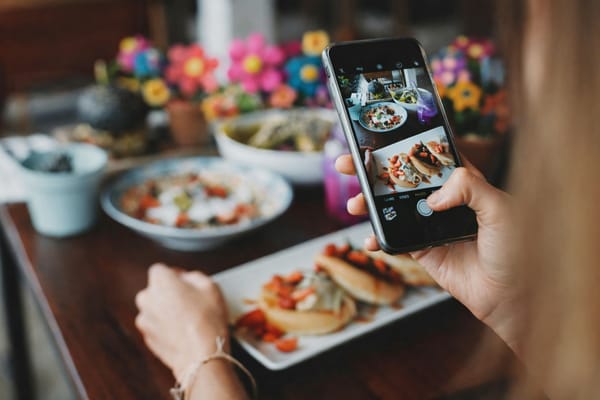
Your customer has a great dinner. They want to tell people about it.
So they open TripAdvisor. They write a glowing review & submit an image. They post it on Google. Maybe they tag the restaurant on Instagram.
Your restaurant got five-star feedback. TripAdvisor owns it.
Not you. Not the restaurant that earned it. The platform that happened to be open on their phone when the impulse to write something positive struck them.
This is the review trap that most hospitality businesses are caught in - and most don't realise how much it's costing them.
The platform problem
92% of travellers read online reviews before making a booking decision. That number isn't surprising. What's more telling is where those reviews live.
78% of all online hotel reviews come from just four platforms - none of which belong to the hotel. The content that persuades future guests to book or not book is largely housed on third-party platforms that the business cannot control, cannot repurpose, and cannot take with them if the platform changes its algorithm, its terms, or its pricing.
There's also the fake review problem. More than 7 in 10 consumers are concerned about non-legitimate reviews on sites like TripAdvisor and Google. The platform that your authentic customer reviews end up on is the same platform where bad-faith competitors can pay to have reviews filtered, or where coordinated fake review campaigns can damage your reputation overnight.
And a drop of even 0.5 stars on Google or TripAdvisor can lead to a 5-9% decrease in revenue. You have limited ability to prevent that. You have zero ability to take the content that went to that platform and put it somewhere it works harder for you.

The content you're sending to someone else's platform
Think about the value of a genuine, detailed positive review from a real guest.
The trust it generates. The specificity that convinces a hesitant booker. The authentic voice that no professional copywriter can replicate. That review contains everything a potential guest needs to decide to book with you rather than your competitor.
And it's on TripAdvisor. Surrounded by your competitors' listings. Displayed in a format TripAdvisor controls, ranked by an algorithm TripAdvisor controls, on a platform that also sells advertising to your competitors.
Meanwhile, you can't put that review in your own ads. You can't embed it on your website with confidence it won't disappear. You can't use the content to build a social campaign that brings people directly to your booking page rather than back to Booking.com.
Real customer content drives 4x higher click-through rates than branded alternatives in paid advertising. 90% of consumers trust real customer content more than traditional advertising. The content your guests are producing is your most valuable marketing asset. You just need to stop sending it all to someone else's platform.
What owning your content actually looks like
Owning your customer content doesn't mean abandoning review platforms. Google reviews matter for local SEO. TripAdvisor is still a decision-making tool for many travellers. You shouldn't pull out of those channels entirely.
What you should do is create a parallel system - one that captures the same authentic content from your guests and puts it somewhere you control.
Here's the difference in practice.
The standard flow: guest has a great experience → opens TripAdvisor → leaves review → review lives on TripAdvisor forever.
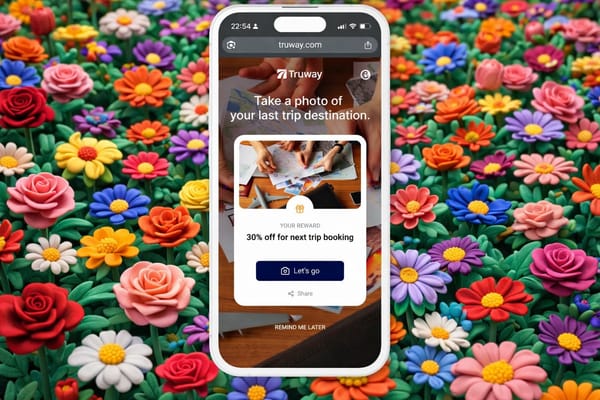
The owned-content flow: guest has a great experience → scans a QR code at the table or the checkout desk → submits a photo, a short video, or a written review directly to you → rights clearance is automatic → the content is yours.
From that moment, you can use it in your ads, on your website, in your email campaigns, in your social media, on your menus. You can send it to your own customers to share, rather than hoping they wander to a review platform. You can build the content library that makes your marketing more persuasive without commissioning another professional photoshoot.
The guest who would have left a glowing TripAdvisor review can still do that. But now they also gave you something you can use.
The direct channel that comes with it
There's a second benefit to this approach that most hospitality operators overlook.
When a guest submits content through your collection page, they receive an instant reward - a discount, a loyalty stamp, a complimentary offer - delivered to their Apple or Google Wallet. That wallet pass is the beginning of a direct communication channel.
Managers at hospitality businesses spend an average of 3-5 hours per week dealing with review disputes on third-party platforms - reporting fake accounts, responding to trolls, chasing down unfair ratings they can't remove. That's time and energy spent managing platforms they don't own.
The alternative is building something you do own: a database of real guests, with real content you've collected, who can be reached via push notification whenever you have something worth saying. A Tuesday offer. A new seasonal menu. A returning guest rate timed precisely.
No platform dependency. No algorithm. No competitor's listing next to yours.
Where 82DASH fits in
82DASH is built for this shift. A branded QR code at any physical touchpoint - table, receipt, checkout desk, room card - opens a collection page your guest can submit to in under a minute. The content comes to you, rights-cleared, ready to deploy. The reward goes to them instantly via Apple or Google Wallet.
You still get the TripAdvisor reviews your guests would have left anyway. But now you also get the content, the loyalty relationship, and the direct channel that third-party platforms will never give you.
The review platforms aren't going away. They're just not enough.
The best content your guests produce doesn't have to end up on someone else's platform.
Isabelle Simon - Communications Lead - 82DASH
Further Reading
- The Post-Visit Engagement Problem: How Hospitality Businesses Lose Customers After Checkout - 82DASH Blog
- Hotel Guest Content: How to Turn Every Stay Into Authentic Marketing - 82DASH Blog
- Why Your Bar or Nightclub Needs a Customer Content Strategy - 82DASH Blog
- Report: 78% of All Online Hotel Reviews Come From the Top Four Sites - Revinate
- Managing Review Risk in Hospitality - Hospitality Marketing Insight
- Online Review Statistics - SocialPilot
- UGC Statistics 2025 - inBeat Agency
Further Watching
- r/Hotelier - Reddit Community - hotel professionals discussing review management, OTA dependence, and direct booking strategy
- r/restaurantowners - Reddit Community - candid conversations about TripAdvisor and Google review challenges
- Hotel Review Management YouTube Search - practical guides on building content independence from review platforms